

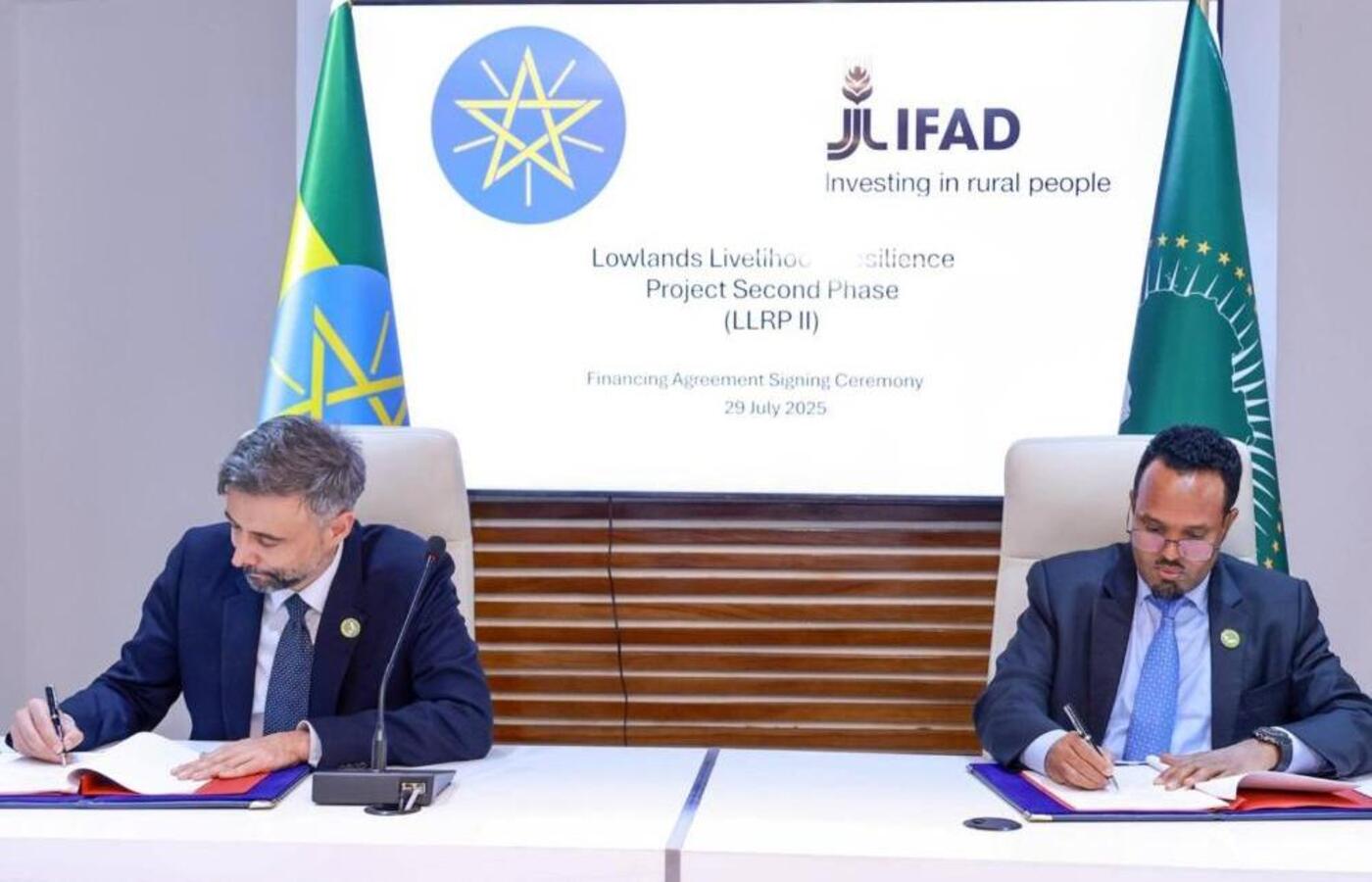
Ethiopia has signed a 69.2 mln US dollars grant agreement with the International Fund for Agricultural Development (IFAD) to finance the second phase of the Lowland Livelihoods Resilience Project (LLRP II), aiming to improve climate resilience and livelihoods among pastoral and agropastoral communities in the country’s lowland regions.
Co-financed with the World Bank, the project targets eight regional states and is expected to benefit 3 million people. It will focus on climate-smart livelihoods, commercialization and diversification, integrated rangeland management, and disaster risk reduction.
The agreement was signed in Addis Ababa by Finance Minister Ahmed Shide and IFAD President Alvaro Lario, who attended the global Food Systems Summit in the capital.
Building on the progress of Phase I, the new funding aims to scale up efforts that have already delivered significant results. The initial phase, launched in 2019 with a budget of around 325 mln US dollars, reached approximately 2.4 million pastoralists and agropastoralists across seven regions. It restored more than 290,000 hectares of degraded land and introduced sustainable agricultural and livestock practices adopted by over half a million farmers.
Phase I also improved access to social and economic services for 1.45 million people and helped communities better manage climate shocks through early warning systems and sustainable rangeland management. Despite challenges such as regional conflicts and inflation, the project maintained solid progress in land restoration and productivity.
The lowlands are critical to Ethiopia’s livestock economy but remain exposed to climate variability and land degradation.




