

Ethiopia’s Ministry of Transport and Logistics has introduced a new requirement mandating that all vehicles on public roads install approved emission-control devices or meet emission standards, as part of efforts to tackle rising air pollution. This directive builds on Ethiopia’s recent ban on the import of fuel-powered vehicles, which until now accounted for nearly 100 percent of the country’s vehicle fleet.
The transport sector is undergoing a notable transformation: electric vehicles (EVs) now make up approximately 60 percent of new car sales in Ethiopia, reflecting government measures to promote greener alternatives. These measures include incentives for EV adoption and infrastructure investments, signalling a broader push towards sustainable transport.
This comes just a few months after the Ethiopian government announced plans to introduce a raft of new taxes on fuel and vehicles, including a 15 percent value-added tax (VAT), a 15 percent excise duty on fuel, and a separate motor vehicle circulation tax on fuel cars. Officials say these measures are necessary to increase revenue and modernise the tax system.
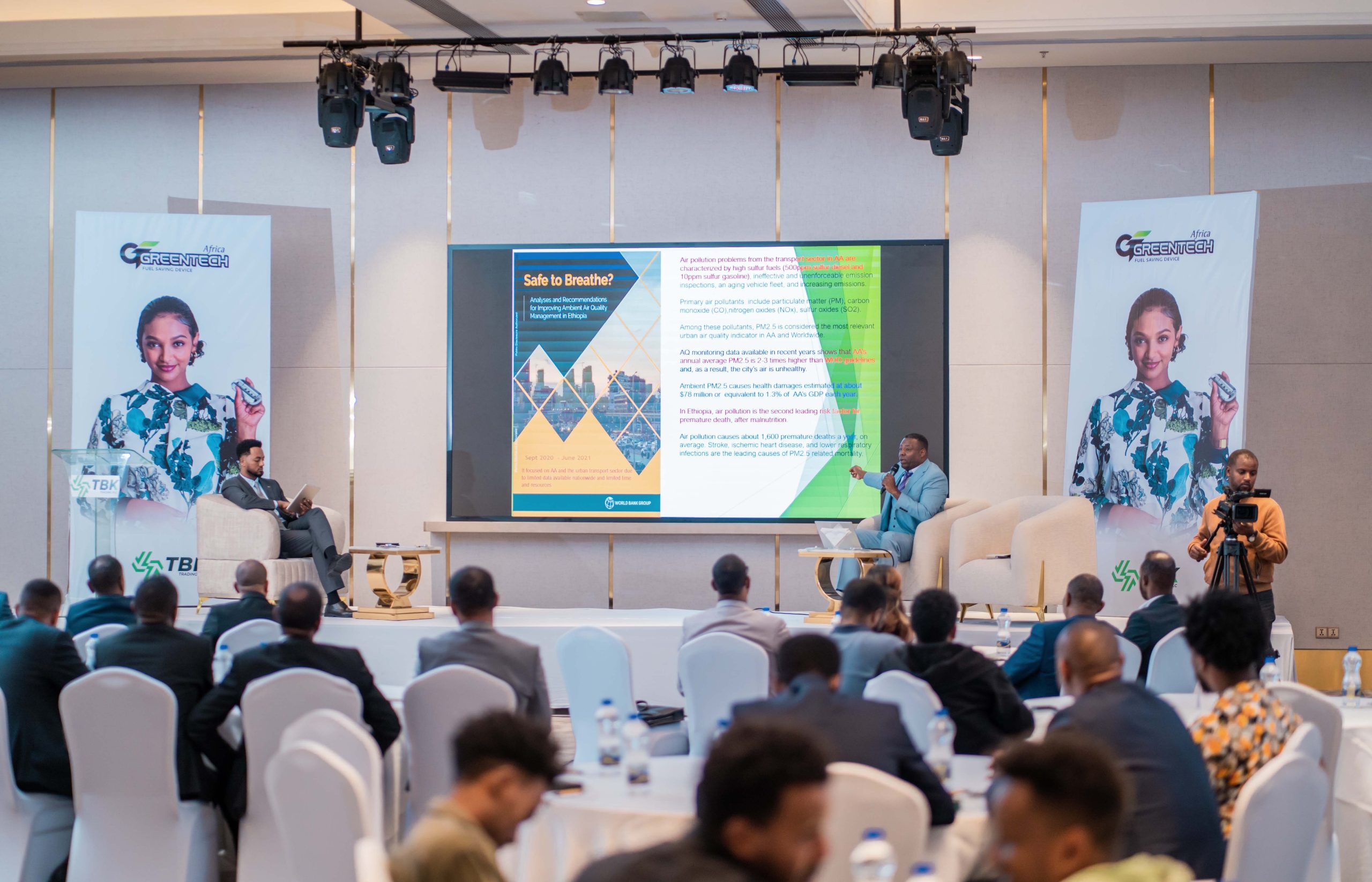
Within this context, TBK Trading PLC has introduced the GreenTech device, a technology said to reduce vehicle exhaust emissions by up to 97 percent while improving fuel efficiency by as much as 30 percent. The GreenTech device is among the approved emission-control technologies accepted under the new Ministry directive (Directive 1051/2017).
Installed inside the vehicle’s fuel tank, GreenTech uses advanced nanotechnology and a ceramic component to convert engine heat into electromagnetic radiation, optimising fuel combustion. Compatible with a broad range of vehicles—from motorcycles to heavy machinery—it is expected to offer a solution for Ethiopia’s existing fleet of fuel-powered vehicles.
The device has undergone four years of domestic testing, including trials on public transport buses. Operators such as Awash Insurance report improved safety and fuel economy after fitting GreenTech to their fleets.
The Ministry has warned that non-compliance will result in penalties, including a minimum three-month ban on vehicle operation. This comes amid growing concern over air pollution’s health impact, with Ethiopian health authorities linking over 811,000 respiratory illnesses between 2020 and 2025 to vehicle emissions.




