

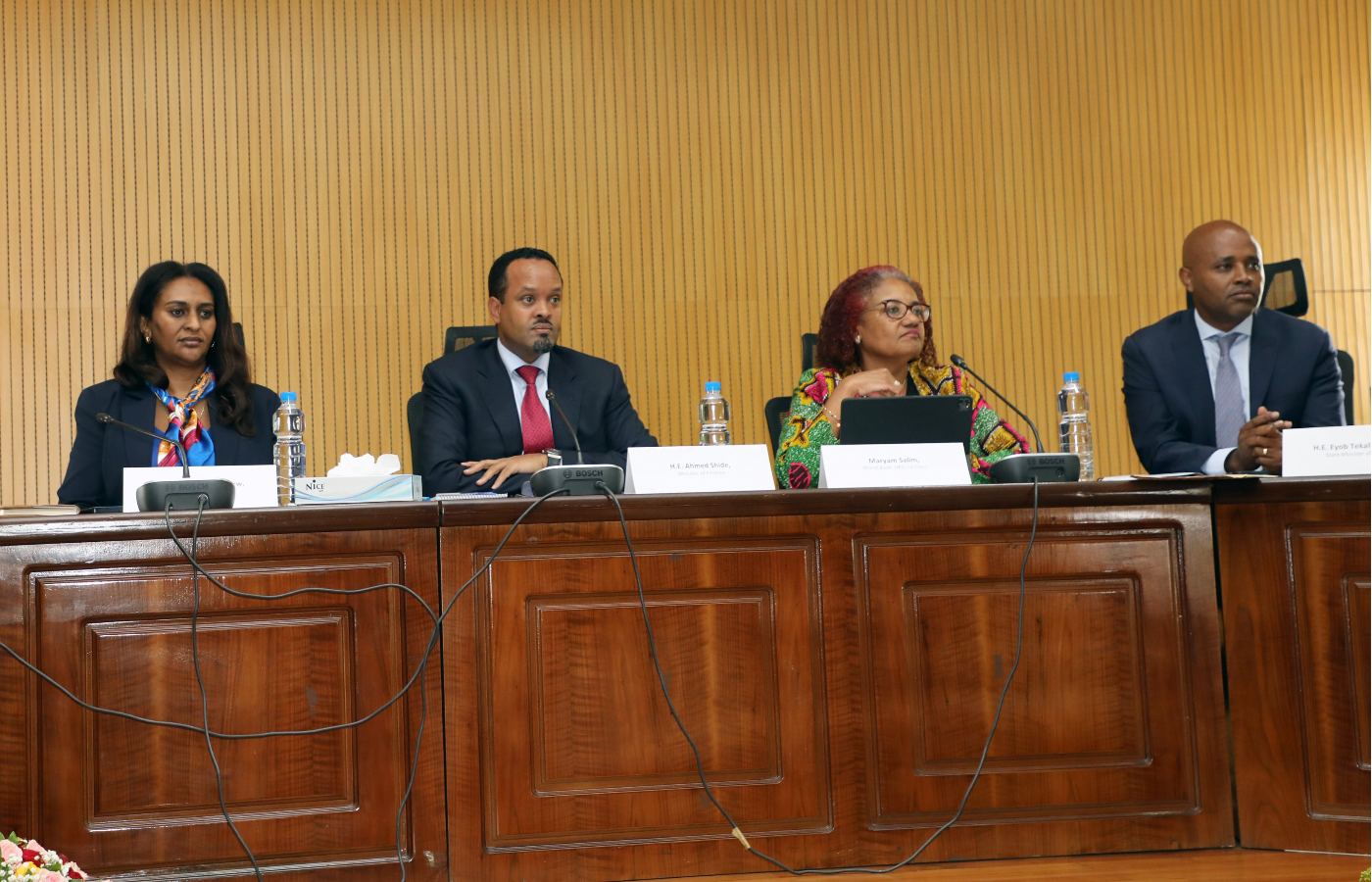
Ethiopia collected over 700 billion Birr in net tax revenue in the 2024/25 fiscal year, driven by an expanded tax base and stricter enforcement on traders long criticised for evading or underpaying value-added tax (VAT). The Ministry of Finance said the revenue milestone moves the government closer to its target of one trillion Birr in tax collection for 2025/26.
At the Ministry of Finance’s annual Head of Agencies Meeting in Addis Ababa, Finance Minister Ahmed Shide reported economic growth of 8.4 percent in 2024/25 and export earnings of 8.3 billion US dollars, more than double the five-year average. Government spending included 60 billion Birr on social safety nets, 180 billion Birr for subsidies, and salary adjustments for civil servants to address domestic and external economic shocks, including global commodity price fluctuations and regional tensions.
Ethiopia has historically relied on agriculture and state-led development, with low tax-to-GDP ratios, high inflation, and foreign exchange shortages. The Home-Grown Economic Reform (HGER) programme, launched in 2019, aims to modernise fiscal policy, restructure state-owned enterprises, and encourage private sector investment. The government said that increasing domestic revenue through taxation is a priority to reduce reliance on external borrowing and finance development spending.
State Minister of Finance Eyob Tekalegn (PhD) noted that reforms in tax collection, including digital systems and stricter compliance measures, contributed to the increase in revenue. “The shift to a private sector–led economy is yielding results, with enhanced tax policies and state-owned enterprise reforms creating a more competitive environment,” he said.
National Bank of Ethiopia governor Mamo Mihretu added that inflation had fallen to 13.9 percent from more than 30 percent two years ago. Measures cited included the adoption of market-based exchange rates in July 2024 and the removal of mandatory foreign exchange surrender requirements for exporters, which increased private sector access to foreign currency and raised foreign exchange earnings by 33 percent. Mihretu projected inflation would reach single digits by the end of 2026.
State Minister of Planning and Development Bereket Fisehatsion outlined HGER II, launched in 2024, which focuses on public sector efficiency and investment in productive sectors such as agriculture, manufacturing, and technology. Ethiopia attracted 4 billion US dollars in foreign direct investment over the past year, ranking second in Africa for FDI inflows, and created 4.5 million jobs, mostly in manufacturing and services.
Development partners including the International Monetary Fund and World Bank noted progress in Ethiopia’s reforms but highlighted risks such as external shocks, agricultural dependence, and limited fiscal space. The IMF, which approved a 3.4 billion US dollar Extended Credit Facility in 2024, said improvements in tax administration and domestic revenue mobilisation are necessary to reach the one trillion Birr target and support private sector activity. The World Bank highlighted investments in climate-resilient agriculture and infrastructure as measures to reduce exposure to droughts and global market fluctuations.
Ethiopia’s external debt stood at 27 billion US dollars in 2024. The government said that increasing tax revenue is a key component of financing development priorities including infrastructure, education, and healthcare.




