

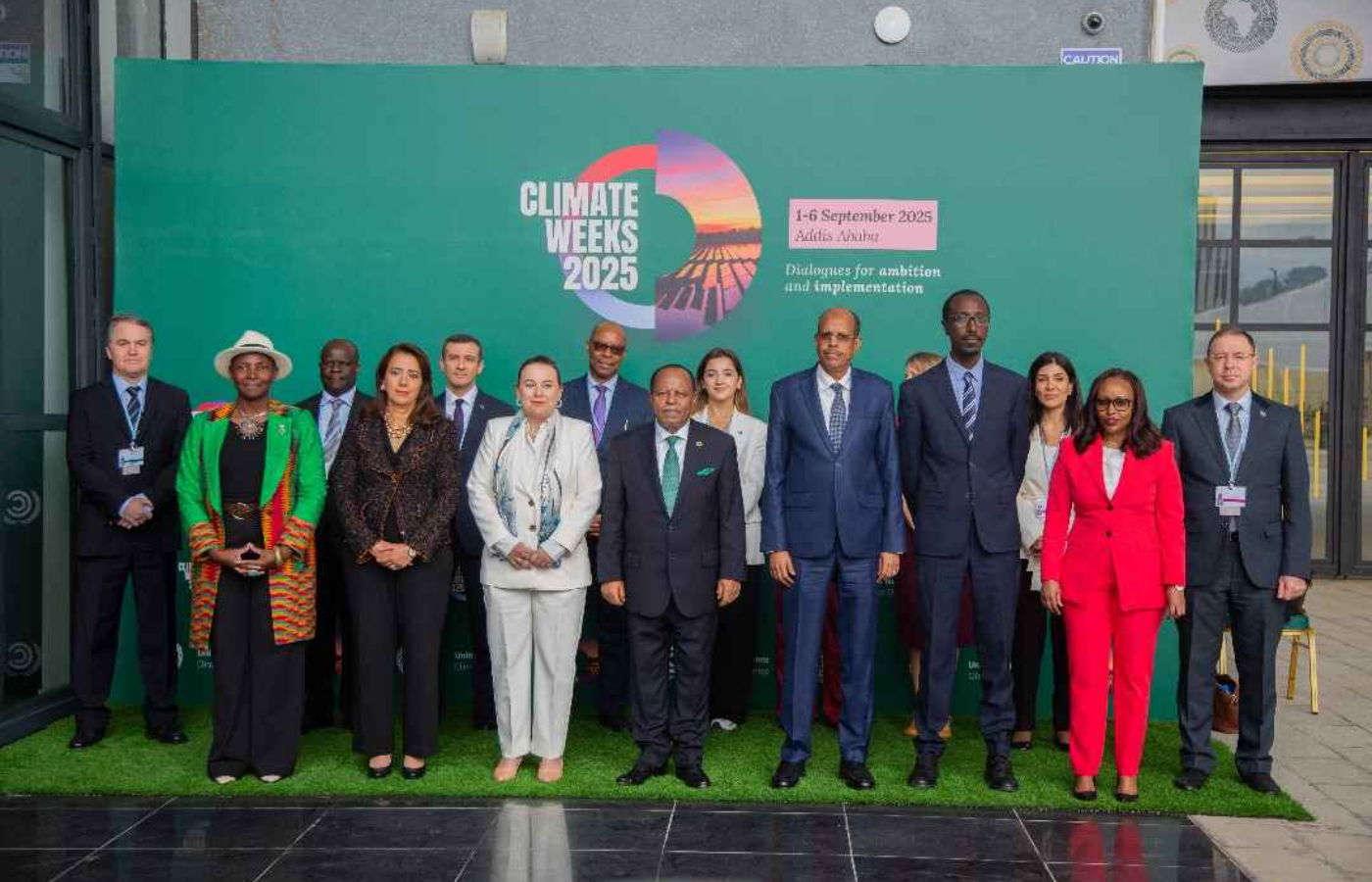
African leaders and international partners have underscored the continent’s wealth of critical minerals as a strategic advantage in advancing the global clean technology transition, during pre-summit events ahead of the Second Africa Climate Summit.
Ethiopian President Taye Atske Selassie said Africa’s mineral reserves, essential for renewable energy and clean technologies, position the continent to play a leading role in climate-resilient development. “With the right support, Africa’s aspirations can fortify global climate action,” he said, while cautioning against repeating historical patterns of resource exploitation that have previously constrained development.
Noura Hamladji, deputy executive secretary of the United Nations Framework Convention on Climate Change, emphasised the urgent need to convert pledged financial flows into practical outcomes. She noted that the commitment to provide 1.3 trillion US dollars annually to developing countries by 2035 must move beyond aspiration. “It must be actionable, delivered promptly, and designed for purpose. Africa can demonstrate how bold climate action delivers tangible human and economic benefits,” she said.
Highlighting Africa’s leadership, she pointed to successful initiatives across the continent, including mini-grid projects in rural communities, recycling innovations in Kenya’s Kibera, green bonds in South Africa, and Ethiopia’s Green Legacy Initiative, which has already planted billions of trees. “Such bold actions are an inspiration for the world and will bring stronger economic growth, more jobs, cleaner energy, and better health outcomes,” she said.
Mahmoud Ali Youssouf, chairman of the African Union Commission, called for a unified African voice in international climate negotiations. He highlighted that realising the continent’s potential requires not only finance but also effective technology transfer and targeted capacity building. “Time for decisive action is fleeting,” he said.
Pre-summit discussions also identified renewable energy projects, green innovation, and youth-led initiatives as immediate opportunities for investment that can yield measurable results on the ground.
The summit, opening today, aims to translate pledges into concrete policies and projects, reinforcing Africa’s position as a global leader in climate-resilient development while delivering tangible benefits to communities across the continent.




