

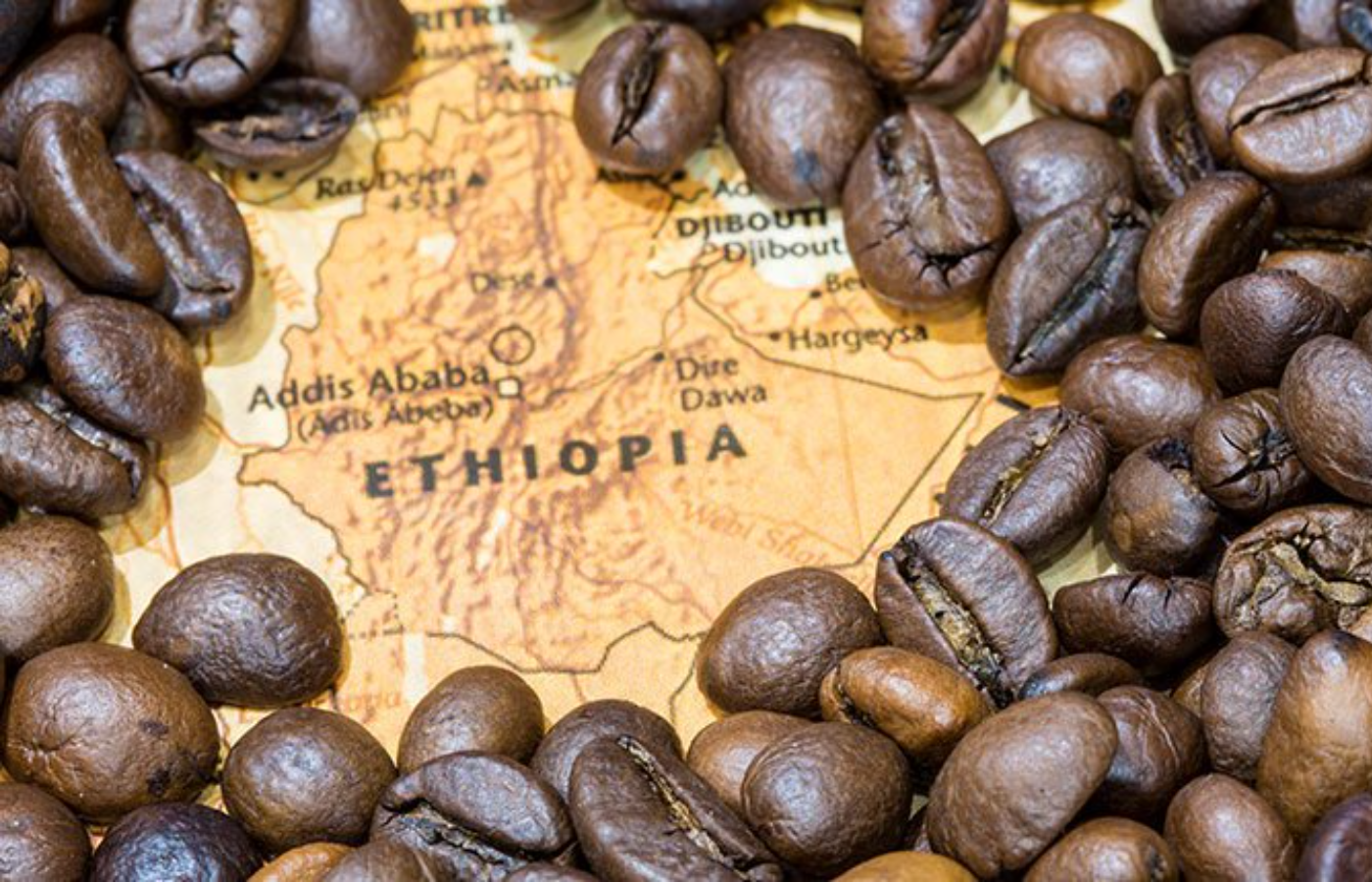
Ethiopian coffee exporters are seeing growing opportunities in international markets as rising Indian coffee premiums push buyers to explore alternative origins.
Premiums for Indian robusta have climbed sharply in recent months. Robusta parchment AB now trades at 1,200 to 1,300 US dollars per tonne above the London International Financial Futures Exchange (LIFFE) benchmark, up from 800 to 900 US dollars in January. Robusta cherry AB premiums have similarly widened to 750 to 850 US dollars per tonne from 200 to 250 US dollars at the start of the year.
Ramesh Rajah, President of the Coffee Exporters Association, said the rising prices are altering global purchasing patterns. “Indian prices are very high, which is giving other countries an opportunity to penetrate markets. In Europe, many exporters report that Uganda is offering much lower prices. Buyers are using Ugandan coffee to reduce their purchases of Indian coffee. In the Middle East, Ethiopia is now competing more directly with India,” he said.
Rajah added that while Indian coffee has traditionally commanded a premium for its quality, the current price gap is prompting roasters and consumers to seek alternatives. “Earlier, the difference between Indian and Ugandan coffee was 100 to 200 US dollars per tonne. Now it has widened to 300 to 400 US dollars. Buyers cannot completely stop sourcing Indian coffee, but they are reducing quantities and blending in other origins like Uganda,” he said.
The price surge reflects broader market pressures. Europe, the largest importer of Indian coffee, receives over half of India’s shipments, with Italy and Germany as key buyers. Supply challenges in Brazil and Vietnam due to climate-related issues, coupled with uncertainties over US tariffs, have intensified the rally in global coffee prices.
Research agency BMI, a Fitch Solutions company, has revised its coffee price forecast upward in response to the surge. The agency raised its forecast from 3 US dollars per pound to 3.40 US dollars, citing US tariffs against Brazil and supply risks in key producing regions. BMI noted that weather conditions in Brazil and Vietnam, along with evolving US trade policy, remain critical factors for market volatility.
Ethiopia, which exclusively produces Arabica coffee, is well positioned to benefit from these shifts. Coffee contributes 30 to 35 percent of export revenues and supports more than 15 million livelihoods. In 2024/25, Ethiopia earned 1.87 billion US dollars from 354,302 tonnes of coffee exports, with analysts projecting total revenue could surpass 2 billion US dollars by year-end.




