

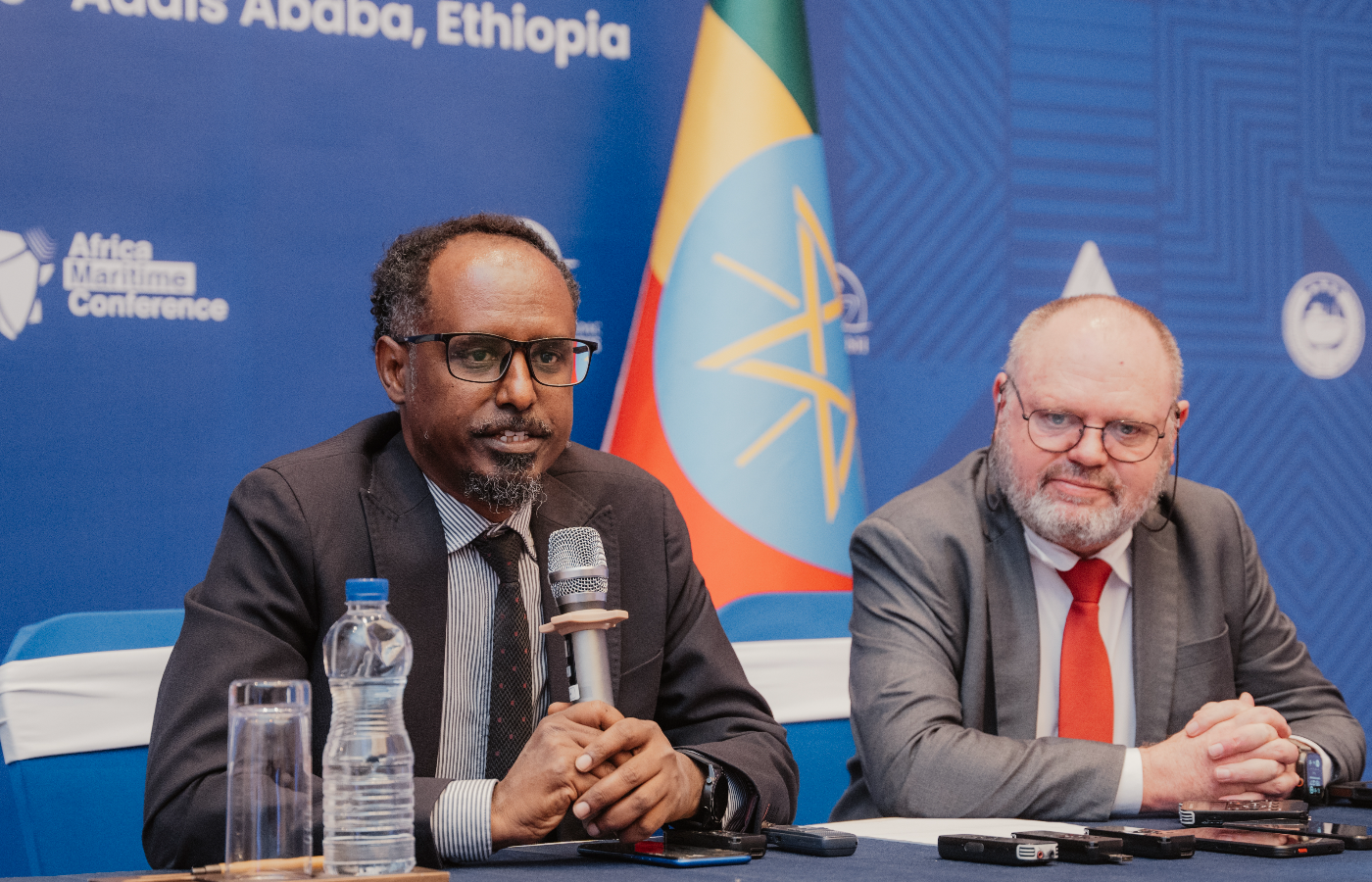
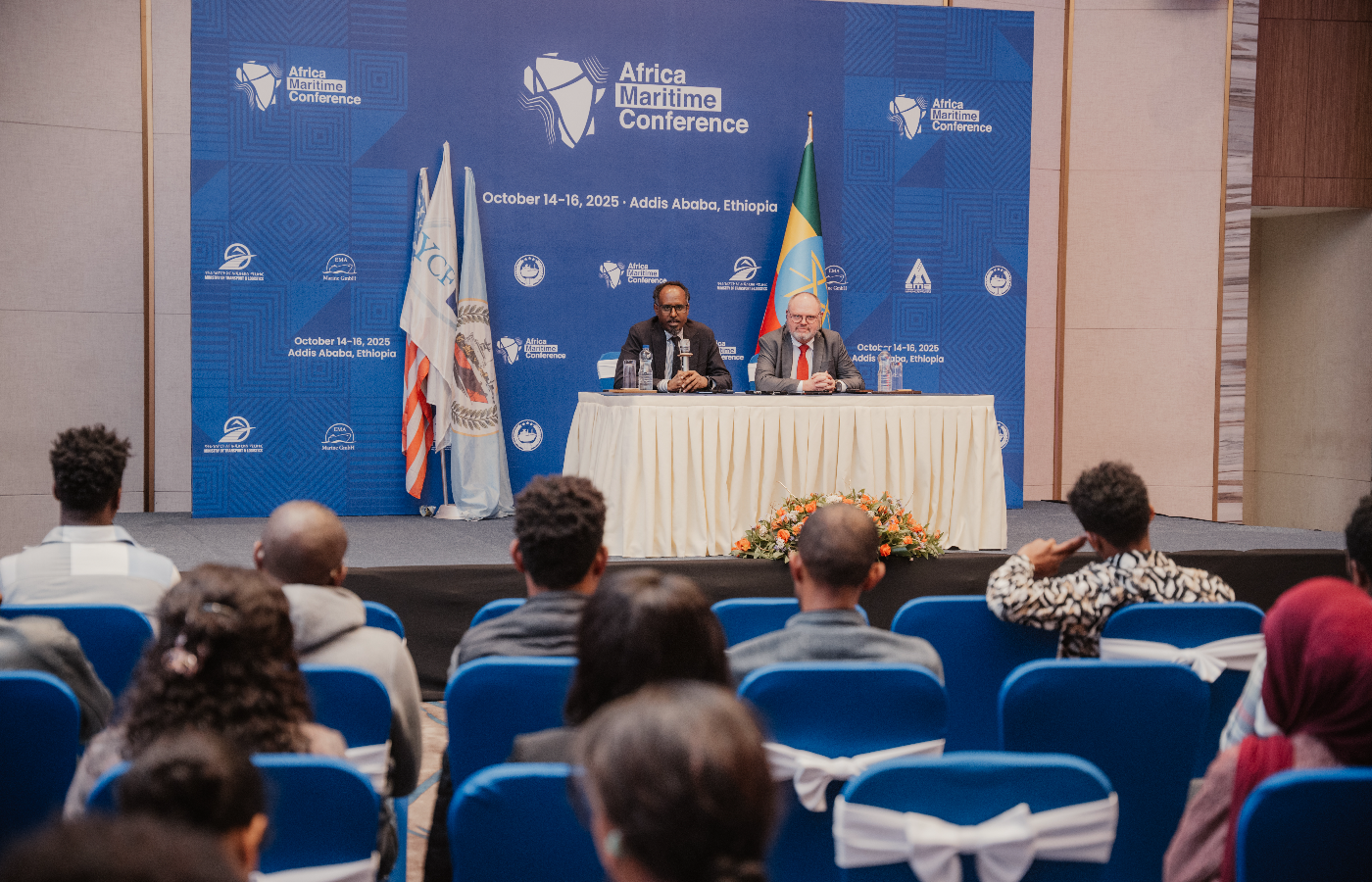
Ethiopia will steer the development of a ten-year strategy to transform Africa into a global maritime hub, officials announced today during a press briefing ahead of the African Maritime Conference 2025 in Addis Ababa.
The conference, organised by the Ministry of Transport in partnership with YCF Manning, a global maritime workforce developer, brings together maritime academies, shipping companies, manning agents, and diplomatic representatives from across Africa and beyond. Delegates will explore how the continent can expand its maritime workforce, enhance global competitiveness, and unlock economic value over the next decade.
Frans Joubert, chief executive of YCF Group, told reporters that Africa holds a limited share of the global seafaring market. “Of the 1.9 million seafarers worldwide, Africa accounts for just four percent. With roughly 150 maritime academies across the continent, there is significant untapped potential,” he said.
The programme’s success is supported by a comprehensive ecosystem: government support, university partnerships, regulatory oversight, financial services for cadets, and logistical advantages including Ethiopian Airlines and a dense network of embassies. Over the past decade, Ethiopia has built a reputation for producing some of the world’s most skilled electronic technical and mechanical engineers, reinforcing the country’s credibility in global shipping.
The Ethiopian Maritime Training Institute, which trains 360 cadets—including 28 women—maintains a placement rate above 95 percent, far exceeding the African average of around 20 percent. Joubert noted that the programme generates approximately 50 million US dollars for every 1,000 officers placed at sea, with total projected value approaching 100 million US dollars. Cadets are selected from 29 universities based on English proficiency and technical skills, undergo rigorous bridging courses, and progress through regulated placements and competency assessments.
Bahir Dar University President Mengesha Ayene (PhD) said Africa’s emergence as a maritime hub hinges on a skilled and adaptable workforce. “Africa’s young population is dynamic, yet the supply of trained maritime professionals remains limited. The new strategy expands beyond engineering to develop talent in hospitality and medical roles on vessels, reflecting a more versatile and globally competitive maritime workforce,” he told Birrmetrics.
The conference aims to produce a coordinated strategy to leverage Africa’s human capital, regulatory frameworks, and logistical advantages—including Ethiopian Airlines and an extensive embassy network—to position the continent as a strategic player in global shipping.




