

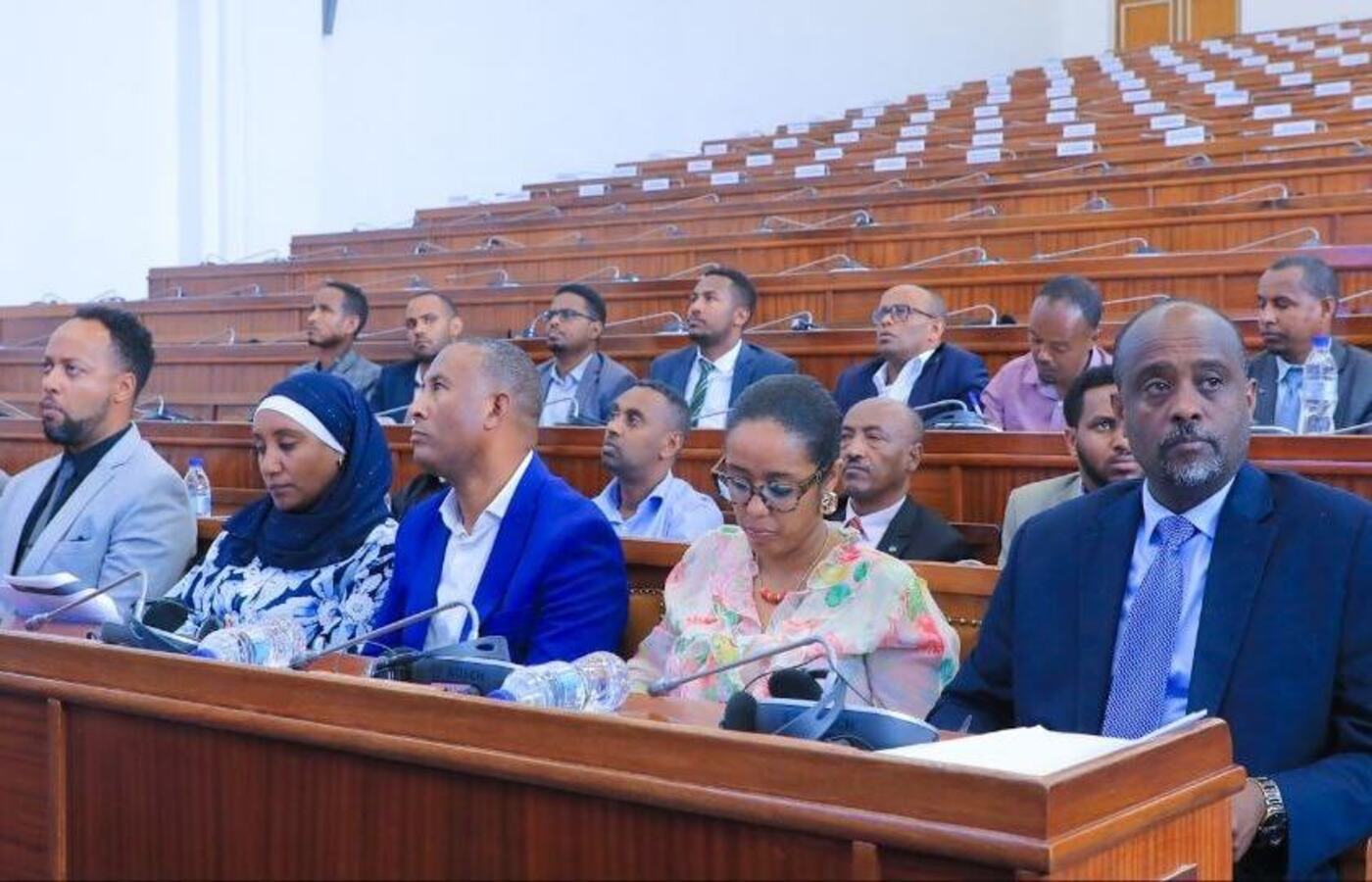
Ethiopia’s sovereign wealth entity defended its reform efforts before Parliament, saying it has cleared audit backlogs for nearly all enterprises except the sugar estates, as MPs pressed for answers on capacity gaps and delayed governance reforms.
Presenting its first-quarter report and 2025/26 budget-year plan, Ethiopian Investment Holdings (EIH) faced detailed questioning from the House of Peoples’ Representatives’ Standing Committee on Government Development Enterprises. Lawmakers said the institution carries “a great responsibility” as a pillar of national growth and raised concerns that several issues have appeared repeatedly in previous reviews.
Committee members said the institution’s foreign-exchange results
achieved a 98 percent implementation rate but relied on only a small group of subsidiaries. MPs asked what EIH is doing “to help the majority of the enterprises generate better foreign exchange and solve the bottlenecks they are facing.”
Revenue performance was another key issue. Lawmakers pointed to declines at the Ethiopian Agricultural Businesses Corporation (down twenty-one percent), Metahara Sugar Factory (down thirty-seven percent), the Ethiopian Engineering Corporation (down four percent) and Hilton Addis (down one percent) compared with the same period last year. They asked what measures EIH has taken “to help these enterprises overcome this performance and achieve their planned revenue.”
Audit delays dominated the discussion. Some subsidiaries continue to appear in annual reports as “in progress,” including enterprises with backlogged findings dating to the 2023/24 budget year.
EIH Chief Finance Officer Rediet Getachew told MPs that the institution inherited significant accounting delays when development enterprises were consolidated under EIH.
“When these development enterprises joined Ethiopian Investment Holdings, they had a high backlog of accounting or audit work. EIH has done a huge amount of work on this,” he said.
He added that a detailed assessment identified whether the delays stemmed from human-resource constraints, technology gaps, system weaknesses or structural issues, after which enterprises were grouped by the severity of their audit problems.
“Out of the 25 enterprises that joined EIH, all, except the Ethiopian Sugar Industry, have been enabled to conduct and update their audit reports,” Rediet told the committee.
He said newly transferred entities from the former Public Enterprises Holding and Administration Agency account for many of the “in progress” audit items still appearing in annual reports.
“These 8 newly joined enterprises are also being assisted,” he said.
MPs also questioned why governance problems and maladministration risks are not addressed proactively in enterprise plans. They asked why issues raised during field visits — including debt-management gaps, asset-management inconsistencies and the absence of strategic plans at Ghion Hotel — were not reflected in the institution’s report.
Other questions centred on outdated machinery and technologies in several subsidiaries, the slow pace of capital-restructuring studies, and the status of coordination efforts to improve market linkages across the EIH portfolio. Lawmakers also sought updates on digitalisation work aligned with Digital Ethiopia 2030, the establishment of a fund for startups and SMEs, and the protection of enterprise property, which they said remains a recurring complaint.
EIH officials said that the institution’s senior management, including the two deputy chief executives, will respond in detail after technical units address the committee’s questions.
“We carried this out in three ways… assigning experts, supporting enterprises directly, and empowering their finance staff,” Rediet said, adding that the reforms are showing “significant improvement.”




