

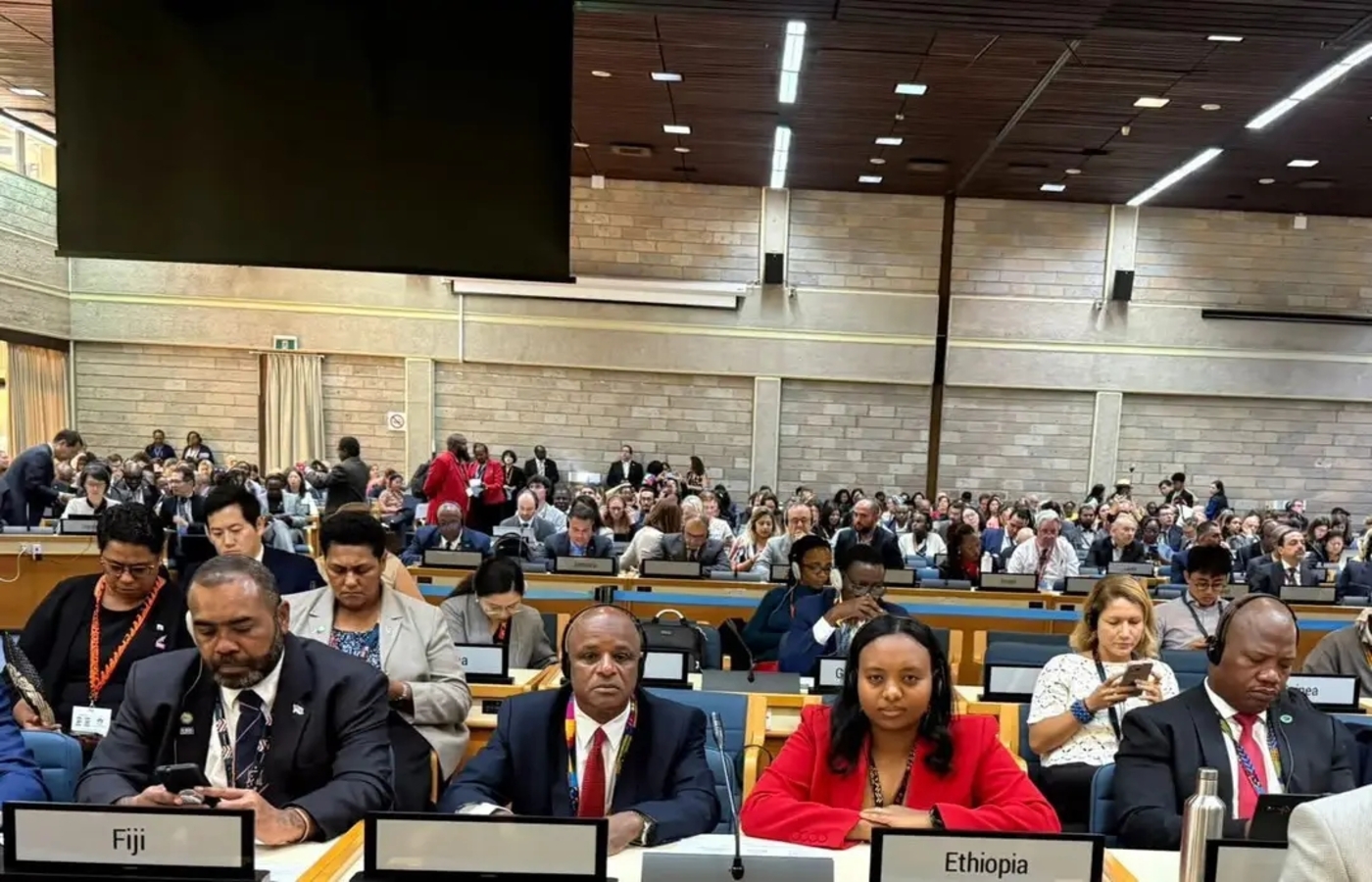
Ethiopia is taking part in the Seventh Meeting of the Open-Ended Committee of Permanent Representatives (OECPR-7), the main preparatory forum for the UN Environment Assembly, now under way at the UN Environment Programme’s headquarters in Nairobi. The delegation is led by Lelise Neme, director-general of the Environment Protection Authority.
The meeting runs from 1 to 5 December and brings together representatives from more than 190 countries. Delegates are reviewing draft resolutions, assessing implementation of UNEP’s medium-term strategy and preparing decisions for adoption at UNEA-7, which convenes next week. Ethiopia’s Ministry of Foreign Affairs said the discussions will include regional policy coordination and frameworks aimed at strengthening resilience to climate stress, pollution and ecosystem degradation.
OECPR-7 forms part of a process established in 2012 when the UN General Assembly created UNEA as the highest global decision-making body on environmental matters. Nairobi has hosted these negotiations since UNEP’s formation in 1972. Recent sessions have focused on plastic pollution, chemicals management and nature-based solutions, with African countries pushing for stronger adaptation finance and support for drought-prone regions.
Ethiopia’s participation follows its recent engagement in continental environmental forums, including AMCEN’s 20th session earlier this year. The country continues to advocate for measures that support climate-resilient agriculture and ecosystem restoration, alongside efforts to expand renewable energy and manage transboundary resources.
This year’s theme — “Advancing sustainable solutions for a resilient planet” — aligns with priorities across the Horn of Africa, where drought cycles, land degradation and water shortages have heightened the need for coordinated regional responses. Outcomes from OECPR-7 will shape negotiations at UNEA-7 and guide the next phase of UNEP’s global agenda.




