

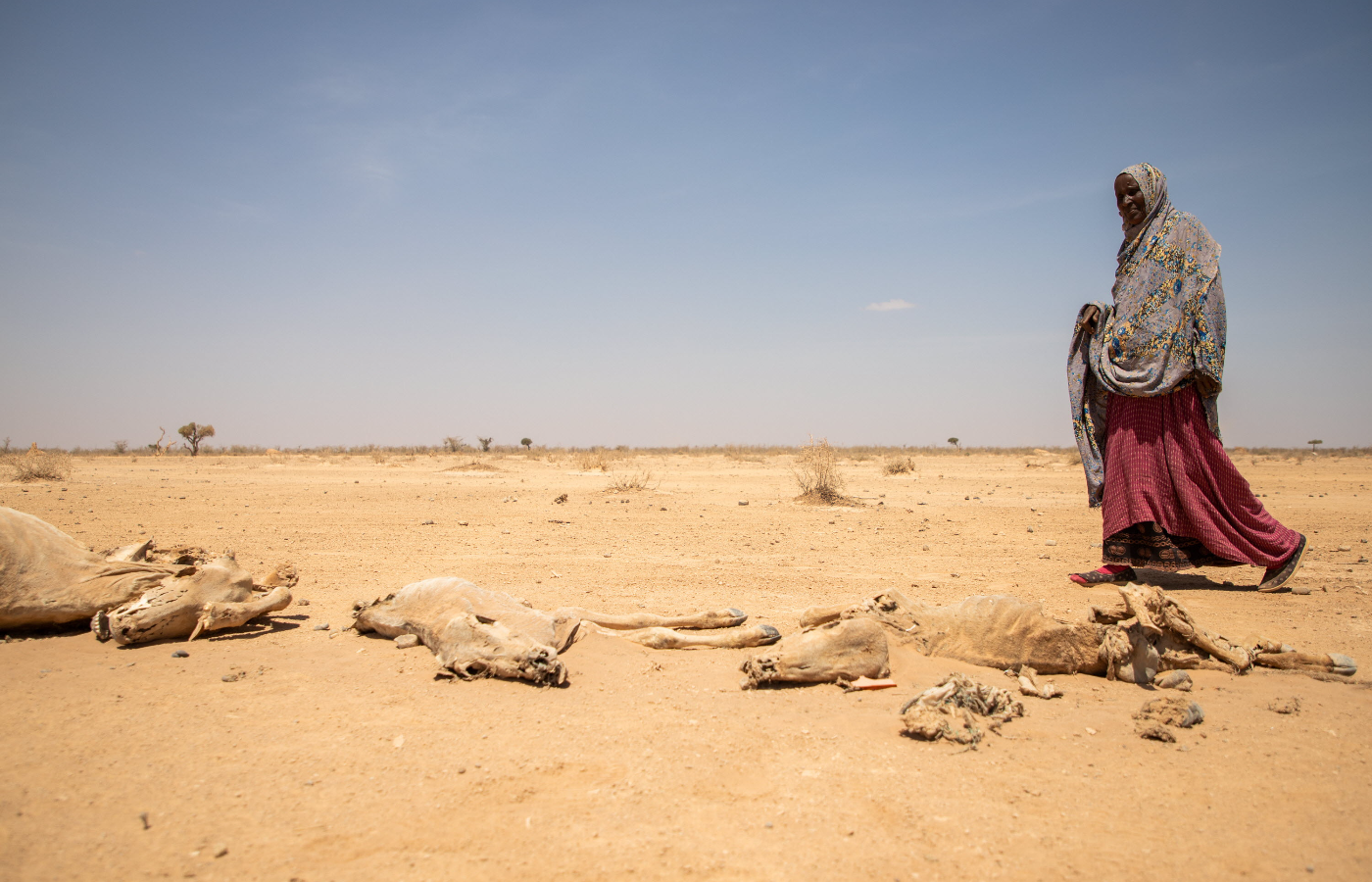
Less than three years after a historic drought, the Horn of Africa is once again confronting a significant food security challenge. The Famine Early Warning Systems Network (FEWS NET) has warned that a record-breaking dry season has left 20 to 25 million people across Somalia, Ethiopia, and Kenya in urgent need of assistance.
Rainfall during the October-to-December (OND) season fell to some of the lowest levels on record. In many areas, totals reached less than 50 percent of the average, with some zones receiving under 30 percent. Experts attribute the extreme conditions to a combination of La Niña, a historic negative Indian Ocean Dipole, and persistent heat that has depleted soil moisture and evaporated surface water.
The dry conditions have devastated crop and livestock production. In Somalia’s Bay and Bakool regions, non-irrigated harvests are projected at less than 10 percent of normal levels. Rainfed crops in Ethiopia’s Somali Region have largely failed, as seeds either did not germinate or withered soon after planting.
Pastoralist communities face a further strain. In Somalia’s Addun Pastoral Livelihood Zone, depleted browse has forced livestock to consume plastic and paper. Early deaths of breeding females have been reported, while in Kenya, many animals have stopped lactating.
Economic pressures are mounting. Households are engaging in “distress sales” of weakened livestock, causing prices to fall. Goat prices in parts of Kenya declined by up to 12 percent in November. Conversely, food and water costs have risen sharply, with sorghum prices in Baidoa, Somalia, up 25 percent and water trucking in some areas reaching six times the normal rate.
FEWS NET warns that the March-to-May (MAM) 2026 rainy season will be critical. Should rainfall fall below average, the region could face extreme malnutrition and hunger-related mortality. Analysts note that such conditions could prompt an assessment for Famine (IPC Phase 5), echoing crises in 2011 and 2017.
Displacement is rising as rural families migrate to urban centres and IDP camps seeking food and work. In some Somali settlements, global acute malnutrition rates have already reached 25 percent. FEWS NET cautions that without a scale-up in food, water, and nutrition assistance, “Crisis and worse outcomes will become increasingly widespread.” Several areas of Somalia are already at Emergency levels, where starvation is a daily reality for many.




