

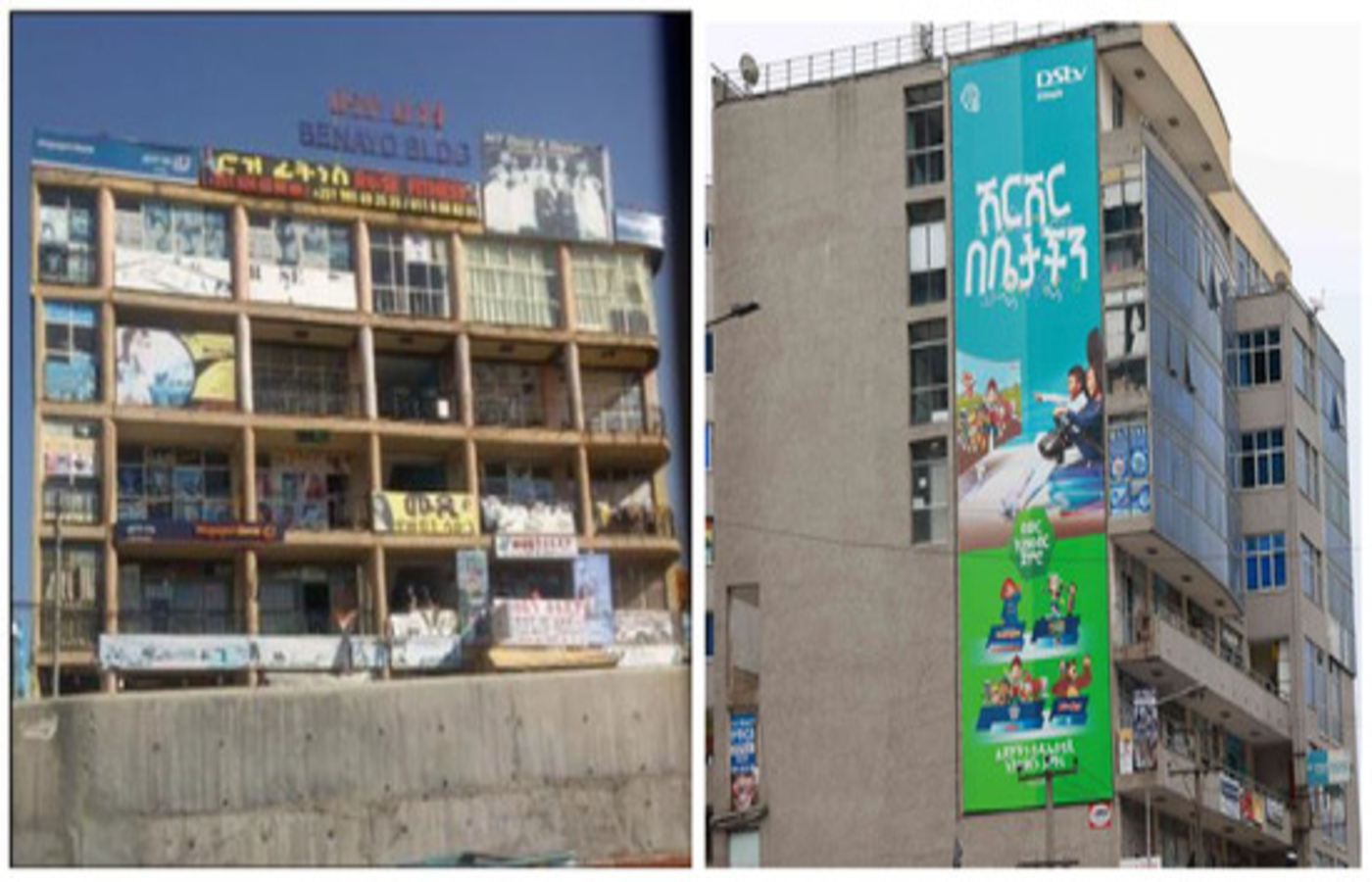
Outdoor advertising standards in Addis Ababa are being widely ignored, exposing persistent gaps in urban governance and infrastructure management, city officials say.
Despite regulations aimed at controlling the proliferation of billboards and other outdoor advertisements, enforcement remains weak, authorities admit, calling for renewed attention to ensure compliance. The issue was highlighted during a broader assessment of the city’s development projects, where officials stressed that public works must deliver both aesthetic appeal and economic returns.
Engineer Wendimu Seta, head of the Addis Ababa City Administration Secretariat, said many projects designed to shape the city’s image have been completed, but their long-term sustainability depends on measurable public and economic benefits.
“For projects to continue serving as models, they must demonstrate economic viability and provide tangible benefits to the public,” Wendimu said.
Wendimu outlined ongoing infrastructure challenges affecting the city, including electricity supply interruptions. He revealed that the capital recorded over 16,000 outages recently, prompting corrective measures. He added that the success of corridor development projects requires both transparency and coordinated efforts across institutions.
“If these projects are to remain sustainable, the administration must communicate their value clearly, and all institutions involved must work in a harmonized manner,” he said.
Officials also acknowledged that the city’s visual landscape is compromised by unregulated outdoor advertising. Large public events often place additional pressures on development projects, further complicating urban management.
The need for effective dry waste disposal systems and stricter oversight of construction projects was emphasised. Authorities stressed that investments in infrastructure must deliver proportional and measurable benefits to residents.
Non-compliant billboards remain a persistent symbol of wider enforcement challenges and gaps in integrated urban governance in Ethiopia’s rapidly expanding capital.




