Long before Africa had central banks, a trader would take cowry shells harvested hundreds of miles away. The shells were not backed by any institution. He took them because he trusted the next trader to take them too. Africa now has hundreds of banks, dozens of currencies and some of the world's most successful mobile-money platforms. Yet paying a supplier in a neighbouring country can still be harder than paying one in Europe or America.
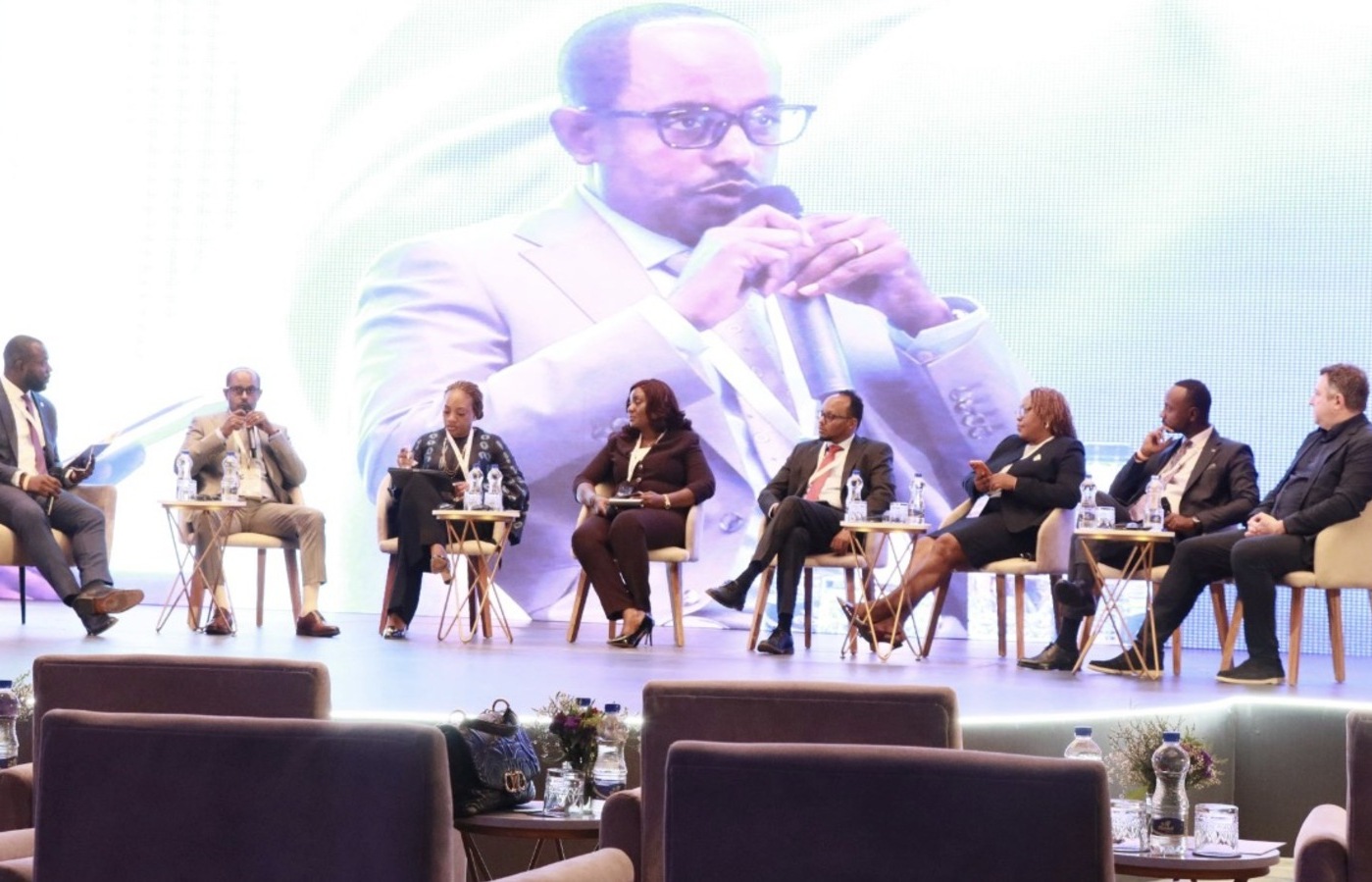
That irony hung over the second Pan-African Payment and Settlement System (PAPSS) COWRY Summit, held at the Ethiopian Skylight Hotel in Addis Ababa on November 26th-27th. Co-hosted by PAPSS and the National Bank of Ethiopia (NBE), it brought together central bankers, lenders, payment-switch operators and fintech bosses. Underneath the institutional language, they were asking one question. Why should an African firm need a currency printed thousands of kilometres away to pay the firm next door?
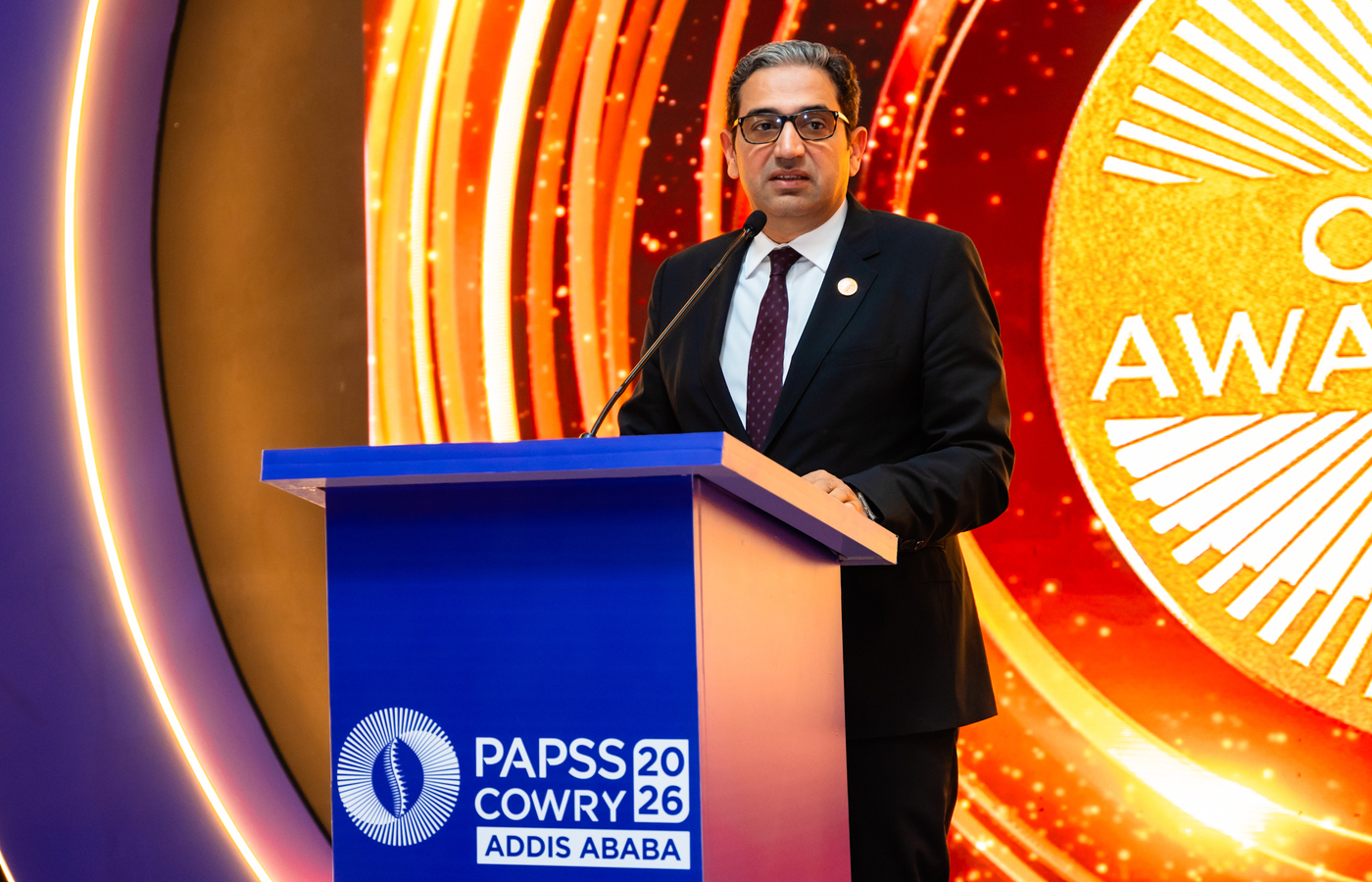
Haytham Elmaayergi of the African Export-Import Bank (Afreximbank), the main backer of PAPSS, opened with history. "For centuries, the cowry shell helped traders in many parts of Africa settle their trade," he said. "The name of this conference reminds us that Africa has paid Africa before. Our task is to do it again, at the speed of today's trade." The stakes are not small. By his reckoning, Africa loses more than 5 billion US dollars a year settling its own trade in foreign currencies, routed through foreign intermediaries.
In 2025 intra-African trade grew by 5.5 percent to 213.8 billion US dollars, but that was still only about 14 percent of the continent's total trade. The African Continental Free Trade Area (AfCFTA) is meant to change this. Cutting tariffs and haggling over rules of origin is only half the job, though: goods have to cross borders, and so does money. "Africa has opened the market. Now we need to make the market work," Elmaayergi said.
What makes Africa's payment problem odd is that it sits alongside a great deal of technological progress. Figures presented at the summit counted 33 instant-payment systems and 346 payment-focused fintechs on the continent. Mobile-money platforms handle 81.8bn transactions a year, and the digital-payments economy is projected to be worth 1.5 trillion US dollars by 2030. Almost all of this plumbing, however, stops at national borders.
An Ethiopian can move money between domestic banks in seconds, and so can a Kenyan, a Ghanaian, a Nigerian or a Rwandan. Moving it between those countries means dealing with different institutions, rules, currencies and liquidity requirements. Africa has got good at moving money within its borders without getting much better at moving it across them. Mike Ogbalu III, the chief executive of PAPSS, put the diagnosis bluntly in his keynote: "Africa does not have a payments innovation problem. It has an interoperability and scaling problem."
If the problem is fragmentation, more platforms will not fix it and may even make it worse. A bank operating in several markets may have to keep separate liquidity pools, technical links, compliance processes and settlement accounts in each, which ties up capital that could otherwise be lent to businesses.
PAPSS was meant to cut through this. African leaders endorsed it in 2019 as the payment arm of the AfCFTA, and it went live commercially in Accra in January 2022. Afreximbank says it now spans 31 countries in all five regions, linking 24 central banks, more than 200 commercial banks and fintechs, and 17 payment switches, with partnerships reaching more than 300 further termination points.
About ten countries joined this year alone. The bank also claims PAPSS has cut transaction costs by 92 to 95 percent, processing times by 99.99 percent and foreign-exchange needs by up to 80 percent. These numbers are self-reported, and how well they hold across different markets and types of transaction deserves scrutiny.
The more revealing disclosure was buried in the growth figures. Between comparable periods in 2025 and 2026, the number of transactions rose by roughly 1,000 percent while their combined value rose by about 120 percent. If volumes grew elevenfold and value only 2.2-fold, the average payment shrank by about 80 percent. (That is this newspaper's arithmetic, not a figure PAPSS announced.) The drop may mean the system is being used more for smaller payments and less only for big commercial deals.
It could just as well reflect a change in which corridors or customers make up the traffic.

PAPSS did not publish the absolute figures or a breakdown by customer type, so it is impossible to say which. Either way, the numbers point to a gap between signing countries up and getting them to use the system. "Connected is not the same as used," Ogbalu's presentation conceded. For an outfit that has spent years celebrating membership agreements, that is a notable change of tone.
A bank can be technically connected without promoting the service, a country can join before its lenders are live, and a corridor can exist without much traffic. A map full of flags tells only part of the story.
Who should own the pipes is a touchier subject. Yilebes Addis, chief executive of EthSwitch, Ethiopia's national switch, wants the tangle of bilateral links between institutions phased out in favour of an architecture built on national payment systems. Domestic switches have already connected local banks, set up settlement and won regulators' trust, he argued, and a continental network should build on that work rather than duplicate it. "The answer is clear: PAPSS is complementary," he said.
His panel included switch operators from Ethiopia, Nigeria, Ghana, Somalia, Kenya and Rwanda, and he placed the obstacle in regulation rather than technology. "Alignment is the real problem." The case for a common gateway is easy to see: 30 national systems linking every one to every other would need 435 bilateral connections. Centralisation brings its own dangers, though. A hub that serves many national systems becomes systemically important.
An outage, a cyber-attack or a governance row there would spread well beyond one country, and questions about fees, ownership and liability for failed payments would carry more weight. Yilebes wants regulators to mandate interoperability and harmonise settlement and liquidity rules, so that cross-border payments become as seamless as domestic ones within five years. For now that is his proposal, not continental policy.
It also exposes a tension: switches and payment firms are being asked to build shared infrastructure together while still competing for the same customers and fees.
The summit's biggest announcement came from Afreximbank. Eligible licensed fintechs will be allowed to join PAPSS directly, subject to regulatory approval. "Fintechs have demonstrated their ability to reach millions of Africans, develop innovative payment solutions and serve businesses and individuals that traditional financial channels have not always reached," Elmaayergi said.
He also urged banks to build PAPSS into their mobile and online apps: "We must take PAPSS to where customers already are, rather than expect customers to change their habits to access PAPSS." This is a mixed blessing for banks. Cross-border transfers have long earned them fees, exchange-rate spreads and correspondent income, and cheaper infrastructure threatens all three. Cheaper payments might also bring higher volumes and draw in customers who now use informal channels.
How the contest between banks and fintechs plays out will depend on the access rules regulators write: licensing, liquidity, safeguarding of customer funds and compliance.
Then there is the dollar, which is not going anywhere just yet. Paying in local currencies is not the same as settling in them. Imagine an Ethiopian manufacturer buying packaging from a Kenyan supplier. Through PAPSS the buyer can pay in birr and the seller can receive shillings, and neither has to buy dollars. Behind the scenes, though, the banks involved still have to settle with each other. PAPSS nets payments that flow in opposite directions.
If one country imports 100 million US dollars' worth of goods from another and exports 80 million US dollars' worth back, only 20 million US dollars needs settling instead of 180 million US dollars. Under hard-currency arrangements, those leftover obligations can be settled through Afreximbank. But netting does not make an imbalance disappear. A country that persistently buys more from its neighbours than it sells them still runs up net obligations, and someone has to supply the liquidity or carry the risk.
Plumbing cannot cure trade deficits, depreciating currencies or a shortage of convertible assets. PAPSS plans to widen the use of African currencies under the Afreximbank Settlement Model from January 2027. It will add developer tools and APIs in the first quarter of that year and escrow services in the second, which could help small firms dealing with unfamiliar suppliers.
Whether local-currency settlement works will depend on whether banks are willing to hold one another's currencies and manage their exposure to them.
The host country is an instructive test. The NBE formally joined PAPSS on October 15th, six weeks before the summit. Ethiopia is in the middle of reforms that began with the liberalisation of its foreign-exchange regime in July 2024, and for decades its importers have struggled to get hard currency. Eyob Tekalign, the central bank's governor, has said payment integration should be judged by the economic opportunities it creates, not by headcounts of member institutions.

At the opening, Fikadu Digafe, the NBE's vice-governor and chief economist, restated Ethiopia's commitment to continental integration. Even so, the gap between joining and being fully integrated is plain. A PAPSS coverage document published in November lists 28 Ethiopian banks and one fintech as reachable for incoming payments through an extended network. None is listed as a direct participant, and that channel caps each incoming payment at 80,000 birr.
The cap applies to that channel only, not to all future Ethiopian transactions, but it is of little use to an importer buying machinery. Many questions remain open. Will exporters paid in birr keep the foreign-exchange incentives they get for hard currency? How will outbound payments fit with currency rules? And will paying in birr actually be cheaper once the exchange rate is counted?
Digital money adds another complication. Stablecoins featured at the summit, and most popular ones are dollar-denominated. They could make cross-border payments easier while deepening the dollar's hold on African commerce: getting around correspondent banks is not the same as getting away from foreign currencies. Central-bank digital currencies offer a more sovereign alternative, but they face the same old problems of divergent rules, exchange-rate risk and scarce liquidity. Digitising a currency does not make it more convertible.
PAPSS, in any case, is only one piece. Afreximbank's Africa Trade Gateway bundles it with trade intelligence (TRADAR), due diligence (MANSA) and market access (ATEX). That reflects a payments matter only when firms have goods to sell and trust their counterparties. Expensive transport, slow customs, incompatible standards and scarce trade finance all hold back regional trade, and PAPSS can remove none of them. It can lower one cost of trading across borders.
The bet is that lower payment costs will generate enough extra trade to make the infrastructure worthwhile.
Sixty-three years ago African leaders met in Addis Ababa to found the Organisation of African Unity. "63 years later, here we are with that vision becoming a reality," said Wamkele Mene, secretary-general of the AfCFTA Secretariat. That may be premature. Over the next five years PAPSS will have to be judged on the number of firms using it, the value of trade it settles, what it costs and how reliable its corridors are, not on how many central banks sign up.
"Let us use this time to make Africa's payments carry Africa's trade," Elmaayergi urged. The cowry worked because everyone trusted that everyone else would take it. Africa's new payment rails will prove themselves when a trader in Addis Ababa pays Accra as readily as Merkato.