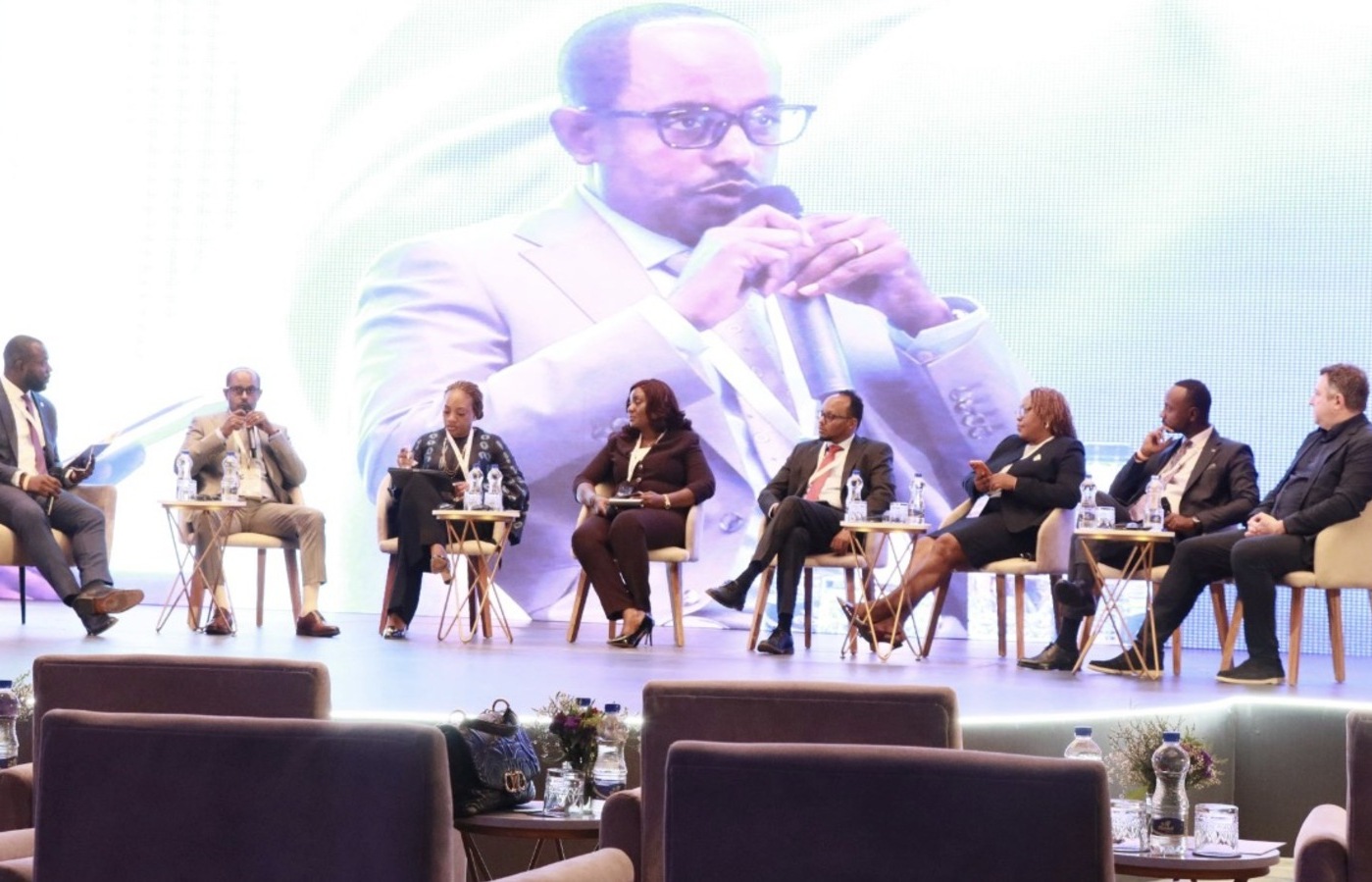
Expanding local-currency payments, strengthening financial connectivity and increasing adoption will be critical to advancing Africa’s trade integration, says PAPSS Chief Executive Officer Michael Ogbalu III.
Africa’s ambition to expand intra-continental trade will depend not only on removing trade barriers but also on establishing payment systems that make cross-border transactions faster, cheaper and more accessible. Despite the African Continental Free Trade Area (AfCFTA), fragmented financial infrastructure, high transaction costs and reliance on foreign intermediary currencies continue to complicate trade between African markets.
The Pan-African Payment and Settlement System (PAPSS) seeks to address these constraints by enabling cross-border payments in local currencies and connecting financial institutions across the continent.
PAPSS is designed to complement existing national payment systems rather than replace them, providing shared infrastructure through which financial institutions, businesses and individuals can transact across African markets. Its expansion is intended to reduce reliance on external payment intermediaries, lower transaction costs and strengthen the continent’s control over its financial infrastructure.
However, expanding the network is only part of the challenge. Increasing adoption among banks, businesses and consumers, ensuring regulatory compliance and improving access to liquidity will be essential to making the system commercially viable. The platform is also exploring opportunities to connect mobile money services, support capital market integration and facilitate broader financial cooperation.
In an interview with BirrMetrics’ Amanuel Kindeya, PAPSS Chief Executive Officer Michael Ogbalu III discussed the platform’s expansion, the challenges of increasing adoption and its role in supporting the AfCFTA. He also addressed local-currency settlement, the prospects for an African monetary union, financial inclusion, regulatory compliance and the importance of developing payment infrastructure that strengthens Africa’s financial sovereignty.
BirrMetrics: In your keynote address, you said that “sovereignty without scale is expensive, while scale without sovereignty is dependence.” What does this mean in the context of Africa’s payment infrastructure, and why is it important for the continent?
Michael Ogbalu III: Establishing payment infrastructure requires significant investment. Building and maintaining such infrastructure can be expensive, particularly when it serves a relatively small market. To make that investment economically viable, you need sufficient transaction volumes and a large user base.
This is why sovereignty must be accompanied by scale. A country may want to establish its own payment infrastructure, but if that infrastructure serves only a small population and processes limited transactions, the cost of maintaining it becomes substantial. That is what I mean when I say sovereignty without scale is expensive.
On the other hand, scale without sovereignty creates dependence. You may have access to extensive infrastructure built and operated by institutions from different parts of the world, but you do not necessarily control it. Its continued availability may depend on decisions made elsewhere.
For example, an external service provider could decide one day that it no longer wishes to support a particular market. That decision could affect the country’s ability to conduct transactions through that infrastructure.
Therefore, Africa needs both sovereignty and scale. We need infrastructure that we can influence and control while ensuring that it serves a sufficiently large market to remain economically sustainable.
This is part of what PAPSS is designed to achieve. We are investing in shared continental infrastructure that enables individual countries and payment service providers to connect to a much larger market. Rather than requiring every country to build everything independently, we provide a platform through which they can benefit from shared investment.
PAPSS is intended to connect Africa’s fragmented payment systems. Given the different national platforms and existing cross-border payment initiatives, including partnerships with international players such as China, how will PAPSS achieve continental interoperability without duplicating existing systems or competing with established providers?
Ogbalu: Before embarking on this journey, we developed what we call our design principles. These principles define the kind of payment system we want to build and guide our decisions as the platform develops.
One of those principles is that PAPSS should not cannibalise existing payment systems. We recognise that Africa already has several payment service providers, including institutions operating in areas similar to ours.
Our objective is not to replace them. Instead, we want to enable African payment systems to connect and extend their reach across the continent.
For instance, an operator that has developed a payment system serving a relatively small population in one country should be able to use PAPSS to access a potential market of approximately 1.3 billion people. Rather than limiting its services to its domestic market, that operator can connect to a continental network and serve customers across multiple African countries.
Regarding China, we recognise that it has its own economic and strategic interests, just as other international partners do. China is Africa’s largest trading partner, and we believe there is considerable room for cooperation.
We are also working towards connecting African payment infrastructure with international systems, including those serving major trading partners.
Our message to Africa is that we must develop our own capabilities while remaining open to partnerships with the rest of the world. Having our own infrastructure gives us a stronger position from which to determine the terms of engagement.
For many years, Africa has often found itself negotiating from a disadvantaged position, partly because critical infrastructure supporting trade and economic activity has been controlled by institutions outside the continent.
Trade is central to prosperity. If we want to increase trade among African countries, we must also strengthen our capacity to control the infrastructure through which those transactions take place.
I recently spoke with an executive from a major international business who told me that his company could reduce its prices significantly and push competitors out of the market. My response was simple: what could I do to encourage you to reduce your prices?
Our objective is to lower the cost of cross-border payments, regardless of whether those services are provided by PAPSS, our partners or other companies entering the market.
Why should some of the most expensive payment corridors exist in Africa when we have the opportunity to make cross-border transactions more affordable?
We envisage an ecosystem in which different payment service providers can operate and compete. However, Africa must also build and strengthen its own infrastructure so that it is not entirely dependent on external systems.

PAPSS has outlined a phased implementation strategy, beginning with establishing the foundations and moving towards scaling up. How have discussions with central banks progressed, and what are the main priorities in the next phase?
Ogbalu: We have already undertaken some of the most difficult work. We have engaged with central banks across the continent, and PAPSS has made considerable progress in bringing countries on board.
These discussions have required us to balance the specific circumstances and regulatory requirements of individual countries with the broader objective of establishing a continental payment infrastructure.
Central banks operate within different national regulatory environments, and we have had to ensure that the system accommodates those differences while maintaining a consistent continental framework.
We have now reached a point where our priorities are shifting.
Previously, approximately 80 percent of our attention was directed towards expanding the network, while 20 percent focused on adoption and usage. We are now placing much greater emphasis on encouraging people and businesses to use the platform.
Building an advanced payment system is not enough. Even if you create something as sophisticated as a Rolls-Royce, it has little value if it does not deliver practical benefits to people at the grassroots level.
We have recorded growth of around 1,000 percent, which is encouraging. However, we believe adoption should grow much faster.
Our priority is to bring the value created by PAPSS to small businesses and ordinary users, including a shoemaker in a remote village, a fabric producer in a local market and other entrepreneurs whose activities can contribute to stronger intra-African trade.
We will continue to welcome countries that have not yet joined when they are ready. However, our immediate focus is on making the existing network more useful, expanding awareness and increasing actual transaction volumes.
How does PAPSS facilitate cross-border transactions between countries with different currencies, and what benefits does this offer in addressing foreign exchange challenges?
Ogbalu: One of the important advantages of the system is that it enables transactions to be settled in local currencies, reducing the need to rely on multiple international currency conversions.
When local currencies can be used more effectively in cross-border trade, demand for those currencies can increase, creating opportunities for stronger local currency markets.
We are also working to improve access to liquidity across different markets. The system is designed to connect available liquidity with payment requirements so that transactions can be processed in the relevant local currencies without unnecessary intermediaries.
This approach can help reduce the costs associated with foreign exchange conversions and improve the efficiency of cross-border payments.
PAPSS was established partly to facilitate trade without requiring Africa to introduce a single continental currency first. Do you believe the continent will eventually achieve monetary union, similar to the eurozone, and how would PAPSS fit into such an arrangement?
Ogbalu: A single African currency is desirable, but achieving it requires considerable economic and monetary convergence among participating countries.
Central banks and governments have been working towards establishing common positions and meeting the necessary convergence criteria. However, bringing all African economies to the same level of alignment is extremely difficult.
I would not say it is impossible, but it is a very challenging undertaking.
Currency is also closely connected to national identity and sovereignty. Countries take considerable pride in their currencies, and moving towards a common currency requires political commitment, economic coordination and public confidence.
We decided that we should not wait for that process to be completed before enabling African countries to trade with one another.
We therefore established infrastructure that connects local currencies and enables commercial banks and other financial institutions to facilitate cross-border transactions without requiring every payment to pass through an international intermediary currency.
This provides a practical solution while the continent continues working towards monetary integration.
Importantly, we have designed PAPSS in a way that allows it to remain relevant even if Africa eventually introduces a single currency. Such a development would not undermine the infrastructure we have built. Instead, the system would continue facilitating transactions within the new monetary arrangement.
We are also examining several options involving digital platforms that could help the continent move more quickly towards some of the objectives associated with monetary integration.
One of the challenges surrounding monetary convergence is the availability and quality of economic data. With sufficient data, we can assess economic conditions more accurately and address some of the concerns countries have about monetary integration.
We see ourselves as an enabler. We are building infrastructure in anticipation of a more integrated African economy. Even if a single currency takes longer than expected, African countries should still be able to trade efficiently using the payment infrastructure already in place.

How is PAPSS integrating with mobile money platforms and digital wallets to extend cross-border payments beyond traditional banking channels?
Ogbalu: I can demonstrate how this works. If you have a bank account and I have a mobile money wallet, you should be able to send money directly from your bank account to my wallet in real time. I should receive the funds within seconds.
We have established integrations with different wallet providers. In some markets, we connect directly with mobile money operators, while in others, we work through aggregators that have already established connections with multiple wallet providers.
Where an aggregator has integrated with a particular wallet, we can connect through that existing arrangement. Where such connections are not available, we can establish direct integrations with the wallet provider.
Our objective is to make it possible for users to send money to mobile wallets across our participating markets.
We are not seeking to replace existing mobile money services or digital wallet providers. Rather, we want to connect these services to a broader payment network.
By doing so, we can expand access, improve interoperability and help reduce the cost of cross-border transactions.
Beyond payments, some African markets are introducing digital financial services that enable investors to buy and sell shares through online platforms. Is PAPSS exploring ways to use its infrastructure to support capital market integration and expand investment opportunities across the continent?
Ogbalu: It is important to understand the broader ecosystem we are trying to create.
Our objective is to enable innovation across the continent by providing the infrastructure through which different services can connect and operate.
We have built the core payment infrastructure, including the systems required to support transactions and their settlement. Around this infrastructure, we have established governance arrangements involving central banks, financial institutions and other relevant stakeholders.
Our governance framework also involves institutions such as the African Development Bank and other partners that contribute to the development and oversight of the ecosystem.
What we are now considering is how this infrastructure can connect central banks, commercial banks and innovators across the continent.
We have an innovation layer that allows developers and businesses to create new services and integrate them into the PAPSS ecosystem.
This means innovators do not have to build an entirely new payment infrastructure before introducing their products. They can develop their services and connect them to PAPSS, potentially making those services accessible to users across multiple African markets.
Regarding capital markets, we are exploring how PAPSS infrastructure could support greater integration and accessibility.
For example, we are looking at opportunities to enable investors in one country to access investment opportunities in another country’s capital market through connected platforms.
An investor in Kenya, for instance, could potentially access shares listed in South Africa through an integrated system.
The broader objective is to use payment connectivity to support the development of a more integrated African financial market.
Given the volume of transactions processed through PAPSS and the participation of financial institutions across different jurisdictions, how do you ensure compliance with Know Your Customer (KYC) requirements and protect the network against money laundering and other financial crimes?
Ogbalu: When you establish a network, its strength is determined by the strength of its individual components. That is why we have adopted a shared approach to KYC and compliance.
The first requirement is to ensure that every bank or financial institution connecting to PAPSS has appropriate due diligence and customer identification procedures.
We also examine the institutions themselves before allowing them to connect to the network. This includes assessing their ownership structures, including ultimate beneficial ownership, and other relevant institutional information.
At the transaction level, we rely on the KYC procedures conducted by the institution responsible for onboarding the customer.
Any individual or business conducting transactions through the network must undergo the appropriate verification processes required by the participating institution.
Beyond these measures, we have systems that monitor transactions and identify potentially suspicious activities.
These include anti-money laundering monitoring systems and automated transaction-monitoring mechanisms that use predefined rules and other monitoring approaches to identify unusual patterns.
Our systems are designed to detect transactions that may require further investigation and enable appropriate action to be taken.
Therefore, our approach operates at several levels: the customer level, the institutional level and the transaction-monitoring level.
We also use technology to ensure that information exchanged between participating systems is transmitted securely.
The objective is to maintain a payment network that is efficient, secure and compliant with the relevant regulatory requirements.
The establishment of an African Credit Rating Agency is expected to provide a new perspective on credit assessment across the continent. How important could such an institution be in unlocking investment and improving access to capital in Africa?
Ogbalu: The establishment of an African credit rating agency is an important initiative for the continent.
As Africans, we need to develop the capacity to tell our own economic stories and assess our markets with a proper understanding of their unique circumstances.
Consider credit assessment at the individual level. Under traditional credit evaluation methods, some people may never qualify for financing because they lack conventional credit histories or do not meet established assessment criteria.
However, technology now allows financial institutions to examine additional information about individuals and their economic activities.
For example, it may be possible to assess how frequently someone purchases goods, the volume of their transactions and other patterns that provide evidence of their financial behaviour.
Such information can help institutions understand whether an individual is capable of repaying a loan, even when that person does not have a conventional credit record.
In many cases, what is perceived as a risk problem is actually a data problem.
The same principle applies to businesses. International assessments may classify certain African markets or companies as high-risk without adequately considering their operating environments and the measures available to mitigate those risks.
An African credit rating agency can contribute to addressing this challenge by bringing a deeper understanding of local markets, businesses and economic conditions into the assessment process.
This does not mean abandoning established credit assessment standards. Rather, it means ensuring that Africa’s circumstances are properly understood and reflected in the analysis.
We need institutions that can assess African economies and businesses from a perspective informed by the continent’s realities, rather than relying exclusively on external interpretations.
Such an institution can play an important role in improving investor confidence, strengthening access to capital and supporting the mobilisation of investment across Africa.
It is estimated that African countries lose approximately five billion dollars annually in cross-border payment transaction costs, much of it associated with correspondent banking arrangements. How does PAPSS intend to reduce these costs, and what savings could greater adoption generate for African economies?

Ogbalu: One of the main ways we intend to address this challenge is by reducing the dependence of intra-African transactions on international correspondent banking networks.
At present, many transactions between African countries pass through financial institutions outside the continent before returning to their African destinations.
We believe that transactions originating and ending within Africa should, wherever possible, remain within African payment infrastructure.
PAPSS provides an alternative route for these transactions.
Think of the payment system as a pipeline through which money moves. When a transaction passes through several international intermediaries, each institution may impose charges or require additional processing.
These costs accumulate and contribute to the overall expense of cross-border payments.
By enabling transactions to move through an integrated African payment network, we can reduce the number of intermediaries involved and limit the associated costs.
As more countries join PAPSS and more financial institutions use the platform, we expect the benefits to increase. This will help African economies retain more of the value that would otherwise be spent on external payment arrangements.
I would also emphasise that payment infrastructure is fundamental to trade. Without efficient payments, trade cannot take place effectively.
Payments are the trigger for commercial transactions. The institutions and infrastructure through which money moves therefore have a significant influence on the efficiency of trade.
If a payment must pass through an external intermediary, that institution may influence the cost, timing and conditions under which the transaction is completed.
This is why payment infrastructure is also an important instrument of economic sovereignty.
We are not arguing that Africa should stop trading with the rest of the world. International trade remains essential.
Our argument is that when African countries trade with one another, the transactions should be processed through efficient African infrastructure wherever possible.
PAPSS has also expanded its annual gathering, bringing together payment industry stakeholders from across the continent. What role do you expect this platform to play in advancing partnerships, innovation and the adoption of African payment solutions?
Ogbalu: Last year, we brought together fewer than 1,000 participants in Lagos, representing more than 20 countries. This year, participation has exceeded 2,000, and we have also expanded the format of the event.
We are using this platform to showcase the work of our partners because we believe it should be about more than PAPSS itself.
We want to create a continental platform through which Africa’s payment community can come together to discuss and shape the future of payments.
For too long, international platforms have come to Africa and attempted to tell Africa’s story from their own perspectives. We want to create an environment in which Africans can tell their stories, present their innovations and determine the direction of their financial systems.
We also want tangible outcomes from these engagements.
We would like to see commercial agreements signed, new partnerships established and payment companies identifying innovations developed in one African market that can be expanded across the continent.
For example, I recently met with an airline operator that was facing challenges expanding its services into another market. We want to explore how PAPSS can help address such challenges by facilitating the payments required for cross-border operations.
The platform should create opportunities for businesses to meet, exchange ideas and develop practical solutions.
Ultimately, this is a platform for the African payment community. We want stakeholders to come together and discuss the future they want for the continent rather than allowing others to determine that future on their behalf.
Finally, what is your message to African countries and financial institutions that have not yet joined PAPSS, particularly regarding the importance of expanding participation across the continent?
Ogbalu: I would encourage them to recognise the value of joining a shared continental payment network.
A payment network becomes more valuable as more participants join it. Consider a telephone network: if only two people are connected, its usefulness is limited. As more people join, the value of the network increases for everyone.
The same principle applies to PAPSS.
The more African countries and financial institutions connect to the platform, the greater the opportunities for businesses and individuals to conduct transactions across the continent.
Each additional participant increases the network’s usefulness and creates more opportunities for trade, investment and financial integration.
We therefore want more countries to join, more financial institutions to participate and more businesses to use the system.
Ultimately, the success of PAPSS will depend not only on the infrastructure we build but also on how widely it is adopted and how much value it creates for African businesses and citizens.