

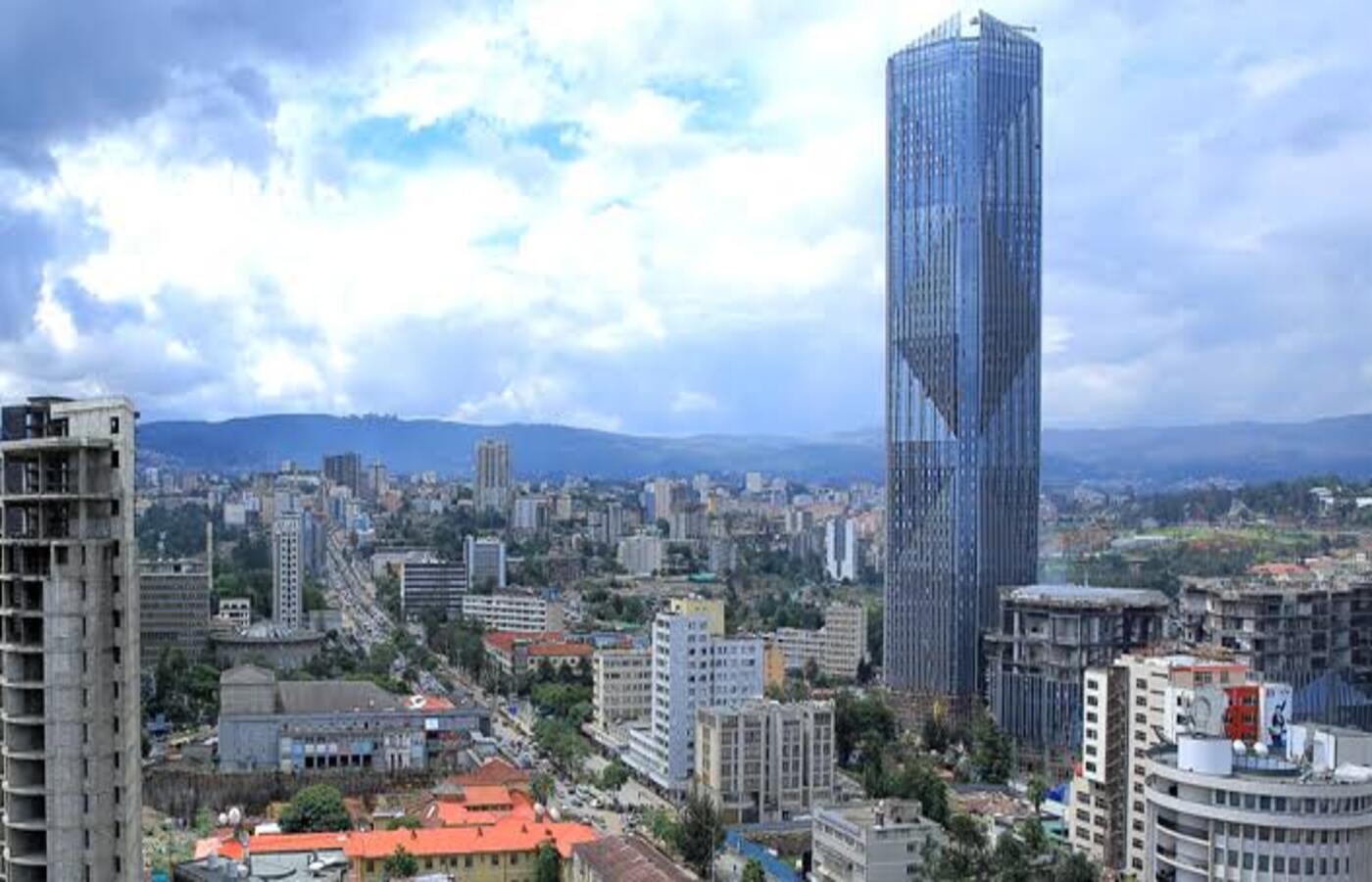
Ethiopia’s banking boom is remaking Addis Ababa’s skyline—but leaving small businesses in the dust
When Mulgeta Abebe walks into the headquarters of Nib Bank, a glinting tower planted on one of Addis Ababa’s busiest corridors, he sees a building that aspires to modernity. He has worked there long enough to remember its beginnings. The exterior, he says, is hard to fault. The interior, rather less so. Behind the polished marble and pricey cafés, “the cost throws my budget out of balance relative to my monthly income,” he explains. The grandeur, in his view, has outrun affordability.
A short distance away, in the skyscraper of the Commercial Bank of Ethiopia (CBE), the country’s biggest lender, Daniel Wogayehu feels similarly underwhelmed. The tower is touted as East Africa’s tallest. But Daniel complains of “basic infrastructure problems” and services that fall far short of the fees the surrounding hotels charge. “My organisation’s principle is to boast of having the ‘largest building in East Africa’,” he says. “But what I expected was something different.”
Such disillusionment echoes across Emperto—Addis Ababa’s self-styled “Financial District”—where the headquarters of dozens of banks now loom over what were once modest neighbourhoods. The construction boom has generated curiosity, pride, and resentment in equal measure. Public ire surged when one bank sought 600 million birr merely to rebrand its logo. Abay Bank’s extravagant spending on commercial signage caused similar irritation.
The core complaint goes deeper: these expensive towers, critics argue, deliver little in the way of economic vitality. Their inauguration ceremonies dazzle; their utility does not.
Bank executives insist the towers reflect sound business planning, capital adequacy rules, and competition for talent. Industry veterans whisper that the race is also about prestige: in a crowded market of more than thirty banks, a skyline presence seems a quicker differentiator than innovation.
Bank profitability remains strong, and most institutions meet the National Bank’s capital requirements. But with talk of future mergers—or even forced consolidation—some wonder what will become of these vast headquarters if the sector shrinks. Ethiopia may soon face the oddity of gleaming, largely redundant towers dotting its capital.
For now, the district is lively but oddly incomplete. “Despite the large sums of money circulating in the area, I am not convinced that the expected job opportunities are materialising around the banks’ skyscrapers,” says Berhanne Meskel, a business consultant. Far from stimulating new commercial life, he argues, the district has “amplified the existing congestion”. He recalls the small firms displaced by construction—bookshops, cafés, local service providers—that never returned.
Neima Nesredin sees both sides. She runs a small collective of fast-food shops behind Ethiopia Hotel. “Our income from CBE employees has increased,” she says. But she agrees that many small and medium-sized firms were pushed out by the city’s building spree. Demand may be high, but room for new entrants is not.
Observers say banks made little effort to cultivate complementary enterprise—no incubation hubs, no affordable rental spaces, no innovation clusters. The towers, they note, may be tall but “the foundations” of a wider ecosystem remain conspicuously thin.
Some Ethiopian academics argue that the sector’s priorities are backwards. Banks, says Atlaw Alem of Addis Ababa University, ought to digitise their front, middle and back offices and outsource non-core processes instead of sinking capital into cement and glass. “Above all, the priority should have been for banks to open their doors—or keep them open—for new and growing startups,” he argues.
Ethiopia’s entrepreneurial landscape is full of potential but plagued by failure. Many founders with promising ideas simply run out of support. Policy debates have long acknowledged the need for incubators and business infrastructure. Yet the financial district’s towers have not sprouted the clusters of small firms, service providers and business advisers that one might expect around such an ambitious quarter.
Elsewhere, the model is different. Abdulmenan Mohammed, a finance expert based in Britain, cites London’s Liverpool Street district. Once dominated by bank headquarters, it evolved into a dense commercial hub filled with advisers, cafés, retailers and service outfits. Sky-high rents forced efficiency and encouraged complementary businesses. Addis, he argues, has not followed suit. Its banks “suffer from a major shortfall in stimulating businesses in their vicinity”.
From Mexico Square to the Ethio Telecom headquarters, the new district’s tight zoning, high rents and inflexible planning make it almost impossible for smaller firms to gain a foothold. Even professionals working in the towers complain that incubator spaces and meeting facilities are scarce.
Hospitality specialist Ashenafi Abera believes the mistake is structural. The district, he says, was planned without concern for mixed-use design. “The area’s landscape is not suitable for small and medium businesses,” he argues. The towers were constructed “in isolation”, ignoring the integrated workspaces that clusters typically require.
Bank bosses offer a different explanation. In a volatile economy, they say, property is security. “In an unpredictable economy, commercial banks are forced to build their own assets,” says Wolde Boutle, CEO of Gedaa Bank. The buildings reassure shareholders; they provide long-term stability in a market that offers precious little.
He denies that the National Bank explicitly pushed institutions to build, though he acknowledges a “positive pressure” unique to banks compared with other share companies.
Yet even insiders admit what outsiders observe: Ethiopia has no coherent strategy for linking banking growth with the broader economy. Outsourcing, fintech investment, SME support, and startup development remain undercooked. From the long-established CBE to the newest market entrants, few have built ecosystems beyond their lobby walls.
The fault, experts note, is not the banks’ alone. City authorities and national policymakers have failed to design a financial district that encourages clustering, complementary industries or business-friendly zoning. Without that, the capital flows swirling through Addis’s towers remain trapped inside them.
For all the money spent, the district has produced a disjointed market system. Small firms have vanished. Informal suppliers have been pushed aside. The hoped-for multiplier effect—the economic logic behind such projects—has not materialised.
The paradox is jarring: a banking sector flush with capital, planting extravagant headquarters across the city, yet unable to nurture the small enterprises on which any dynamic financial system ultimately depends.
Ethiopia’s skyline is rising fast. But unless the foundations of its financial ecosystem keep pace, these towers may stand as monuments not to progress, but to missed opportunity.




