

A packed night in Addis Ababa suggests that combat sports may have a market. Turning noise into a durable business will be the harder contest.
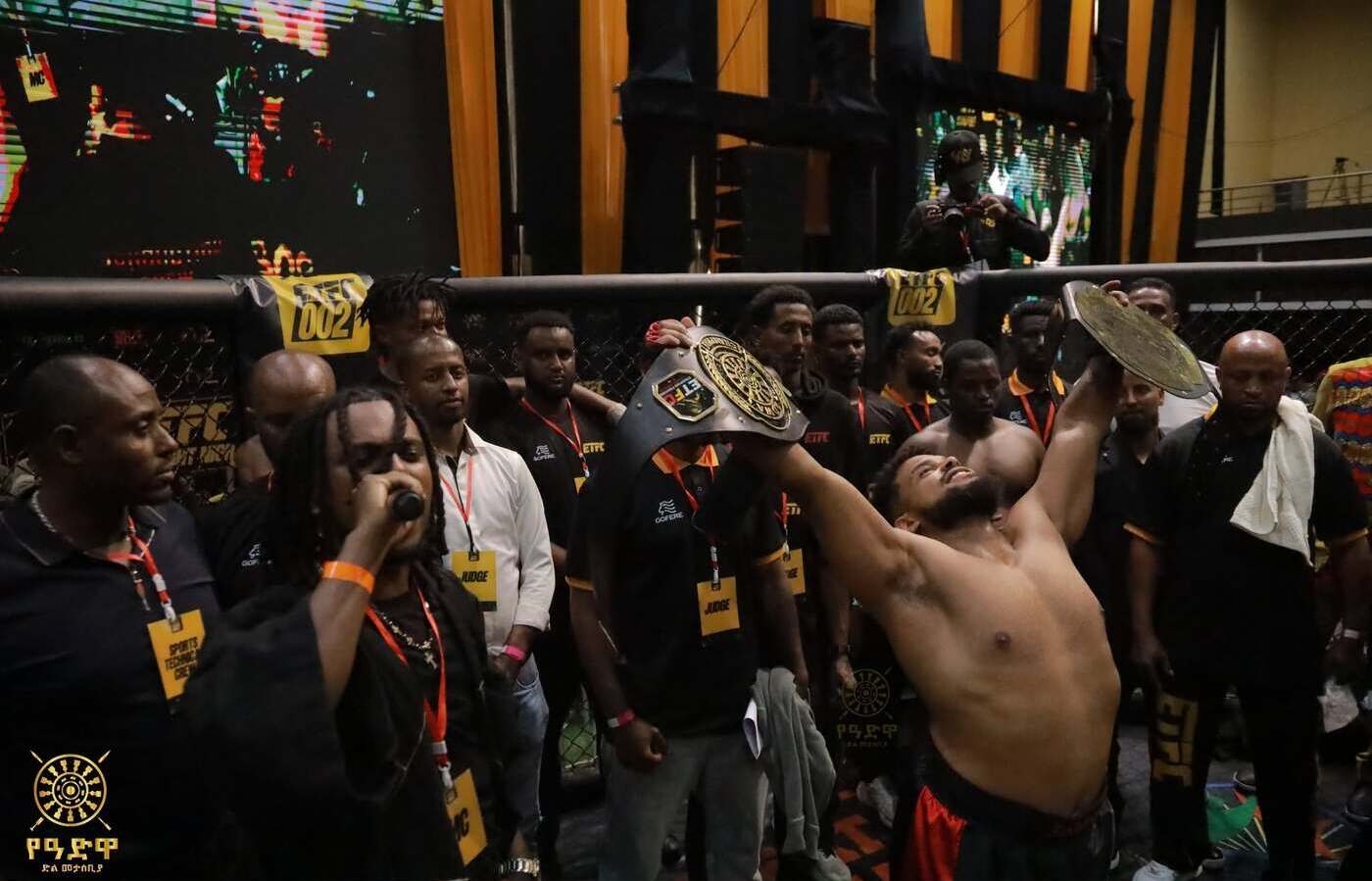
On August 27th the Adwa Victory Memorial Museum in Addis Ababa acquired an unlikely new exhibit: a cage. Twenty-two athletes contested 11 bouts of boxing, Muay Thai and mixed martial arts. Cameras rolled, sponsors displayed their wares and a large crowd waited for the evening’s main attraction. When Johnny Jujitsu took Sedo to the ground and controlled the contest, the sporting question was settled. The commercial one was only beginning.
The organisers of ETFC 002 called the event Adwa Fight Night. Its success has encouraged talk of a new Ethiopian sports industry. Such excitement is understandable. It is also premature. Noise is an unreliable accountant. A full-looking hall can demonstrate curiosity, even enthusiasm; it cannot by itself reveal whether a promotion can cover fighters’ purses, insurance, production, venue hire and marketing—and then do so again three months later.
Still, the evening mattered. This was not the birth of Ethiopian combat sports, nor even ETFC’s first card. It was something more useful: a stress test. A private promoter gathered several fighting disciplines under one name, built a rivalry that travelled through gyms and social media, sold different levels of access and tried to turn athletes into entertainment. Ethiopian sport has staged many competitions. It has created far fewer products.
Mixed martial arts is itself the product of such combinations. Contests between different fighting styles long predate the modern label: wrestlers, boxers and practitioners of Asian martial arts tested one another under varying rules, while Brazil’s vale tudo tradition made cross-style fighting a popular spectacle in the 20th century. What changed in the 1990s was not the discovery that people could punch and grapple in the same contest. It was the creation of a television format that could package the contest, repeat it and sell it.
The decisive commercial moment came in Denver on November 12th 1993. The first Ultimate Fighting Championship placed specialists from boxing, kick-boxing, wrestling, savate and Brazilian jiu-jitsu in an eight-man tournament intended to discover which style worked best. Royce Gracie, the smallest-looking man in several of his matches, submitted three opponents in one night. Early UFC events were deliberately unruly and attracted political hostility. The adoption of weight classes, timed rounds, medical requirements and the Unified Rules around the turn of the century helped transform a televised curiosity into a regulated sport. Fighters then evolved too: the successful ones ceased to represent a single discipline and learned to strike, wrestle and grapple. That synthesis is what modern MMA means.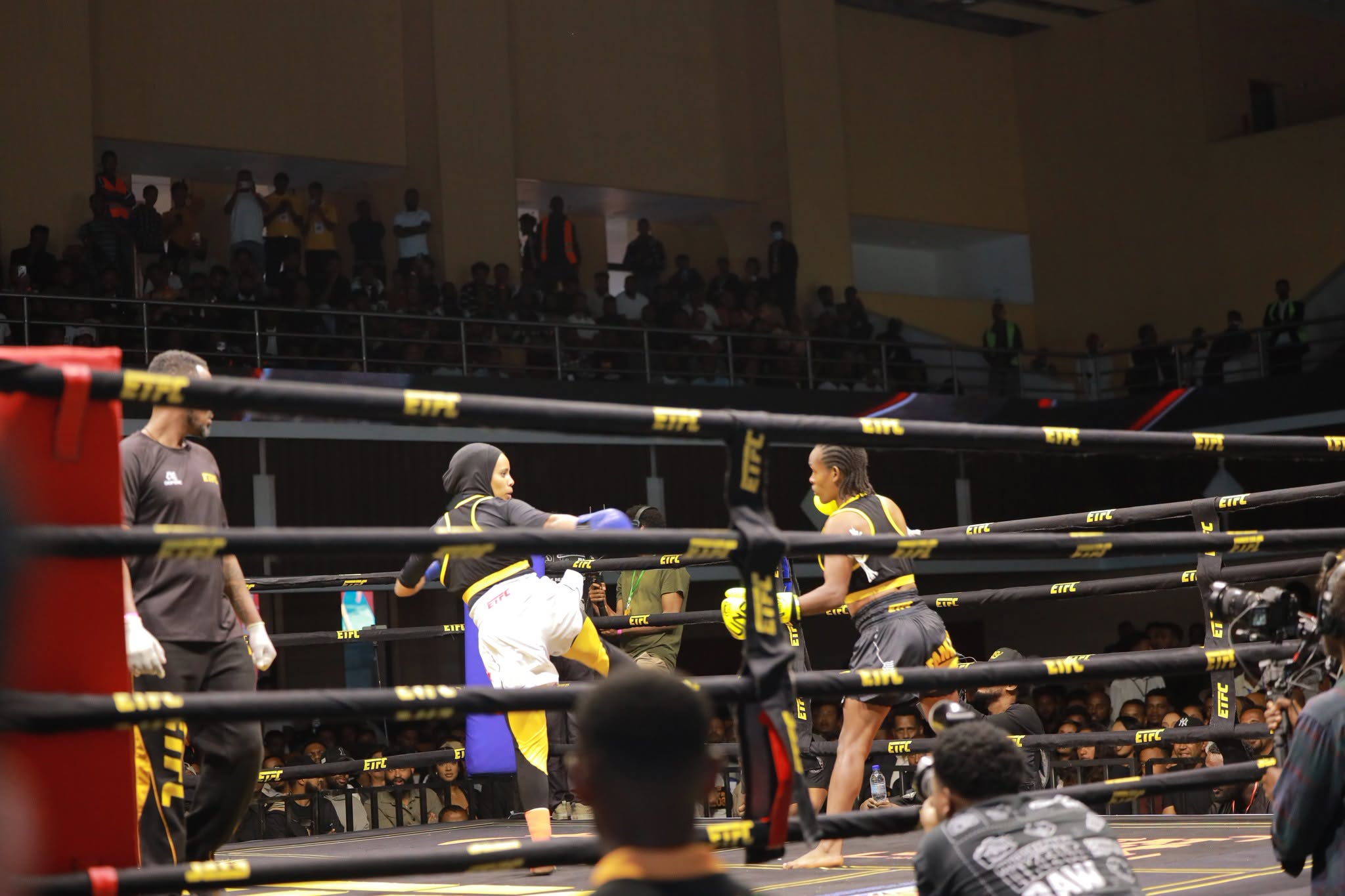
The distinction is important. A competition produces a winner. A promotion must produce an audience before the first bell and retain it after the last. That requires stories, personalities, dependable schedules and good pictures. It also requires payment. Tickets for Adwa Fight Night were advertised from 4,000 birr for early entry to 100,000 birr for premium ringside seats. ETFC has not published audited sales, attendance or profit figures, so the size of demand remains uncertain. Yet the price ladder tested whether the same event could serve ordinary fans, affluent enthusiasts and corporate guests.
Around the cage sat the beginnings of a wider business. M-PESA, Gofere and Abbay TV were named among the event’s partners. Pre-fight reporting said the organisers expected roughly 3,000 spectators and international distribution through DAZN. The combination matters because tickets are only one source of revenue. A serious fighting promotion can sell sponsorship, broadcasting, hospitality, merchandise, licensing, gym memberships, athlete endorsements and a steady stream of digital clips. The fighters are the product’s core; much of the money is made around them.
That would be a substantial change. Ethiopian combat sports have long been administered rather than marketed. Federations organised tournaments, sponsors occasionally paid a bill and athletes carried much of the cost. Dereje Asrat, a boxing professional and former athlete, offers a bruising diagnosis: “The sport has been held back for 30 or 40 years by bureaucrats who monopolized everything. They took the sport nowhere. The athlete is bankrupt, the federation is bankrupt, the coach is bankrupt. They've been swimming in a pact of shared poverty, 'you scratch my back, I'll scratch yours.'” The indictment is sweeping, but the economics are familiar: a system that distributes scarcity among athletes, coaches and administrators has little capacity to invest in any of them.
ETFC’s novelty is institutional, not athletic. Ethiopia has never lacked tough fighters or committed coaches. It has lacked the machinery that turns their effort into a saleable property. Promoters have an incentive to improve production, cultivate stars and persuade sponsors to return. They also bear the risk when ticket sales disappoint. That commercial discipline is uncomfortable, but useful. Federations seldom go bankrupt because an audience stayed home; promoters can.
The temptation is to compare Ethiopia with the Ultimate Fighting Championship, the giant of global mixed martial arts. There is no audited figure for the value of MMA as a whole: the sport is dispersed among promotions, broadcasters, gyms, equipment makers and sponsors, and market-research estimates often measure different things. The cleanest benchmark is therefore the UFC itself. It was assigned an enterprise value of 12.1 billion US dollars when it was combined with WWE in 2023. TKO’s 2025 accounts show that the UFC generated 1.502 billion US dollars in revenue and 851 million US dollars in adjusted earnings from 42 events. Media and content supplied 907.7 million US dollars of that revenue—more than live events, hospitality and merchandise combined.
The next rights cycle makes the point still more starkly. A seven-year American agreement with Paramount that began in 2026 is worth an average of 1.1 billion US dollars a year, or 7.7 billion US dollars over its term. UFC says its programming reaches almost 950 million broadcast and digital households in more than 210 countries and territories. These figures establish that elite MMA is a multi-billion-dollar global media business; they do not make every national promotion a billion-dollar company. Calling Ethiopian MMA a 10-billion-dollar opportunity would mistake one dominant company’s valuation for the size of an unmeasured local market. The proper lesson is more modest: at scale, the valuable assets are recurring events, media rights, sponsors and intellectual property. The gate is important; the camera is more so.
Africa is no longer merely exporting fighters into that global system. South Africa has the continent’s deepest professional infrastructure. Johannesburg-based Extreme Fighting Championship has staged regular cards since 2009 and developed fighters who moved into the UFC. Yet even South Africa illustrates the limits of the market: despite producing a UFC champion and sustaining a domestic promotion, it has not hosted a UFC event, partly because suitable indoor venue capacity and globally priced tickets remain difficult. Maturity in African MMA is relative, not complete.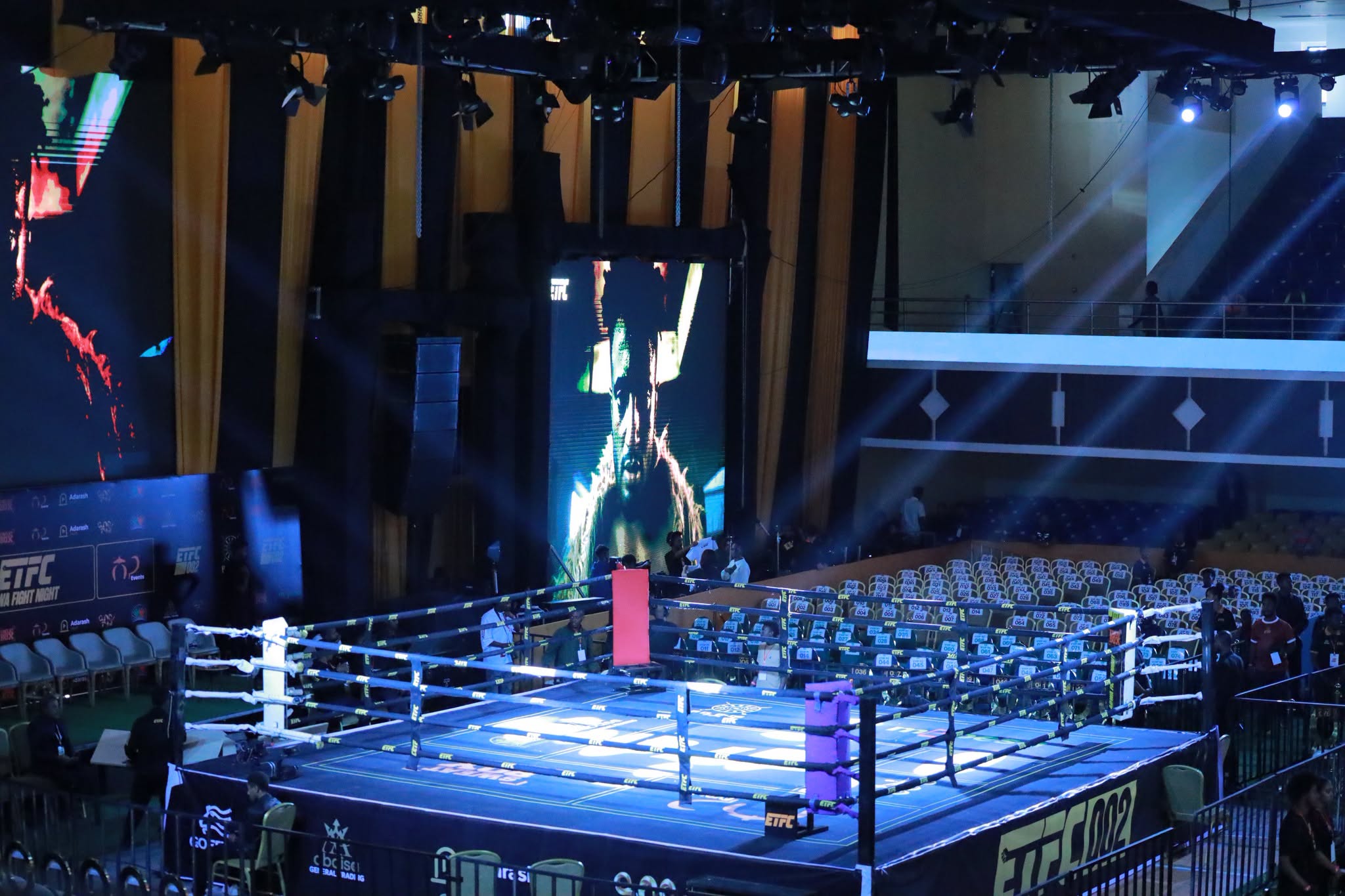
A second layer is now emerging across the continent. Nigeria’s African Knockout began as a reality programme in 2020, developed into regular fight nights and secured a pan-African broadcast agreement with SuperSport in 2025; its roster has drawn athletes from more than 20 countries. The Professional Fighters League launched an African tournament in 2025, staging events in Cape Town, Johannesburg, Kigali and Cotonou, before opening its 2026 season in Pretoria and taking a card to Lagos. South Africa supplies the strongest domestic base; Nigeria supplies population, star power and media ambition; Rwanda and Benin have shown that international cards need not remain in the continent’s largest economies. But the circuit is still thin. Regular calendars, recognised regulation, medical capacity and broadcast money are concentrated in a handful of markets.
Ethiopia’s demographics provide grounds for optimism and caution in roughly equal measure. The country had more than 135 million people in 2025 and an unusually young population. But only about 22 percent of Ethiopians used the internet in 2024. An online feud can appear national while reaching a relatively small, urban and connected public. Viral views measure attention, not willingness to pay. Asechalew Hailemariam, president of the Addis Ababa Boxing Federation, sees a broader recovery: “Boxing was stagnating a year ago. Recently, it has been gaining new fans. The expansion of sports infrastructure has supported this growth.” That is encouraging, though investors will still want less glamorous numbers: tickets sold by category, viewing time, repeat customers, sponsorship renewals and the cost of acquiring each fan.
The first test is repetition. ETFC’s founder, Getachew Melese, acknowledges how hard it was to get even this far. “We had been trying for several years, but for various reasons, we couldn't succeed,” he says. “The event at Adwa showed us just how popular it is. I see this as the birth of a new era.” Birth metaphors are irresistible after a successful launch; infancy is the more useful comparison. A calendar of one card every three months would allow fighters to train towards predictable dates, broadcasters to schedule a recurring programme and sponsors to buy a season rather than an evening. It would also expose weak economics. Novelty can fill one venue; habit must fill the next four.
The second test is safety. Medical examinations, trained officials, ringside doctors, ambulances, insurance, anti-doping rules and post-fight care are not bureaucratic accessories. They are part of the product. A promoter that cuts corners may save money once and destroy trust for years. Parents, brands and broadcasters are unlikely to support a sport that treats fighters as disposable.
The fighters, meanwhile, need an economy between bouts. A purse every three months will not create a profession if athletes must still finance their own nutrition, coaching and medical care. Gyms, instruction, endorsements and content can provide additional income. Managers can help negotiate contracts and build careers. Without such scaffolding, a lively domestic circuit may merely prepare its best performers to leave for richer markets.
Government has a role, though not the starring one. Asegdew Hailegiorgis describes an activist official agenda: “We are working to normalize the sports business. The government is conducting studies, producing coaches, and providing technical support. The Ministry of Culture and Sport is pushing for legislative backing to institutionalize the sports business.” The useful end of that work is clear rules: safety standards, licensed officials and venues, enforceable contracts and fair competition. Federations should regulate the sport without also trying to dominate its promotion. When the regulator, promoter and gatekeeper are the same institution, the old pact of poverty is likely to reappear in a smarter tracksuit.
There is also talk of “fight tourism”. Addis Ababa has good air links, a large diaspora and a growing events business. But tourism is not created by adding the word to a press release. It requires regional match-ups, dates announced well in advance, reliable ticketing, travel packages and promotion beyond Ethiopia. The Adwa museum supplied theatre and symbolism. A tourism industry will need more prosaic things, including suitable venues and hotel bookings.
For sponsors, the shift must be from charity to investment. Getachew identifies the missing capital plainly: “The lack of wealthy investors willing to put money into the sports business, and the fact that it hasn't been viewed from an investment perspective, is why we haven't seen substantial results.” Dereje’s prescription is more expansive: “It must be a platform where giant companies promote their products, TV stations compete for broadcasting rights, investors come with venture capital, and athletes can rise above poverty in a single night.” Companies should indeed demand audience profiles, content rights, category exclusivity and evidence of exposure; promoters should be able to supply them. But the promise that a single night can lift an athlete from poverty depends on a business built patiently between such nights.
Adwa Fight Night therefore proved less—and more—than its enthusiasts claim. It did not establish the value of an Ethiopian MMA industry. It did show that promoters can assemble the ingredients of one: athletes, spectacle, paying customers, brands and distribution. “The result was wildly successful,” Dereje concludes. “A sport that had been in a 'coma' for years came alive.” That is a fair description of the mood two days on; it is not yet a balance-sheet verdict. Johnny won the fight in the cage. The contest outside it will be decided by calendars, contracts, doctors, broadcasters and spreadsheets. The crowd has done its part. The next round belongs to the accountants.




