

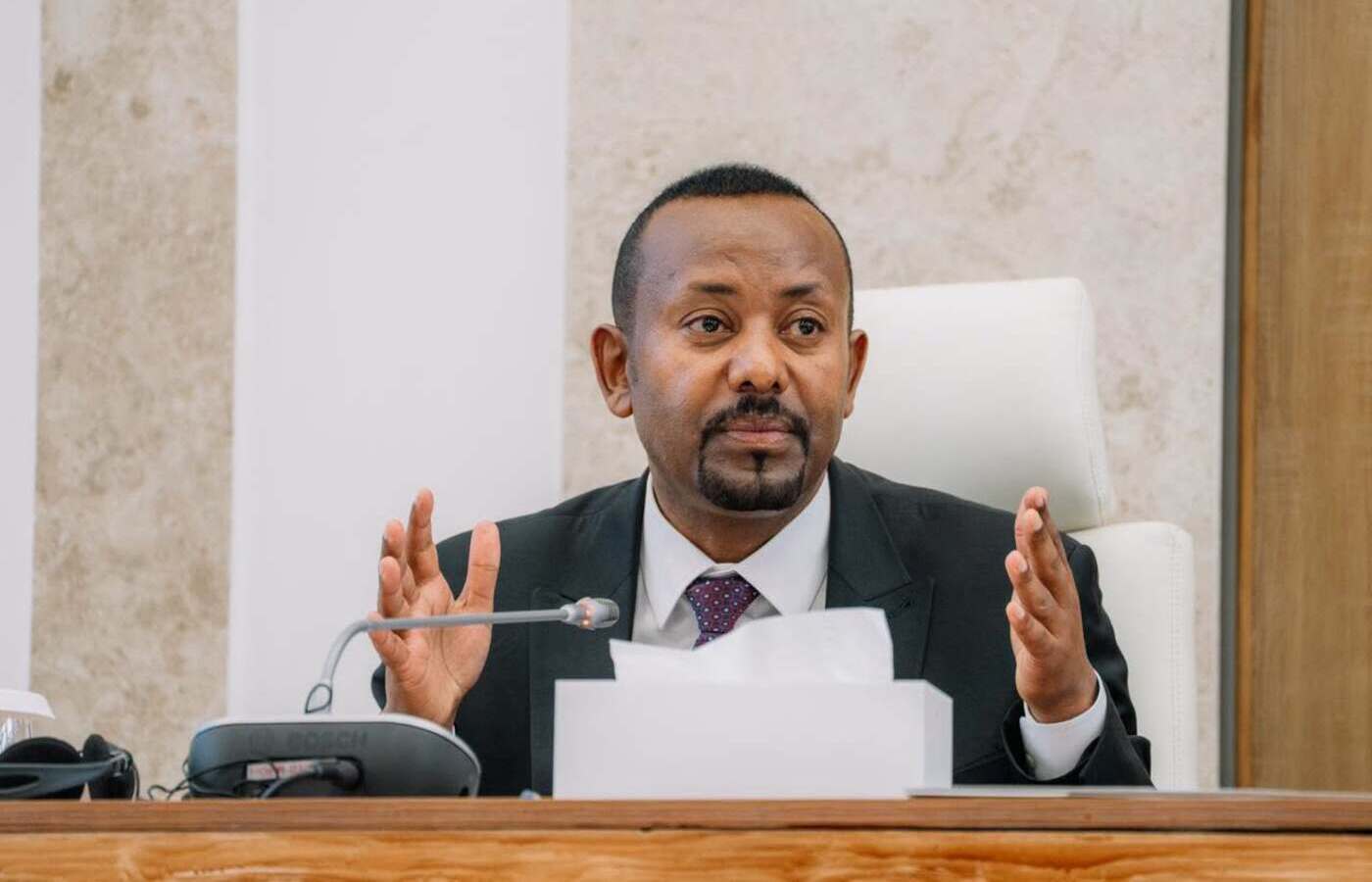
Prime Minister Abiy Ahmed (PhD) and parliamentarian Dessalegn Chanie (PhD) offered contrasting assessments of Ethiopia’s economic situation during a parliamentary session, with the Prime Minister pointing to business expansion, industrial growth, health-sector investments and rising consumption as signs of progress, while the lawmaker warned that inflation and declining purchasing power were eroding the country’s middle class.
Speaking during the presentation of the government’s annual performance report for the fifth year of the sixth parliamentary term, Dessalegn criticised the government’s economic narrative, arguing that official figures were failing to reflect the daily realities faced by citizens.
“Let the government stop covering the reality of people’s lives with games of numbers,” Dessalegn said.
The lawmaker said the macroeconomic reforms introduced by the government had contributed to sharp increases in prices, weakening the purchasing power of millions of citizens and creating what he described as a hidden hunger that was diminishing the middle class.
Dessalegn also accused the government of focusing on economic achievements while overlooking continued security challenges and restrictions in the political space.
Responding to concerns over economic conditions, Prime Minister Abiy Ahmed rejected the suggestion that Ethiopia’s economic reforms had weakened productive activity, pointing instead to expanding businesses, rising domestic production and increased investment as evidence of economic transformation.
“Although businesses complain about taxes, they are expanding,” Abiy said, arguing that continued business growth reflected underlying economic activity.
He also pointed to visible changes in consumption patterns, including the increasing number of luxury vehicles in the country, as evidence that parts of the economy were improving.
Beyond consumption, the Prime Minister highlighted industrial output as evidence of a structural shift in the economy. “Products that previously required close to 5 billion US dollars in foreign currency have now been replaced by domestic production,” Abiy said.
Speaking about the performance of the economy and industry during the parliamentary session, Abiy said major changes had been recorded, particularly in construction inputs and manufacturing.
He said the manufacturing sector registered 20.3 percent growth and that the government was working to generate 1 billion US dollars from industrial exports in the coming year.
The Prime Minister pointed to recent investments in manufacturing, including a newly inaugurated ceramic factory and another large factory expected to begin operations soon. He added that structural improvements had been made in cement, glass and metal production.
Abiy said the expansion of existing cement factories, together with the entry of the new Lemi Cement factory into production, had contributed to a 16 percent increase in cement supply during the year.
He added that overall industrial sector growth was expected to reach 12.7 percent, describing the performance as evidence of the impact of strategic interventions in the sector.
The Prime Minister also highlighted developments in the pharmaceutical sector as part of the government’s efforts to expand domestic production capacity. He said Ethiopia had increased local medicine manufacturing capacity from four percent to between 44 percent and 45 percent.
“Nearly half of the medicines used in the country can now be produced domestically,” Abiy said.
The Prime Minister said the government spent 70 billion birr on medicine procurement during the budget year, while more than 60 billion birr was spent on purchasing medical equipment.
He said improvements in pharmaceutical production, regulatory systems and health infrastructure had contributed to Ethiopia receiving Maturity Level Three recognition from the World Health Organisation’s medicine regulatory framework.
Abiy said the recognition, achieved by only a limited number of African countries, would support Ethiopia’s efforts to expand pharmaceutical production and access international export markets.
He added that several modern medical facilities had been introduced, including the expansion of St Paul’s Hospital, which he said had been upgraded to accommodate an additional 1,000 beds.
The exchange highlighted competing views over how Ethiopia’s economic performance should be measured — whether through investment, industrial expansion, business growth, improvements in domestic production and consumption patterns, or through household purchasing power and living costs.
Dessalegn further criticised the government’s education performance, citing the reported high failure rate among grade 12 students and calling for accountability within the education sector.
He also questioned the government’s reporting on humanitarian needs, arguing that reducing the number of aid recipients through data verification did not necessarily reflect the scale of challenges facing vulnerable communities.
As a solution, the lawmaker called on the government to shift focus from projects such as corridor development and resort construction towards productive industries, social protection programmes and a broader political dialogue.
He also urged the Prime Minister to provide a clear timetable and commitment for addressing peace and political challenges in the country.




