

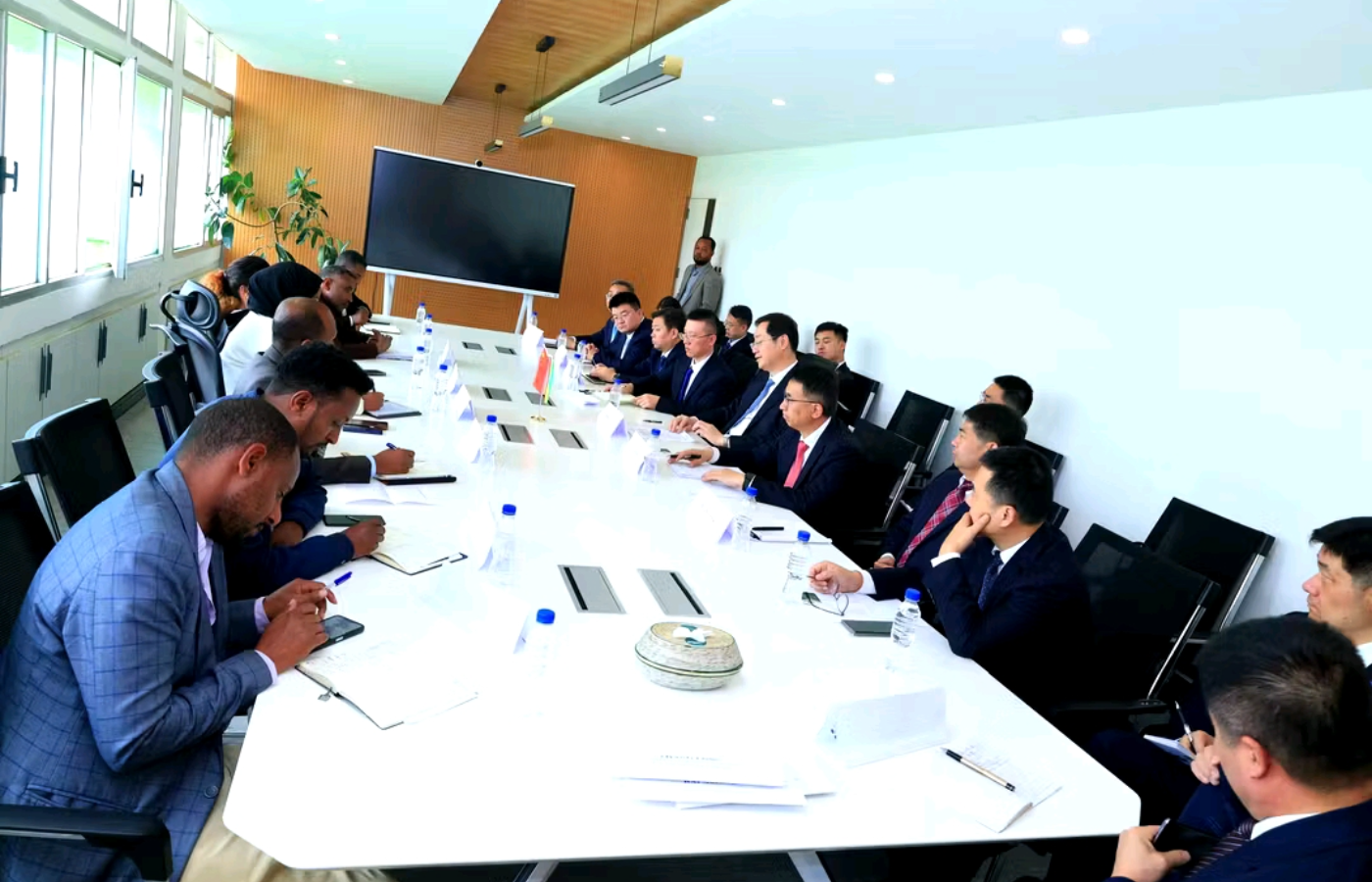
Ethiopia and China’s Shaanxi Province have begun talks to narrow the widening trade gap between the two economies, as officials from both sides explore ways to promote fairer and more sustainable economic ties.
Trade and Regional Integration Minister of State, Yasmin Wohabrebbi met with Wang Zhiyao, Vice Governor of Shaanxi Province, in Addis Ababa for discussions focused on boosting exports, investment, and industrial cooperation. The meeting followed the Ethiopia–China Economic and Trade Conference held earlier this week.
Yasmin said Ethiopia’s trade with China remains heavily skewed, with exports valued at around 105 million US dollars against imports exceeding 6.2 billion US dollars during the 2024/25 fiscal year. She urged Chinese buyers to increase imports of Ethiopian products and called on Shaanxi investors to participate in priority sectors such as manufacturing and agro-processing.
She also encouraged Chinese firms to leverage opportunities under the African Continental Free Trade Area (AfCFTA), noting that Ethiopia’s growing industrial base and regional connectivity offer an attractive entry point to the wider African market.
Shaanxi’s economy has shown strong growth, with the province recording foreign trade of 86.2 billion yuan in the first three quarters of 2025, surpassing the previous year’s 57.9 billion yuan. Its exports are supported by robust manufacturing and foreign-funded enterprises, while imports include machinery, equipment, chemicals, and raw materials, reflecting the province’s industrial and logistical capacity.
Vice Governor Wang said Shaanxi investors are showing rising interest in Ethiopia’s industrial sector, particularly in areas such as electro-mechanical production and equipment supply. He emphasised that Shaanxi companies are keen to strengthen trade links and explore long-term investment projects.
Officials from both sides agreed to continue technical discussions aimed at diversifying trade, expanding investment flows, and supporting technology transfer as part of a broader effort to create a more balanced economic partnership.




