

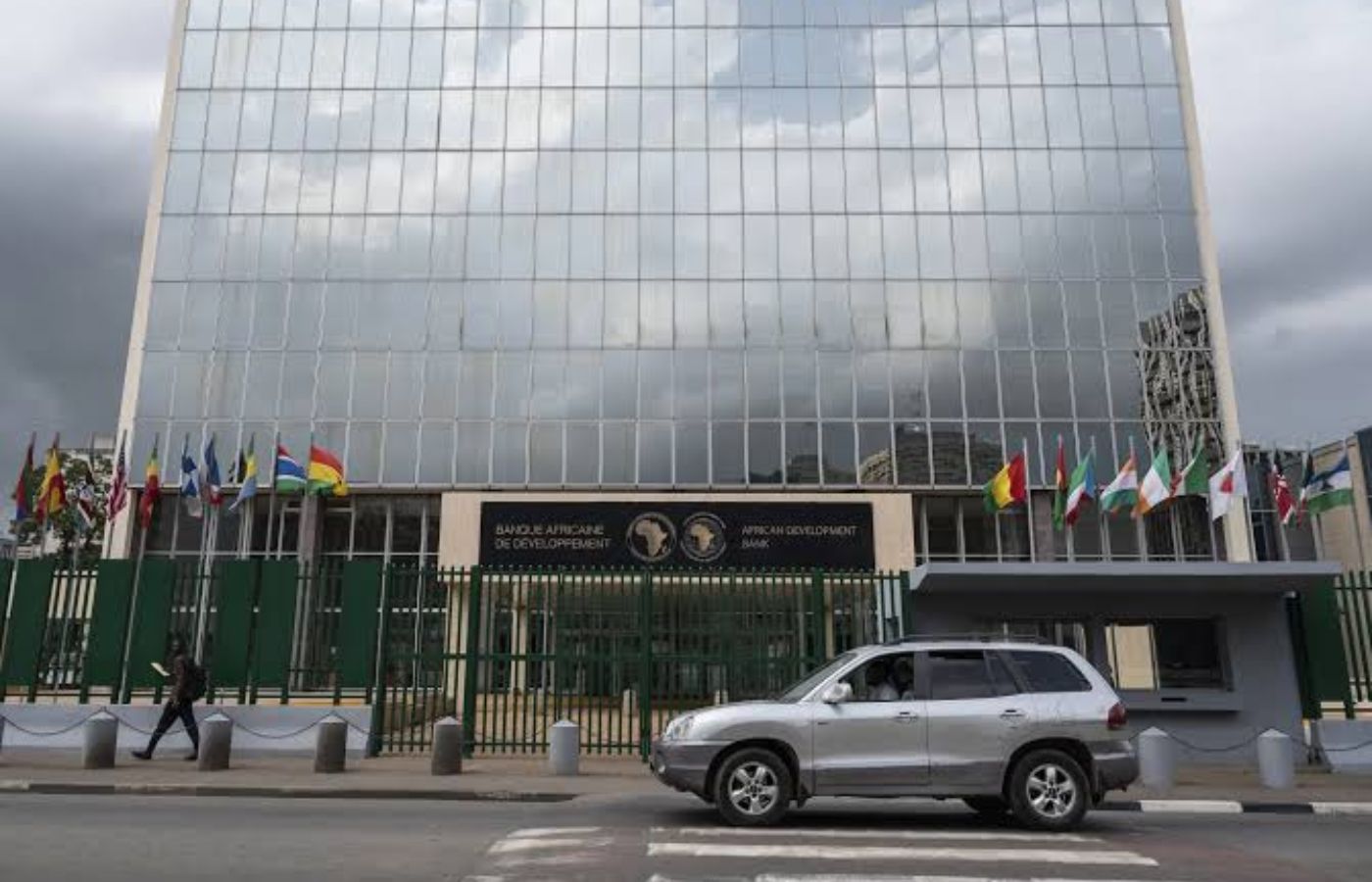
Ethiopia’s pension funds are accumulating savings in an economy desperate for long-term capital, yet much of that money is flowing back into government debt and state-owned banks, limiting its ability to finance productive investment, according to the African Development Bank.
The funds’ heavy concentration in domestic government securities and deposits at state-owned banks exposes them to inflation and fiscal risks and has resulted in persistently low real returns, the AfDB said in its 2026 Country Focus Report on Ethiopia, titled “Mobilizing Ethiopia’s Development Financing at Scale in a Fractured World.”.
The problem is not simply a shortage of money. The country’s economy generated substantial new resources during its recent recovery: real GDP grew 9.8 percent in FY2024/25, export earnings increased 119 percent and remittances reached about 7.1 billion US dollars in 2024. The difficulty is finding financial channels capable of turning those resources into long-term investment.
Pension funds are one of the clearest examples of that failure.
The AfDB says Ethiopia lacks a modern prudent-person and risk-based prudential framework for pension investment, while asset-liability management capacity remains weak. Governance and disclosure are also limited.
The country does not routinely publish aggregate pension assets, liabilities, investment returns, duration mismatches or portfolio allocations by asset class. Without standardised, audited and regularly published data, the bank says it is difficult to assess funding adequacy, intergenerational equity or investment performance against appropriate benchmarks.
That opacity matters because pension funds can become one of the largest pools of patient capital in an emerging economy. In Ethiopia, however, their potential remains largely untapped.
A captive source of domestic finance
The Private Organizations Employees Social Security Agency has expanded alongside formal employment, but pension assets remain small relative to GDP. The AfDB notes that pension assets are estimated at about 13 percent of GDP in Kenya and 9 percent in Uganda, while Ethiopia lacks a reliably published comparable figure.
Regulatory conservatism, shallow capital markets and a shortage of investable instruments have pushed pension funds towards government securities and state-owned banks. Macroeconomic volatility, debt distress and foreign-exchange shortages have further discouraged diversification into private, long-term or foreign assets.
The AfDB says the result is that pension funds function largely as "captive domestic financiers", generating constrained risk-adjusted returns while doing little to deepen capital markets or support wider development-finance objectives.
That creates a circular problem. The state needs domestic savings to finance development, but the financial system is also heavily exposed to the state.
Banks and microfinance institutions account for nearly 99 percent of financial assets. The Commercial Bank of Ethiopia alone holds 51 percent of banking assets, five times the amount held by the next-largest bank.
Pension money therefore has few obvious destinations beyond the institutions that already dominate the financial system.
Ethiopia needs capital, not just money
The problem becomes more consequential when measured against the scale of Ethiopia’s investment ambitions. The lender estimates that the country needs to mobilise 608 billion US dollars by 2030. Structural transformation requires additional financing equivalent to 13.2 percent of GDP annually.
Climate commitments add another enormous requirement. Ethiopia’s nationally determined contributions carry financing needs of about 316 billion US dollars, while its long-term low-emissions development strategy requires about 5 billion US dollars annually between 2025 and 2050.
No government budget can comfortably finance requirements of that scale.
The government has improved domestic revenue mobilisation, but the tax-to-GDP ratio was only about 7.8 percent in FY2024/25, up from 6.8 percent a year earlier. Ethiopia is targeting 15 percent.
The fiscal deficit narrowed to about 1.6 percent of GDP in FY2024/25, but the AfDB expects it to widen to 2.5 percent in FY2025/26, partly because of higher debt-service costs, security spending and weak tax administration.
That makes private and institutional capital increasingly important. But pension funds cannot become major investors in infrastructure, companies or other productive assets without a sufficiently deep market in which to invest.
The missing markets
Ethiopia has begun building that market.
The Ethiopian Securities Exchange has created an institutional platform through which companies can eventually raise equity and debt outside the banking system. The AfDB describes the exchange as an important structural milestone but says Ethiopia needs to establish reliable trading, settlement, custody and price discovery before expanding into corporate, municipal and thematic securities.
That distinction is crucial. An exchange does not create capital by itself. It creates a mechanism for allocating capital.
Pension funds need investable companies, reliable financial statements, enforceable contracts and predictable regulation before they can move meaningfully beyond government securities and bank deposits.
Ethiopia currently lacks much of that depth.
There is also no routine public picture of the pension system itself. The absence of regular information on assets, liabilities, returns and portfolio risks makes it harder for policymakers to judge whether retirement savings are being deployed efficiently or whether the system is accumulating risks that could surface later.
The same problem appears in diaspora finance
Ethiopia has already demonstrated that it can attract external household savings.
Remittances reached about 7.1 billion US dollars in 2024, more than the roughly 4 billion US dollars received in foreign direct investment and close to the 5.4 billion US dollars in official development assistance.
But much of that money goes towards consumption, housing, healthcare and education rather than productive investment.
The AfDB attributes part of the problem to a shortage of trusted investment products and concerns about policy reversals, property rights and contract enforcement. It points to regulated diaspora funds, investment-linked savings products and SME co-investment platforms as potential channels.
Again, the issue is not necessarily the availability of money. It is the credibility of the instruments through which money can be invested.
Debt makes the allocation problem harder
Ethiopia’s debt position reinforces the constraints facing institutional investors.
Public and publicly guaranteed debt was estimated at 71.34 billion US dollars, equal to 34.8 percent of GDP, while external debt stood at 31.3 billion US dollars. External debt service absorbed about 15 percent of government revenue between 2020 and 2023.
Pension funds heavily invested in government securities therefore face an obvious concentration of risk: their savings are tied to the fiscal position of the same government that needs those funds to finance its development programme.
The AfDB’s answer is not to push pension funds abruptly into riskier assets. It is to improve the financial infrastructure around them: stronger regulation, better disclosure, deeper markets, better risk management and a wider supply of investable assets.
Growth is exposing the weakness
The irony is that the problem is becoming more visible precisely because Ethiopia’s economy is recovering.
Mining grew 205.4 percent in FY2024/25. Manufacturing expanded 10.3 percent and agriculture 7.3 percent. The current-account deficit fell to 0.2 percent of GDP from 2.9 percent, while inflation declined to 15.8 percent from 26.6 percent.
The government has also introduced a floating exchange-rate regime, moved monetary policy towards interest rates, eased foreign-exchange restrictions and opened parts of the financial system to international competition.
Yet the financial architecture has not developed at the same speed.
The AfDB describes the central constraint as one of "credibility, coordination, and execution rather than the scarcity of instruments".
That diagnosis extends beyond pensions. Ethiopia’s renewable natural capital is estimated at about 195.8 billion US dollars, while hydropower potential stands at 48,030 megawatts. Less than 11.7 percent of that hydropower potential has been exploited and less than 1 percent of its more than 10,000 megawatts of geothermal potential has been developed.
Public-private partnerships, meanwhile, could mobilise private capital but can also leave the government exposed through guarantees and other contingent liabilities.
Across all these areas, the same constraint keeps appearing: assets and money exist, but the institutions needed to turn them into investable projects remain weak.
The AfDB forecasts Ethiopia’s economy will grow 7 percent in FY2025/26 and 8.5 percent in FY2026/27, with inflation falling to 14.7 percent and 8.7 percent respectively.
The test of the next phase of reform will therefore be less about finding another source of finance than about changing where existing savings go.
For Ethiopia’s pension system, that means moving from a model in which retirement savings are largely absorbed by government securities and state-owned banks towards one in which they can safely become long-term investors in the economy.




