

The African Development Bank (AfDB) warns that Ethiopia’s rapid economic growth faces significant risks from persistent inflation and currency volatility, placing the country alongside other vulnerable economies in Africa, even as the East African nation remains among the region’s strongest performers.
According to the bank’s 2026 Africa Macroeconomic Performance and Outlook (MEO), Ethiopia was among the strongest performers in East Africa in 2025 followed by Rwanda and Uganda, with GDP expanding 9.8 percent, driven by a resilient agricultural sector and growth in services. Fiscal management has remained disciplined, with the budget deficit contained at 2.3 percent of GDP despite extensive infrastructure and reconstruction spending.
Across East Africa, the region grew an estimated 6.4 percent in 2025, with Rwanda at 7.5 percent and Uganda at 6.4 percent, supported by robust agriculture, service sector expansion, and rising investment flows. Regional growth is projected to remain steady in 2026 before moderating to 6.3 percent in 2027.
Despite Ethiopia’s robust output, the report flags inflation as a key vulnerability. The country is expected to face an average rate of 10.8 percent over 2026–2027, well above the single-digit trend across Africa. Rising prices for food and imports have placed Ethiopia in a high-risk category alongside Nigeria and Egypt.
The AfDB links the inflationary pressure to the 2024 move to a market-based exchange rate, which led to a 72 percent depreciation of the Ethiopian birr in 2025. While the reform opened the economy to structural adjustment, it has also amplified the cost of essential goods and imported inputs.
Unlike most East African countries pursuing broad-based fiscal consolidation, Ethiopia is undertaking a fiscal expansion, the bank said. The increase in spending is largely driven by higher social, recurrent, and capital expenditures, including the rehabilitation of conflict-affected areas. Despite the expanded outlays, Ethiopia remains classified as a “good performer” on fiscal balance, with the deficit projected to average 2.3 percent of GDP over the 2026–2027 period.
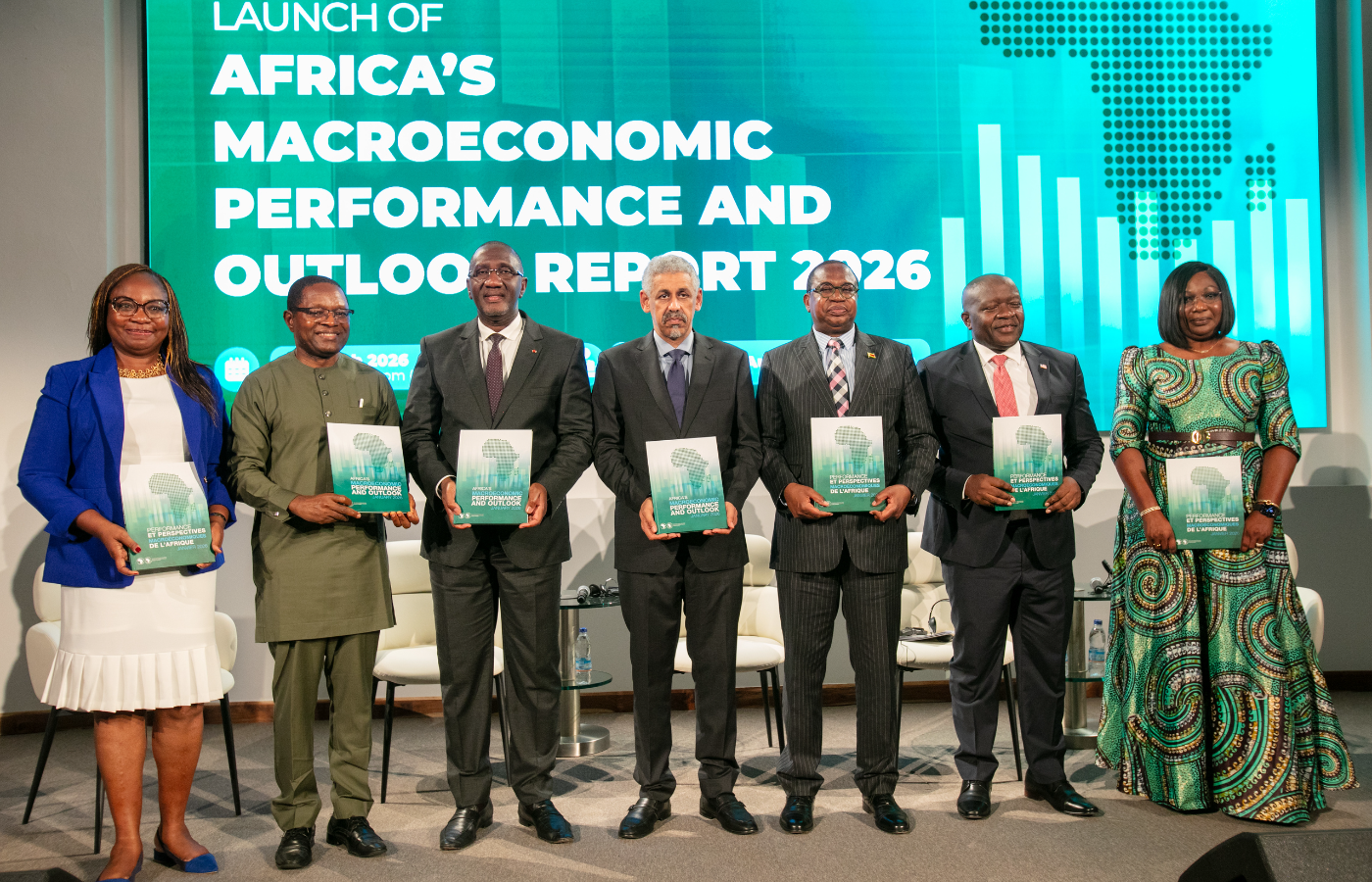
Released at the Bank Group headquarters in Abidjan, the latest report paints a picture of a continent on the move. East Africa retained its lead as Africa’s fastest-growing region, posting 6.4 percent GDP growth in 2025. Across the continent, real GDP jumped to 4.2 percent, up from 3.1 percent in 2024, outpacing the global average. Remarkably, twelve of the twenty fastest-growing economies in the world last year were in Africa.
During his presentation, Prof Kevin Urama, the African Development Bank’s Chief Economist and Vice President for Economic Governance and Knowledge Management, said Africa is likely to weather the current crisis with limited disruption to its macroeconomic outlook in 2026. He noted that the continent has historically recovered from shocks and retains the capacity to bounce back if appropriate policy measures are applied. According to his estimates, should the crisis extend beyond three months, Africa’s economic growth rate for 2026 could decline by 0.2 percentage point.
The report highlights a broad-based expansion, with 22 countries exceeding 5 percent growth and six surpassing 7 percent, underpinned by easing inflation, stronger macroeconomic management, and favourable agricultural conditions. Africa’s GDP growth is expected to stabilise at 4.3 percent in 2026 and rise to 4.5 percent in 2027.
Per capita growth, while modest, accelerated from 0.9 percent in 2023 to 1.9 percent in 2025, signalling slow but tangible improvements in living standards. Inflation, long a constraint, has declined sharply to 13.6 percent in 2025 from 21.8 percent in 2024, with further reductions projected.
Foreign direct investment surged over 75 percent in 2024 to $97 billion US dollars, while remittances rebounded 14 percent to 104.6 billion US dollars, overtaking foreign portfolio inflows as the continent’s largest source of external non-debt financing.




