

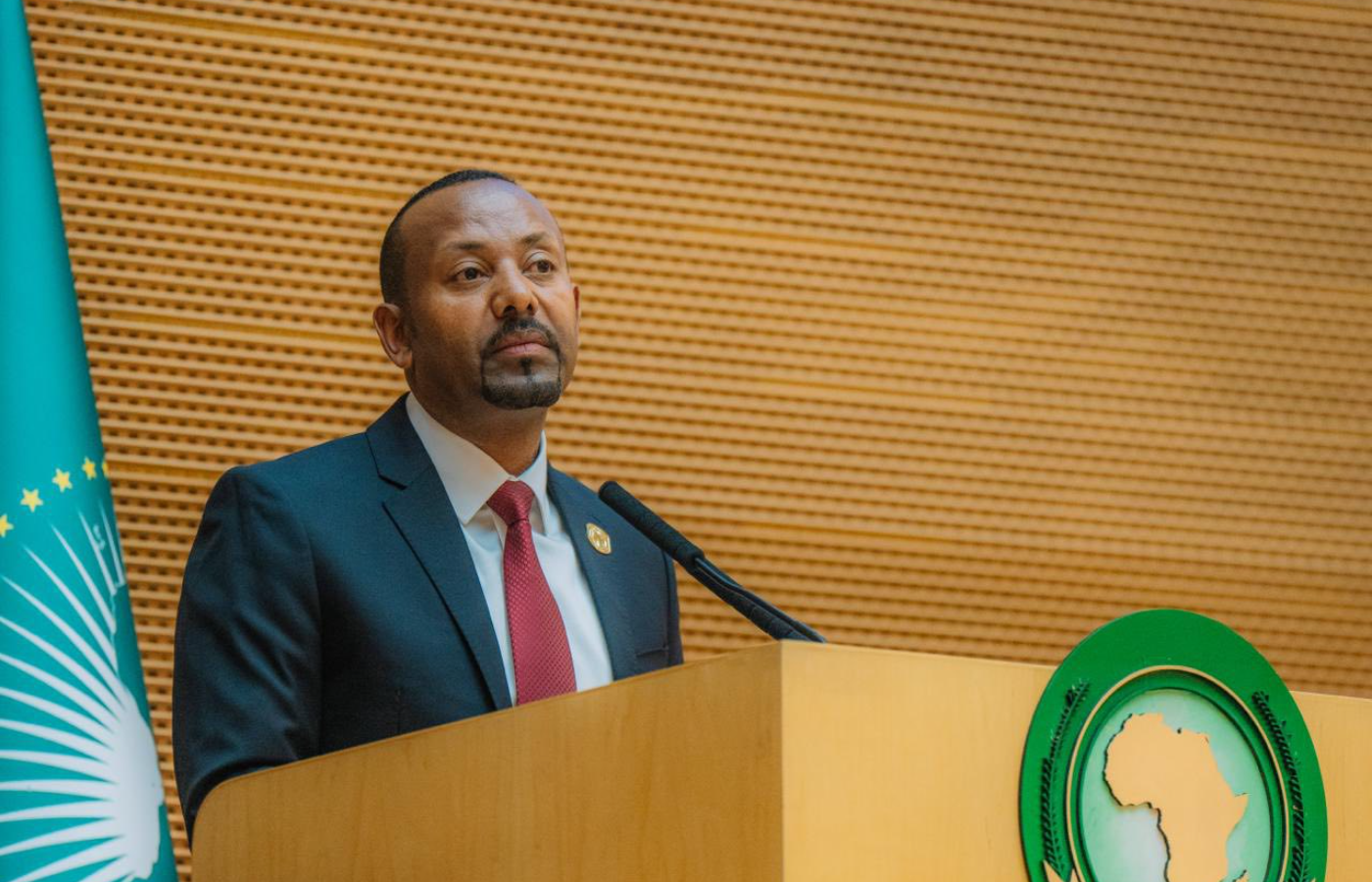
Africa will not be left behind in the age of intelligence, Prime Minister Abiy Ahmed (PhD) declared on Friday, unveiling plans for an artificial intelligence university and a continent-wide digital transformation under the ‘Digital Ethiopia 2030’ initiative.
Speaking at the African Union Summit in Addis Ababa, Abiy outlined a vision for a digitally connected, climate-conscious, and youth-centered Africa. “We are building digital public infrastructure that places citizens at the centre of service delivery,” he said. “By linking our national digital ID system with payment platforms and data networks, we enable secure access to services, seamless transactions, and responsible data sharing that will drive our economy forward.”
The planned AI university, Abiy said, will be anchored in Ethiopia’s philosophy of “Medemer/ Synergy”, emphasizing collaboration between human values and machine intelligence. “This institution will unite local context with global relevance and ensure that technology contributes directly to economic growth and human development,” he added.
Ethiopia has already made strides in the sector, establishing Africa’s first Artificial Intelligence Institute in 2020. The new university is intended to provide research, training, and innovation opportunities that position Africa as a global contributor in the age of intelligence.
Beyond education, Abiy highlighted Ethiopia’s broader connectivity projects. “Through Ethiopian Airlines, we connect people, link markets, and move goods,” he said. “To sustain this momentum, we are building Africa’s largest airport—a next-generation gateway anchoring our continent in the global value chain.”
The Prime Minister also tied digital expansion to sustainability. “Every river we manage, every city we design, and every digital platform we deploy must generate resilient opportunity and dignity,” he said. “By 2063, Africa will be defined by what we secure, what we sustain, and what we share.”
Abiy emphasized Africa’s unity and sovereignty as essential for progress. “Initiatives like Pulse of Africa amplify African voices, because development is never complete without our story,” he said. “Africa must not simply respond to crises; we must shape agendas and lead with purpose.”




