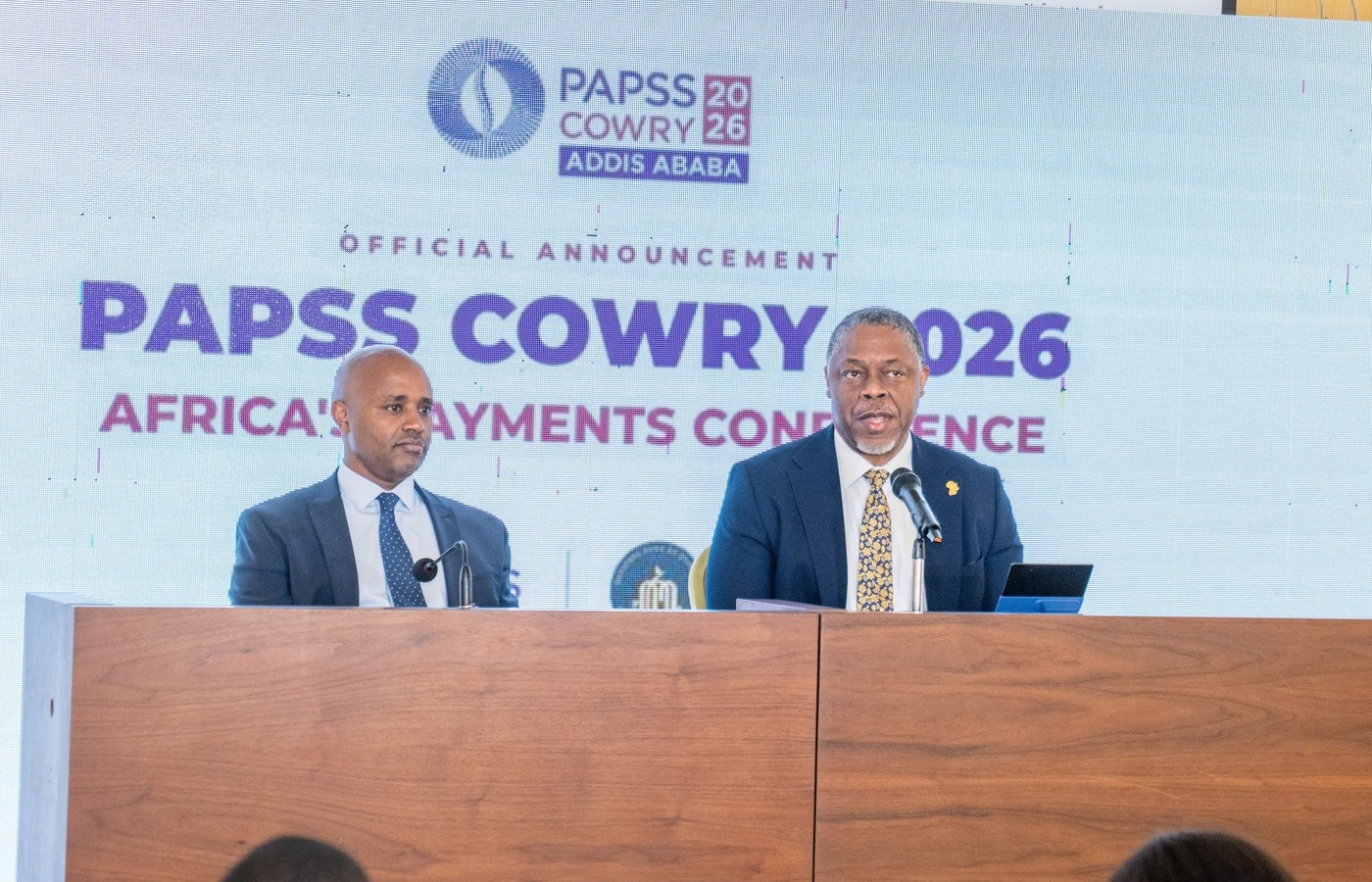
The two-day PAPSS COWRY Summit brings together central banks, commercial lenders and financial technology companies to advance local-currency settlements across Africa.
African financial institutions, regulators and payment service providers are gathering in Addis Ababa on November 26 and 27, 2026, to discuss the expansion of cross-border payment systems designed to reduce the continent’s reliance on foreign currencies for intra-African trade.
The PAPSS COWRY Summit centres on the Pan-African Payment and Settlement System (PAPSS), a financial market infrastructure that enables businesses and individuals to make cross-border payments in local currencies.
Jointly organised by PAPSS and the National Bank of Ethiopia (NBE), the conference is expected to attract more than 1,000 delegates, 60 speakers and 35 exhibitors, including representatives of commercial banks, fintech companies, regulatory authorities and development finance institutions.
The gathering comes six weeks after Ethiopia officially joined the continental payment network on October 15, 2026, opening the way for domestic financial institutions to facilitate transactions with their African counterparts without necessarily routing payments through international correspondent banks.
Established by the African Export-Import Bank (Afreximbank) in collaboration with the African Union and the African Continental Free Trade Area (AfCFTA) Secretariat, PAPSS was officially launched in January 2022 in Accra, Ghana.
The network has since expanded to more than 30 African countries, connecting 24 national and regional central banks, over 200 commercial banks and payment service providers, and 16 payment switches, according to figures released in September 2026.
PAPSS also reported a year-on-year increase of approximately 1,000 percent in transaction volumes in September, although it did not disclose the absolute value or number of transactions processed.
For Ethiopian importers, the system could eventually allow payments to suppliers in participating African markets using birr, with recipients receiving funds in their respective local currencies. Exporters could similarly receive payments in birr from customers elsewhere on the continent.
The system does not, however, eliminate exchange rate risks, underlying settlement obligations or regulatory requirements governing cross-border transactions.
Ethiopia’s participation comes amid broader financial sector reforms that began in July 2024, when the central bank introduced a market-determined exchange rate regime as part of efforts to address longstanding foreign exchange shortages.
While PAPSS could reduce the need for intermediary currencies in eligible intra-African transactions, its contribution to easing Ethiopia’s foreign exchange constraints will depend on trade volumes, participating institutions, currency conversion arrangements and settlement mechanisms.
The Addis Ababa conference marks a shift in PAPSS’s priorities from expanding its geographical coverage to increasing commercial usage of its infrastructure.
Discussions will also cover emerging payment technologies, including stablecoins, digital assets, artificial intelligence and cybersecurity, alongside efforts to connect African payment infrastructure with international financial networks.
The inaugural conference, held in Lagos in December 2025, attracted more than 600 participants from 25 countries. This year’s projected attendance represents an increase of approximately two-thirds.
The next milestone will be the operational integration of domestic commercial banks into the system. The central bank’s membership announcement did not specify which Ethiopian banks would become operational participants first, the applicable transaction fees or when customers would begin accessing outbound local-currency payment services.