

Africa does not lack infrastructure plans. Nor does it lack conferences discussing how to finance them. What it lacks, more often, are projects that survive the journey from political ambition to financial close—and then from financial close to a service that ordinary people can actually afford.
That problem becomes particularly awkward when the infrastructure in question is not a toll road, a power plant or a port, but a hospital, a school or an affordable home.
A motorway can charge motorists. A power plant can sell electricity. A port can collect handling fees. A cancer hospital cannot simply double its prices because its investors want a higher return. Affordable housing ceases to be affordable if the financing structure needed to attract private capital pushes the final cost beyond the reach of its intended residents.
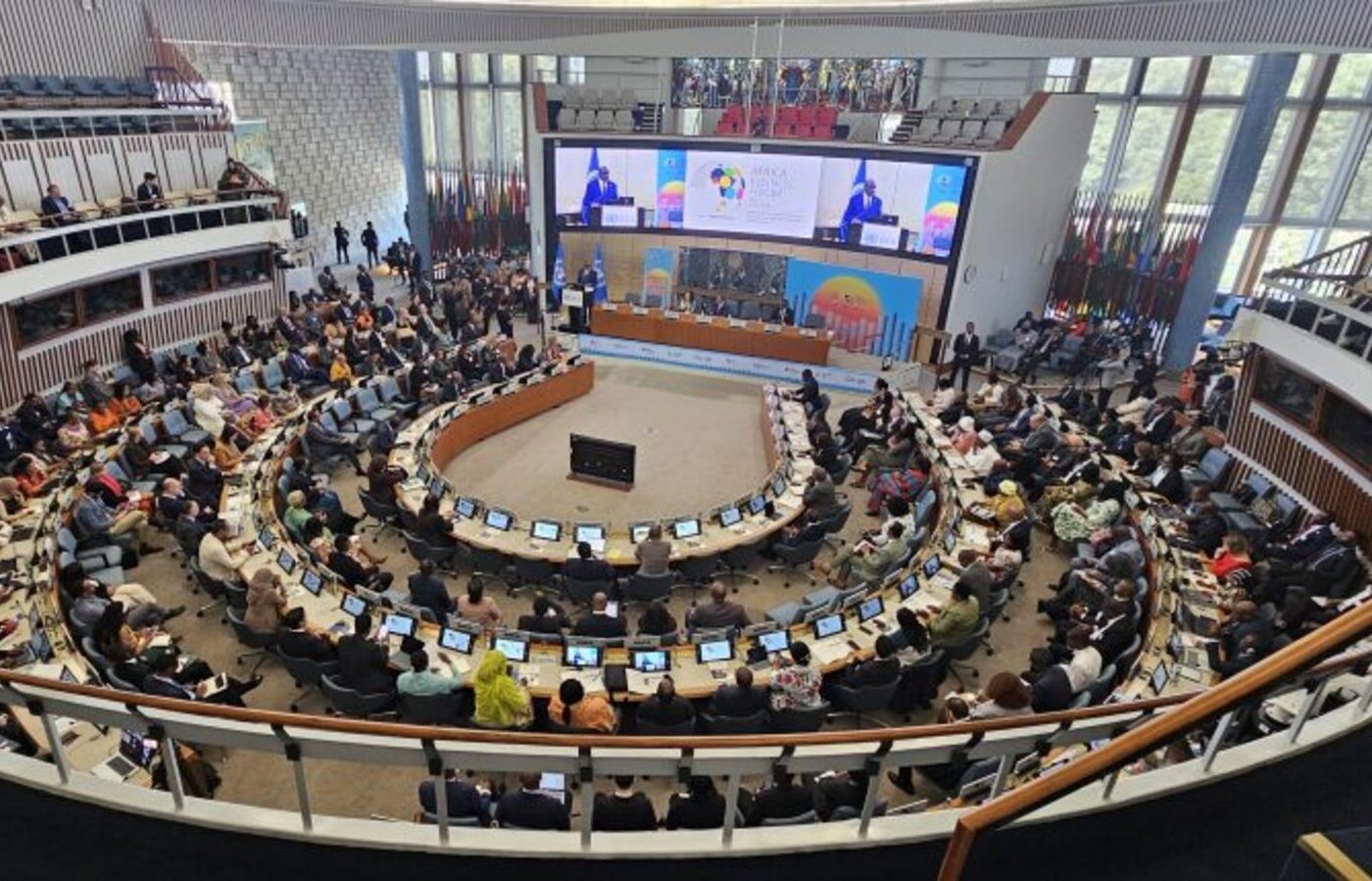
That contradiction sat at the heart of the 2026 ALSF PPP Forum in Addis Ababa.
Held under the theme “Making Social Sector PPPs Work: From Policy Ambition to Effective Service Delivery,” the gathering brought together African PPP units, development institutions and private-sector specialists to confront a question that has become more pressing as government budgets have tightened: can private capital be used to deliver social infrastructure without turning public services into expensive commercial products?
Interviews conducted by BirrMetrics on the sidelines of the Forum with officials from the African Legal Support Facility and the African Development Bank suggest that the answer depends less on finding investors than governments sometimes assume.
The money matters. But preparation, institutions, risk allocation and political discipline may matter more.
The first problem is conceptual.
Public-private partnerships are often spoken of as though they allow governments to build infrastructure without paying for it. Maude Vallée, Head of Operations at the African Legal Support Facility, rejects that premise.
“PPPs is not a way to fill the gap for governments who doesn’t have enough financing to develop infrastructure or public service,” she said. “This is a delivery model.”
That distinction sounds technical. It is anything but.
Private capital may finance construction today, but the cost does not disappear. It merely moves through time and changes form. The bill may eventually be paid through user fees, government transfers, guarantees, subsidies or some combination of them.
“It’s not going to replace the engagement of the government,” Vallée said. “Depending on the structuring of the infrastructure, the government can still have to contribute financially to the structuring of the transaction.”
For governments operating with narrow fiscal space, that matters enormously.
A PPP may reduce the immediate call on the budget while creating obligations that last 20 or 30 years. A hospital may be built today with private finance, but if patient fees cannot cover the investor’s required return, government may still have to pay the difference later.
The financing problem has not vanished. It has been repackaged.
This is precisely why poorly prepared PPPs can be more dangerous than no PPP at all.
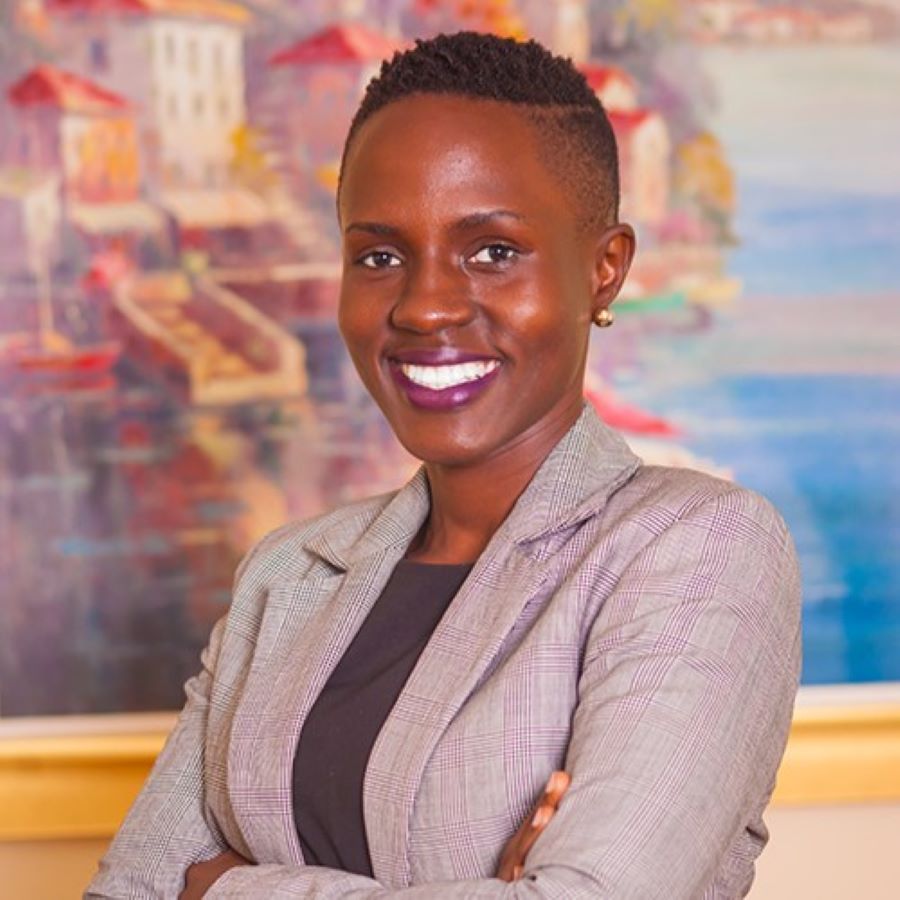
Primah Atugonza, Sector Lead for Infrastructure and PPPs at the ALSF, argues that many promising projects stumble long before an investor sees them.
“I think the main issue is a lack of funding for thorough project preparation,” she said.
Preparation is the least glamorous part of infrastructure development. It produces studies rather than buildings and financial models rather than ribbon-cuttings. Yet it is the stage at which governments should determine what service they actually want, how much it will cost, how demand will evolve and which party should carry which risks.
“Project preparation requires for the government to fully understand the project, to fully scope the services that will be provided to the people, but to also be able to understand what the private party will do,” Atugonza said. “It also requires risk to be fully studied.”
Too often, governments rush this stage.
“Unfortunately, projects are not given the time that is needed to study the project well at the preparation stage in order to make it able to go to market,” she said. “Certain times you will find pre-feasibility reports that are labeled feasibility reports.”
That shortcut can become expensive later.
“Once you do not have enough information, then you are not able to pitch that project to the private party.”
The attraction of speed is understandable. Governments like pipelines. Ministers like announcements. Investors like certainty. But a PPP contract may survive several governments and several generations of civil servants. What looks like delay during project preparation may in fact be insurance against decades of disputes, renegotiations and unanticipated public liabilities.
For Atugonza, feasibility studies, risk allocation and institutional readiness cannot sensibly be separated.
“I would say 100%—extremely important and in equal measure,” she said. “All of them are important in the same manner.”
The feasibility study, she said, determines whether a project should go to market at all. It also helps determine which risks should be borne by which party.
“If a contract is not balanced, then that contract will not succeed in reality,” she said. “It could succeed on paper, but it will not succeed in reality.”
This is one of the more important lessons in PPP finance.
Governments sometimes assume that a successful negotiation consists of pushing as much risk as possible onto the private party. Investors have their own answer to that strategy: they charge for it.
A developer asked to assume risks it cannot control will either demand a higher return or decline to participate. Excessive risk transfer can therefore make a project more expensive rather than safer.
The difficult task is not to transfer all risk. It is to allocate each risk to the party best equipped to manage it.
That requires expertise.
And here Africa encounters another problem.
Private developers usually arrive at the negotiating table accompanied by transaction advisers, lawyers, engineers and financial modellers. Public agencies may be negotiating one of the largest contracts they have ever handled.
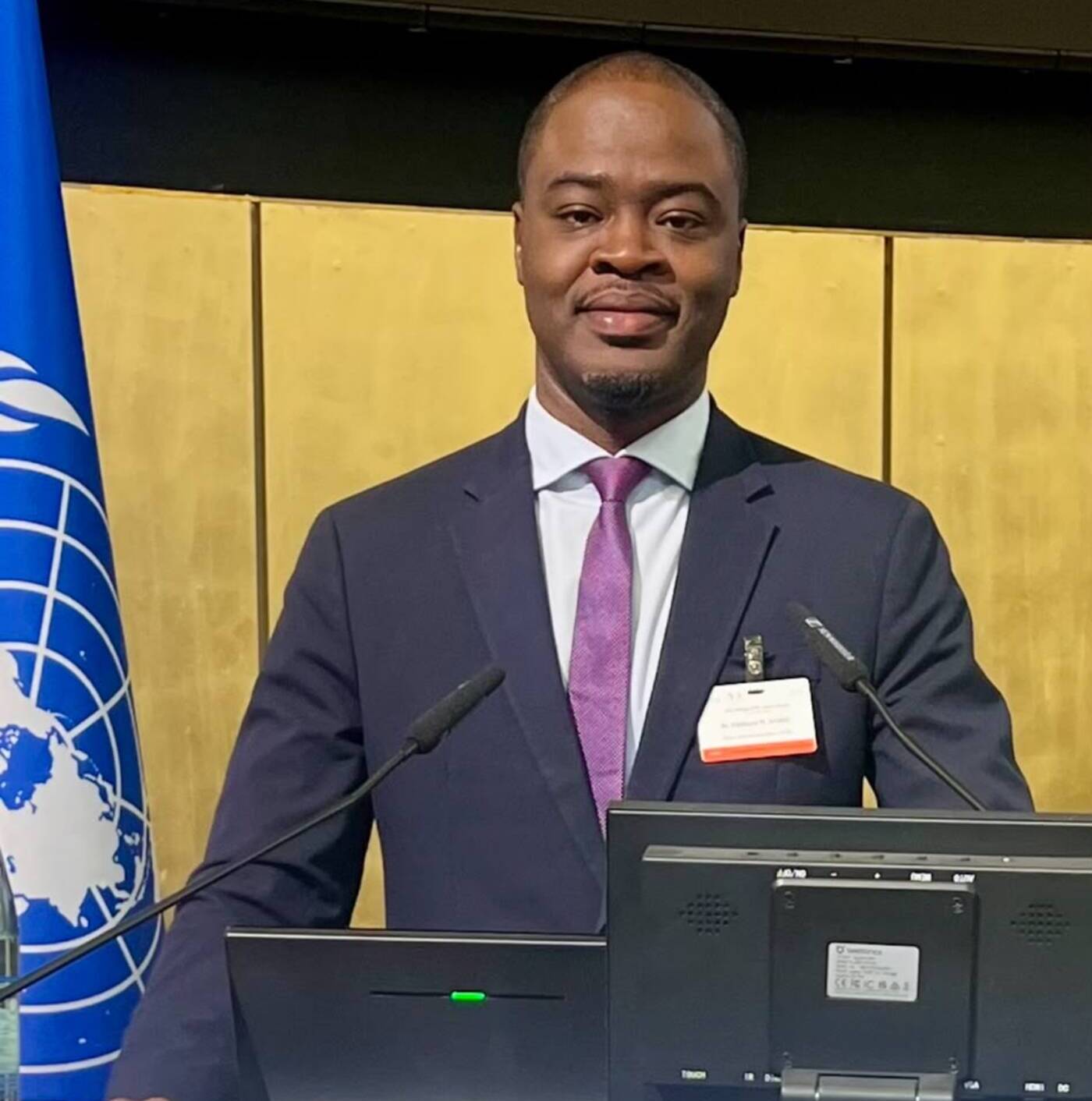
Ababacar M. Sambe of the African Development Bank describes this imbalance as one of the main obstacles to workable PPPs.
“A primary challenge is the institutional capacity imbalance between public authorities and private developers,” he said. “While private sector entities often arrive with specialized expertise and preparation, public authorities frequently lack the technical tools, screening models, and negotiation capacity required to structure balanced, long-term concessions.”
The imbalance does not end when the contract is signed.
Consultants may spend two years advising a government on a transaction. The government may then have to manage the concession for another quarter of a century.
“Good advisors are important for a project because good advisors will help you create the parameters,” Atugonza said. “However, you need the people that are going to implement the project day-on-day—these are contracts for 25 years.”
Advisers come and go.
“Whilst you have advisors that come in for 18 to 24 months and set the parameters, the institution needs to have the capacity to implement these parameters for the next 25 years.”
That turns PPP capacity from a procurement issue into a state-capacity issue.
A country can hire world-class advisers to negotiate a transaction. It cannot outsource the state’s responsibility to administer it for the next generation.
“Contracts are implemented by institutions,” Atugonza said. “Because contracts are implemented by institutions, then institutions need to be ready and capacitated to take projects forward.”
Investors notice these weaknesses too.
For Sambe, a viable PPP begins before the project itself.
“From an institutional investor perspective, the first thing that we need to see in a country before committing for a long-term investment in terms of PPP is to make sure that the institutional framework and the legal framework in terms of PPP are mature and ready,” he said.
Only after those foundations are established does attention shift towards the transaction.
“Once we have this condition, and we know that the country has the legal framework, institutional framework, and regulatory framework ready, the second thing we are looking for is the project itself.”
That project, he said, must be financially, legally and technically sound.
“We need to make sure that the project is environmentally fit and sound, and the impact on the environment has to be positive before we commit ourselves.”
In other words, governments do not compete for private capital merely with projects. They compete with institutions.
A beautifully modelled hospital project sitting inside a weak contractual environment may still struggle to attract financing. Investors are not only asking whether the building can be constructed. They are asking whether contracts will be honoured, disputes resolved, payments made and the public counterpart still capable of doing its job ten years after financial close.
For the African Development Bank, part of the response has been to work on the public side of the table.
Sambe said the bank’s PPP framework, adopted in 2021, includes support for enabling environments, legal frameworks, public-sector capacity and standardised tools for evaluating potential projects.
Such work is especially important in social infrastructure, where the arithmetic is far less forgiving than in conventional commercial infrastructure.
“Most of the time, social infrastructure projects are very difficult to deliver through PPPs because private partners are interested in making a profit, and in those social sectors, there is no direct profit,” Sambe said.
That sentence captures the central difficulty facing the Forum.
Hospitals, schools and low-cost housing can produce immense economic and social benefits. But the people who benefit from them may not be able to generate the cash flow needed to satisfy a commercial investor.
The gap must be filled somehow.
“When a project is economically and socially beneficial for the country, the government must look at how to provide subsidies—what we call Viability Gap Funding—because there is a gap,” Sambe said. “The government brings resources in a way that makes the project attractive to the private sector.”
Housing offers an obvious example.
“In urban housing, land is very expensive,” he said. “What governments can do is secure the land and provide it as a subsidy to the private partner so they don’t add the cost of land into the final price.”
Time can also be used as a financial instrument.
“On top of that, extending concession periods—from 10 years to 15 years, for instance—makes the reimbursement structure far more affordable for the final user.”
The logic is simple enough. If a project is socially valuable but commercially weak, government can help bridge the gap.
The danger lies in forgetting that every bridge has a cost.
A sovereign guarantee may encourage a lender to provide capital, but it can also create a future liability for the state. Viability-gap funding can make a project investible but requires public resources. Providing land cheaply may reduce housing prices but transfers an asset that has an opportunity cost.
Atugonza says this tension is now one of governments’ biggest concerns.
“The biggest problem that governments are facing is constrained fiscal space,” she said. “The government still has to provide some return on investment for the private sector.”
“So that idea of affordability versus the return on investment for the private party is the issue that governments are facing.”
Investors want reassurance.
“The private party is asking, ‘How do you guarantee that I will be paid?’” Atugonza said.
The public side therefore needs instruments capable of making that promise credible.
“The government has to be able to reassure the private party through actual instruments like sovereign guarantees, viability gap funding, and other financial instruments that will ensure that the project moves forward.”
But the more support government provides, the less plausible it becomes to describe PPPs simply as an escape from fiscal constraints.
Social-sector projects therefore require a more imaginative approach to revenue.

Vallée believes governments and investors may have to find income streams around the public service rather than relying exclusively on the people consuming it.
“We need to be more creative—maybe more creative than for other infrastructure,” she said.
Housing developments, for example, could include commercial space.
“If we are building affordable houses, we can have also some stores being built that could generate some revenues for the private partner.”
A healthcare project might use the same logic.
“In healthcare projects, integrating secondary revenue opportunities, such as grid-connected solar power generation, can help offset project risks and reduce required state subsidies.”
The purpose of such structures is not merely financial cleverness. It is affordability.
“Social infrastructure touch the population very closely,” Vallée said. “When we think about health, when we think about school, it touch the daily life of the population.”
“What is difficult with that type of infrastructure is that you need to ensure that the service will remain affordable for all the population.”
That is the line on which social-sector PPPs ultimately succeed or fail.
A commercially successful hospital that prices patients out of treatment is not a policy success. Nor is an “affordable” housing scheme whose financing costs leave the target population unable to buy the homes.
The project has to satisfy two balance sheets at once: that of the investor and that of society.
Ethiopia is an interesting place to test whether this can be done.
The country has spent years developing its PPP architecture and is now attempting to move beyond frameworks towards implementation. Atugonza argues that Ethiopia has begun to approach the issue less as a collection of individual projects and more as an ecosystem.
“I think Ethiopia is very much on a good path to project implementation,” she said.
“Ethiopia is tackling the PPP problem by addressing the entire ecosystem. It is not just addressing sectors, but it is addressing the banking sector and the various challenges involved in private capital accessing Ethiopia. It is addressing insurance.”
She pointed to emerging activity in healthcare and housing.
“If you look at the project pipeline, Ethiopia is trying to make them work,” she said. “In the health sector, there’s been the diagnostics hospitals—this is a very good project. If you look at what is being done in housing, these are good projects.”
“Ethiopia is taking steps to bring PPPs to implementation.”
Vallée offered a glimpse of what part of that pipeline could look like.
“Throughout Africa, the demand is there,” she said. “Including in Ethiopia, we have one project for affordable housing that we are helping with. We have another project regarding an oncology hospital that we are at the very, very beginning of it.”
Those projects will test more than Ethiopia’s ability to attract investors.
They will test whether feasibility work is rigorous enough, whether institutions can negotiate on relatively equal terms, whether financing risks can be managed and whether support from the state can make projects bankable without making the public finances more fragile.
They will also test whether the end product remains accessible to the people it is supposed to serve.
There is one final ingredient that no financial model handles particularly well: politics.
PPP transactions usually cross ministries and agencies. Finance officials may worry about fiscal liabilities. Sector ministries may focus on service delivery. Environmental authorities have their own requirements. Contracting agencies want implementation. Investors want certainty.
Without someone able to force coordination, progress can stall.
“Political will is probably one of the main issues,” Vallée said.
“If you don’t have at the highest level someone to say, ‘Okay, we need to do this infrastructure in the form of a PPP,’ it will not move forward.”
“You need the political will of someone who will tell everybody involved to work together—the Ministry of Finance, the Ministry of Environment, the contracting authorities, and other key entities.”
Yet political will contains its own danger.
A leader determined to deliver a project can push institutions to cooperate. The same pressure can encourage officials to rush preparation, exaggerate bankability or sign a weak contract merely to show progress.
The ideal, therefore, is not simply strong political backing. It is political backing combined with institutional restraint.
That is also why Vallée warns against treating PPPs as a magical answer to an empty treasury.
“Why a project is not bankable, it’s most of the time because it’s not well prepared,” she said. “It’s not well structured.”
“Sometimes PPPs are seen as some sort of magic tool, meaning that ‘Oh, we don’t have money, let’s do a PPP.’ But it doesn’t work this way.”
The Addis Ababa Forum was intended partly to replace that kind of thinking with something more practical.
Vallée said the objective was to put Africa’s PPP units themselves at the centre of the conversation.
“We wanted to create a forum, a place where it would be the Africa PPP units who would be at the center of the discussion and also be the ones to make the recommendations.”
The idea, she said, was a “bottom-up approach” in which PPP units would develop recommendations capable of being used once they returned home.
That may be the more useful way of thinking about Africa’s current PPP moment.
The continent does not suffer from a shortage of demand for infrastructure. Governments know they need hospitals, schools, housing, energy, transport and water. Investors know infrastructure can offer long-term opportunities. Development institutions have spent years developing legal frameworks, financial instruments and advisory programmes.
The missing piece is often the machinery that turns those ingredients into durable transactions.
That machinery is less dramatic than the projects themselves.
It consists of feasibility studies, financial models, capable civil servants, negotiated risk, credible contracts and institutions able to enforce them for decades.
PPPs can help governments mobilise capital. They cannot repeal economics.
Someone must eventually pay for every road, hospital and home.
The real question is whether governments can arrange that payment in a way that gives investors enough confidence to put money at risk without asking citizens—or future budgets—to bear costs they cannot afford.
For social infrastructure, that is not a side issue.
It is the entire point.
For deeper coverage on infrastructure policy, project finance, and public-private partnerships across Africa, read full coverage on African Governments Social Sector PPPs, or monitor official legal and policy frameworks on the African Legal Support Facility and UN Economic Commission for Africa portals.




