

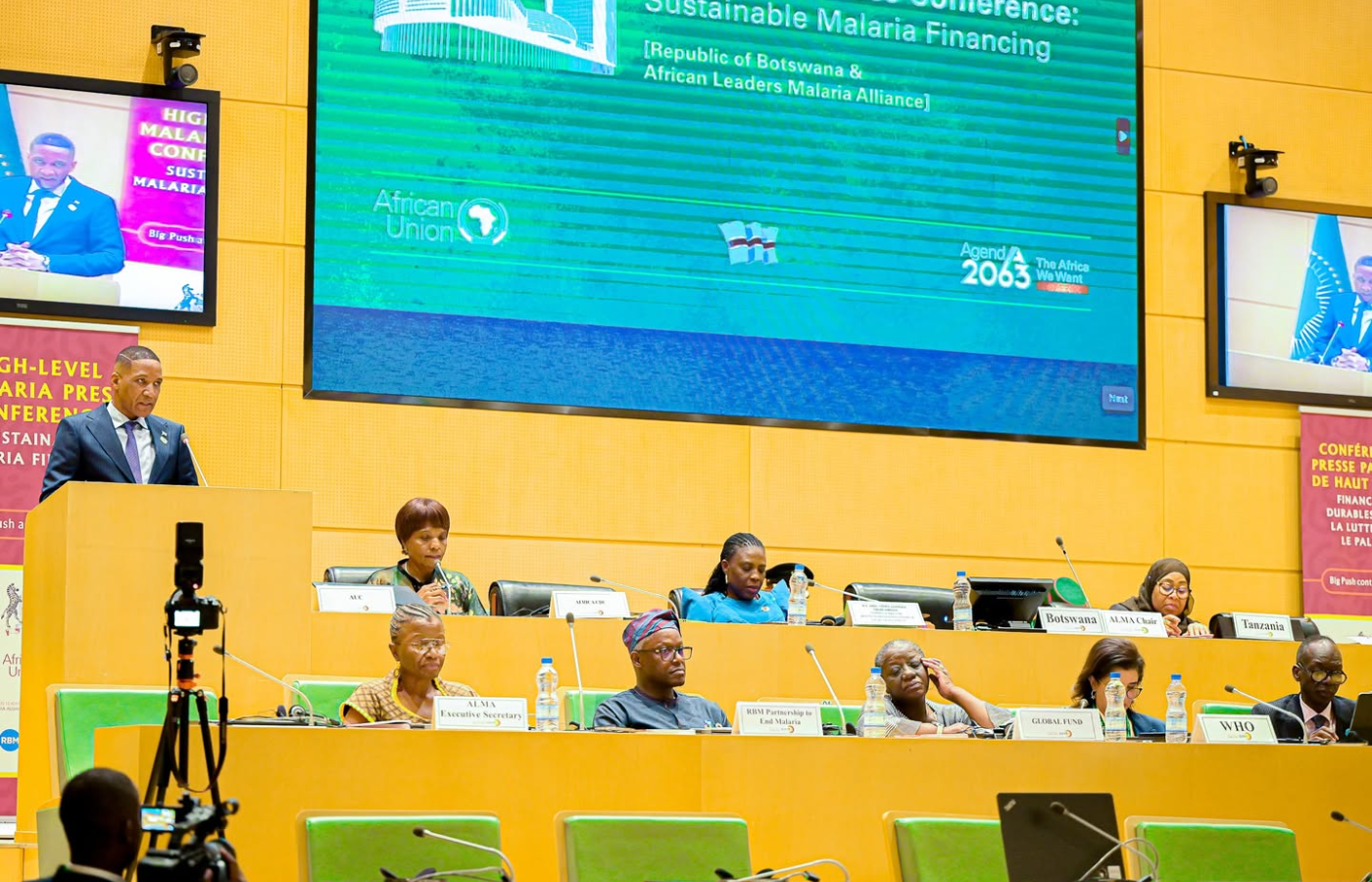
African heads of state and government have warned that a 30 percent cut in malaria financing could cost the continent 37 billion US dollars in lost gross domestic product by 2030, as cases and deaths remain heavily concentrated in Africa.
The warning was delivered at the 39th African Union Summit in Ethiopia, where leaders reviewed the African Union Malaria Progress Report 2025. The report shows that African Union member states accounted for 270.8 million malaria cases in 2024, representing 96 percent of the global total, and 594,119 deaths, equivalent to 97 percent worldwide.
Despite sustained intervention efforts, momentum has slowed. Progress has largely stalled since 2015, and only five member states have met the 2025 target of reducing malaria incidence or mortality by 75 percent under the AU Catalytic Framework to End AIDS, TB and Eliminate Malaria in Africa by 2030.
According to the report, a 30 percent reduction in funding would result in 640 million fewer insecticide treated nets being distributed, 146 million additional malaria cases and 397,000 additional deaths by 2030. Seventy five percent of the projected additional deaths would be among children under five. Without urgent intervention, annual malaria cases could exceed 400 million, with deaths surpassing one million.
While funding pressures intensify, the report highlights expanded deployment of newer technologies. In 2025, 74 percent of insecticide treated nets distributed across Africa were dual active ingredient nets, compared with 20 percent in 2023. These nets are reported to be 45 percent more effective than pyrethroid only nets against resistant mosquitoes.
President Duma Gideon Boko of Botswana, chair of the African Leaders Malaria Alliance, said official development assistance for health in Africa has declined by 70 percent over the past four years. He noted that the Eighth Replenishment of the Global Fund fell short of its 18 billion US dollars target and warned that the financing gap threatens decades of gains, including the prevention of 1.64 billion cases and 12.4 million deaths since 2000.
Against this backdrop, leaders placed greater emphasis on domestic financing and structural reforms. Member states committed to expanding resource mobilisation, developing national health financing sustainability plans and strengthening innovative funding mechanisms. End Malaria Councils and Funds in 12 countries have mobilised more than 200 million US dollars through public private partnerships.
Heads of state also called on international partners to honour existing commitments and renew the World Bank’s Malaria Booster Programme. The original programme, implemented between 2005 and 2010, committed more than one billion US dollars. Leaders are urging a renewed initiative to close funding gaps, deploy next generation tools, strengthen community health worker programmes and build climate resilient health systems.
Twenty four countries have introduced World Health Organization approved malaria vaccines for children under five. Some 28.3 million doses were distributed in 2025, compared with 10.5 million in 2024. Two spatial repellent products were prequalified in 2025, marking the first new vector control intervention introduced in decades. A record 22 countries planned seasonal malaria chemoprevention campaigns in 2025.
Leaders also emphasised local manufacturing to improve affordability and supply security. Africa currently imports 99 percent of vaccines and 95 percent of medicines. Nigeria has entered partnerships for local production of antimalarial treatments and rapid diagnostic tests and is working to establish manufacturing capacity for next generation nets. The African Medicines Agency, ratified by 31 countries, is harmonising regulatory frameworks to accelerate the registration of new health products.
Michael Adekunle Charles (MD), chief executive of the RBM Partnership to End Malaria, said that full deployment of existing and new tools, combined with full funding, could save more than 13.2 million lives over 15 years and generate over 140 billion US dollars in economic gains. He said every dollar invested in the Global Fund delivers 19 US dollars in returns.
In a joint call to action, heads of state urged member countries to treat malaria as a central pillar of health sovereignty and economic transformation, while calling on international partners to align support with national strategies and secure sustainable financing to prevent a resurgence of the disease.




