


The OSC has faced financial strain since January 2025
Its CEO submitted his irrevocable resignation on December 5
The Addis Ababa-based Organisation of Southern Cooperation (OSC), of which Ethiopia is a member, will wind down its operations and complete an administrative closure by June 30, 2026, following a decision by its General Assembly during an extraordinary session held on December 26.
In a statement issued after the meeting, the Assembly said it had taken note of the resignation of Secretary-General Manssour Bin Mussallam and resolved to discontinue all programmatic activities, citing persistent financial challenges caused by delays in assessed contributions from Member States.
The Assembly requested the Secretary-General to oversee an orderly closure of the organisation and urged Member States to settle their 2025 arrears as soon as possible to enable the OSC to meet its outstanding financial obligations, including dues to staff, partners and service providers.
The Secretary-General was also tasked with archiving the organisation’s legal and working documents, achievements and lessons learned to preserve institutional memory for future South–South cooperation initiatives.
The OSC has faced financial strain since January 2025 after failing to receive sufficient assessed contributions to fund its approved 2025 budget.
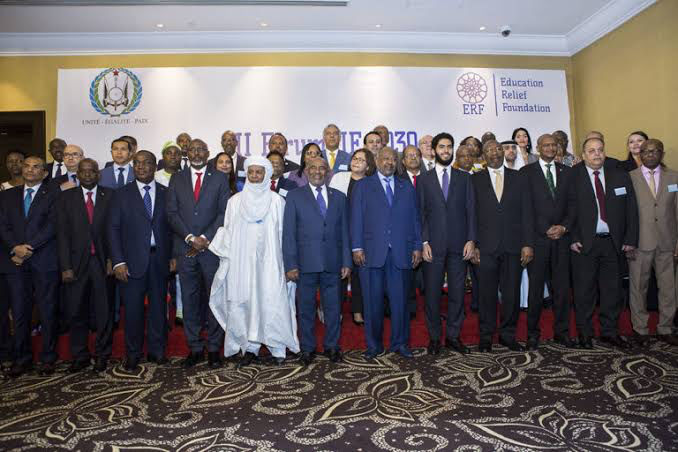
Established in 2020 and headquartered in Addis Ababa, the OSC is an intergovernmental, membership-based organisation focused on advancing South–South cooperation. Ethiopia is among its Member States, alongside countries from Africa, Asia, the Middle East, Latin America and the Pacific.
Under its Constitutive Charter, assessed contributions from Member States form the core of the OSC’s budget, with the General Assembly approving expenditure and apportioning financial responsibilities.
Member States risk losing their voting rights if contributions fall into arrears beyond the current and preceding financial year, unless exemptions are granted under exceptional circumstances.
The Charter also allows the Secretary-General to accept voluntary contributions from governments and public or non-governmental institutions, though such funding is capped to preserve the organisation’s independence.
In addition, the OSC established a wholly owned Financial Subsidiary intended to generate revenue through ethical and socially responsible investments in Member States, with the long-term aim of reducing reliance on direct budgetary contributions and supporting education, development and solidarity-based financing.
In its Strategic Plan for 2023–2030, the OSC positioned itself as an alternative to traditional aid models, prioritising self-reliance and endogenous development while minimising dependence on external donors.
Ethiopia hosts the headquarters of the OSC in Addis Ababa, reinforcing the country’s role as a diplomatic hub for South–South cooperation. The organisation sought to leverage Addis Ababa’s status as the seat of the African Union and numerous international missions to foster collaboration, knowledge-sharing and joint initiatives across the Global South.
In recent years, OSC activities involving Ethiopia focused on digital transformation for development, science and technology cooperation, and expanding opportunities for women in science.
As recently as December 22, 2025, Bin Mussallam told the Ethiopian News Agency (ENA) that Ethiopia’s role in advancing South–South cooperation was “critical,” describing Addis Ababa as a hub for Global South collaboration and noting that African integration strengthens South–South cooperation more broadly.
Bin Mussallam submitted his irrevocable resignation on December 5 following what he described as a year-long reflection on the organisation’s direction since the last General Assembly in November 2024.
At that meeting, Member States had pledged to take greater ownership of the OSC’s programmatic and operational activities, commitments he said were not fulfilled.
In his resignation statement, the Secretary-General presented Member States with two options: immediately meet their statutory financial obligations to secure the organisation’s viability and allow for the election of new leadership, or proceed with a dignified closure, which would still require financial contributions.
Reflecting on the OSC’s short history, he said the organisation had grown from a legal framework into a functioning institution with a secretariat of more than 100 staff, active governing bodies and growing interest in membership. However, he warned that persistent non-compliance with financial obligations had made the organisation unsustainable.
The General Assembly’s decision this week followed earlier deliberations on the future of the organisation, including an extraordinary session held earlier in December.
In its statement, the OSC reaffirmed its commitment to the principles of South–South cooperation, solidarity and equity, and said it would continue to inform the international community as the closure process unfolds.




