

Ethiopia’s greatest sporting success comes from athletics. Its deepest sporting emotion belongs to football. But the sport that moves the country most remains the one least prepared to pay its own way.
Ethiopia’s greatest sporting success has usually come on the track and the road. Its deepest sporting emotion, however, often belongs to football.
You could see it when the Walia Ibex returned to the Africa Cup of Nations after 31 years, turning qualification into a national celebration. You could see it again when Ethiopia made it back to AFCON after another long absence, proof that even limited continental success could still move millions. For many Ethiopians, football does not need a global trophy to command loyalty. It needs the national shirt, a packed café, a hopeful crowd, and ninety minutes of belief.
That is the paradox at the heart of Ethiopian sport.
Athletics has given the country its global identity: Abebe Bikila running barefoot into history, Miruts Yifter’s late surges, Derartu Tulu’s barrier-breaking gold, Haile Gebreselassie bending the track and marathon clock, Tirunesh Dibaba completing the historic 5,000m and 10,000m Olympic double, Kenenisa Bekele turning distance running into domination, Tigst Assefa shattering the women’s marathon world record, and Tamirat Tola conquering Paris with an Olympic-record marathon run.
Running has made Ethiopia famous.
Football has made Ethiopia emotional.
Yet the sport that carries the loudest domestic passion has remained one of the least commercially organized. Ethiopia has stadiums, clubs, rivalries, sponsors, broadcasters, regional pride and an unusually loyal fan base. What it does not have is the business architecture that turns that emotion into recurring income.
Across Ethiopia, public money has gone into stadiums, federations and clubs. Cities have built arenas. Regional administrations have financed football teams. Governments have treated sport as a source of pride, diplomacy and youth mobilisation. But the sector remains a financial patient: dependent on subsidy, weak in governance, thin in commercial thinking, and unable to convert passion into predictable revenue.
The paradox is sharpest in football.
Ethiopia has historic clubs, emotional rivalries, regional identities, and a domestic league that has already attracted naming and broadcast deals. But many clubs still operate less like businesses and more like extensions of public administrations. Salaries consume the bulk of budgets. Youth systems remain weak. Digital ticketing is underdeveloped. Merchandising is almost invisible. Club communication is often an afterthought. Stadiums exist, but the product around the game is not strong enough to fill them consistently or monetize them beyond match day.
That is the Ethiopian sports paradox: subsidized to survive, but not structured to earn.
A new draft Sports Proclamation, approved by the Council of Ministers and sent to Parliament, promises to modernize the legal and administrative framework of the sector. It comes alongside a revised national sports policy that recognizes gaps in participation, technology-based data systems, anti-doping and the broader social role of sport.
On paper, this is a serious opening. In practice, it may become another missed chance unless it confronts the deeper problem: Ethiopia has built sports infrastructure faster than it has built sports institutions.
Gashaw Abeza (PhD), an American-based sport investment specialist, does not believe the crisis has a single cause.
“The bottlenecks are well known but deeply intertwined,” he says. “That makes it difficult to isolate a single cause.”
For Gashaw Abeza (PhD), the first knot is ownership.
A few clubs, including Saint George SC and Ethiopian Coffee SC, have clearer identities and structures. But many others exist in a grey zone between public institution, political project and football club. Some are effectively tied to regional or municipal administrations. That makes long-term planning difficult.
A governor or mayor wants a title within a season. A professional club needs a ten-year academy plan.
The result is short-termism. Budgets are raised to buy players, not to build systems. Clubs chase promotion, survival or prestige, but rarely invest enough in scouting, youth development, data, coaching, sports medicine, marketing or commercial departments. When the season ends, the same cycle starts again.
“It is a cycle of hand-to-mouth management,” Gashaw says. “When travel and accommodation eat the rest, nothing remains for long-term development.”
This is not just an opinion. Reporting on Ethiopian clubs has shown the strain clearly. Adama Ketema, one of the country’s older clubs, was reported to have an annual budget of around 80 million birr, while needing about 120 million birr to remain competitive. More than 70 percent of its budget was going to salaries, hotel stays and food. Other clubs show a similar pattern, with wages and operating costs swallowing the money that could have gone into academies, training facilities, fan engagement or commercial departments.
These are not the spending patterns of a growth industry. They are the spending patterns of institutions trying to survive the next fixture.
The structure rewards inflation, not investment.
When one publicly backed club raises salaries, others follow. Players benefit in the short term, but the league becomes financially fragile. Clubs with limited commercial income are pushed into wage competition they cannot afford. If government budgets tighten or political priorities shift, salaries are delayed, players protest, and the club’s credibility suffers.
This is where club licensing should matter.
In modern football, club licensing is not a bureaucratic formality. It is the basic gatekeeping system that determines whether clubs are fit to compete. Properly enforced, it can raise professionalism, promote financial transparency, improve governance, increase financial stability, force youth development and protect the credibility of competitions.
Ethiopia already knows this language. The Ethiopian Football Federation has licensing requirements. The problem is enforcement.
“Most Ethiopian clubs would struggle to meet these requirements,” Gashaw says. “Despite this, they are often allowed to participate in continental competitions through formal approvals that suggest compliance. That undermines long-term development and accountability.”
Muluneh Girma, a researcher at Kotebe University’s Sport Science Department, agrees. For him, Ethiopia’s problem is not the absence of rules. It is the absence of consequences.
“Strict and consistent enforcement of club licensing would be transformative,” he says. “It would require clubs to invest in youth development, strengthen governance, improve financial management, and build proper infrastructure.”
Instead, Ethiopia has often operated with a gap between formal compliance and real capability. A club may owe salaries and still compete. It may lack a functioning youth system and still survive licensing. It may have no serious marketing unit and still expect sponsors to appear. The result is a league that wants commercial money without consistently meeting commercial standards.
“Without structural reform,” Muluneh warns, “clubs will continue to face constraints that make compliance difficult. They are trapped.”
The trap is visible even in Ethiopia’s stadium story.
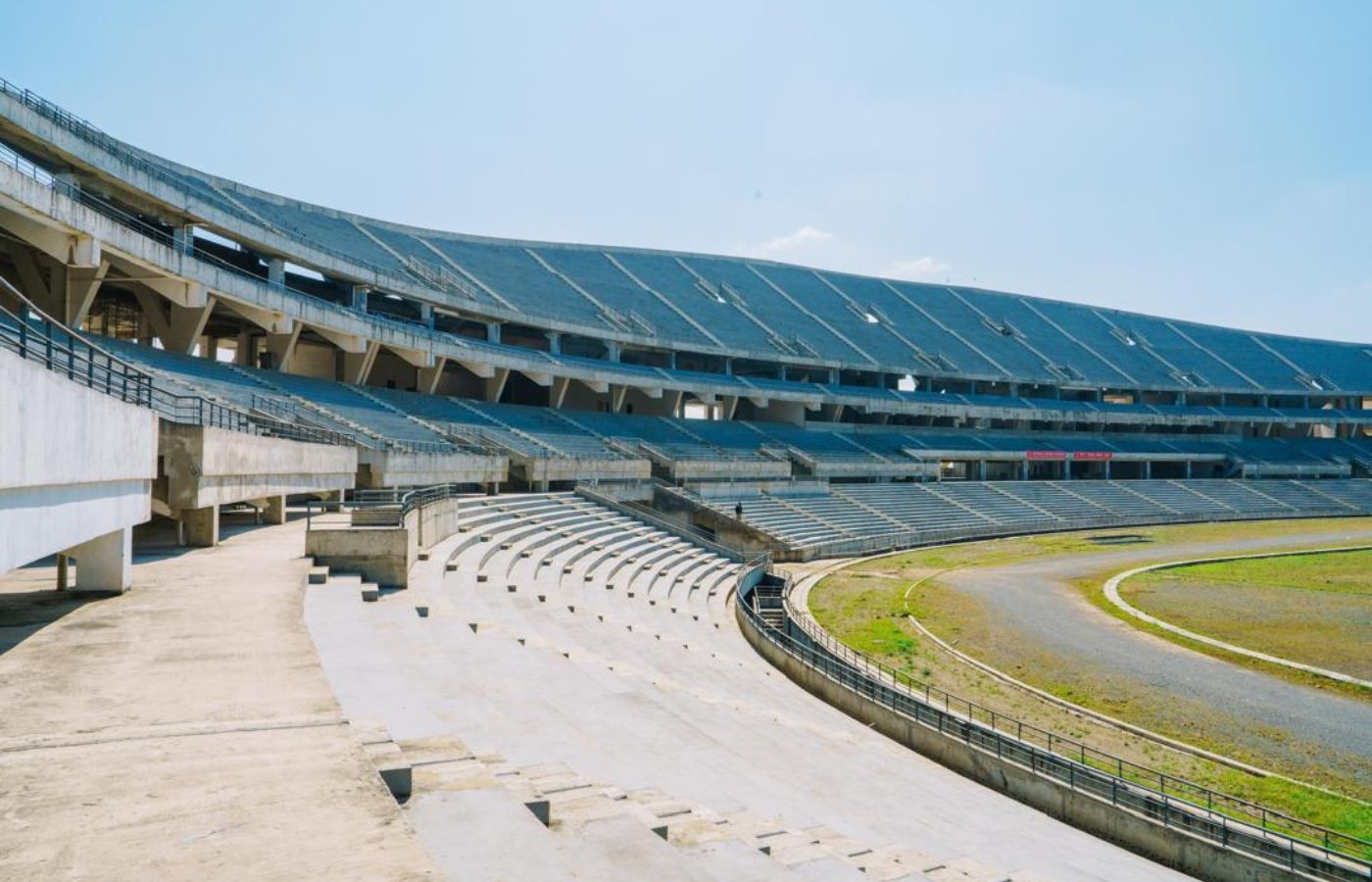
For years, the country built large stadiums in several cities. But in 2021, CAF inspection found that Ethiopia’s main stadiums did not meet international standards, forcing the national team to play home matches abroad. Only in 2026 did Dire Dawa Stadium receive approval to host Ethiopia’s first home internationals in five years.
That fact should haunt Ethiopian sport policy.
A country can build stadiums and still fail to build a sports economy. It can pour concrete and still miss the details that matter: pitch quality, lighting, safety, media facilities, access control, ticketing systems, hospitality areas, commercial concessions, training grounds and maintenance budgets.
Haileegezabher Adhanom, a football match producer for SuperSport Ethiopia, sees the stadium problem differently from many officials. He argues that several stadiums were not originally built around the logic of sport business.
“They were not built to host sporting competitions,” he says. “Cities were competing to host Nations and Nationalities Day, and they started building bigger and bigger stadiums which did not fulfil the CAF/FIFA minimum standards to host Level A tournaments.”
That sentence captures a national policy mistake. Ethiopia built many venues as symbols of civic prestige. But sport business requires venues designed as revenue assets.
In global sport, stadiums are no longer just places where matches happen. They are ticketing platforms, retail spaces, hospitality products, media environments, fan-data collection points, event venues and year-round commercial properties. Top clubs increasingly depend not only on broadcast money, but also on commercial revenue, merchandise, sponsorship, hospitality and stadium use beyond match days.
Ethiopia does not need to copy Real Madrid, Manchester City or Bayern Munich. But it does need to understand the principle: a stadium used mainly as a political monument or occasional match venue is a dead asset.
The same is true of the league itself.
Ethiopia has already had a taste of what commercial packaging can do. In 2020, SuperSport acquired exclusive rights to broadcast Ethiopian Premier League matches, putting the domestic league into a regional pay-TV ecosystem. In 2025, after SuperSport did not renew, the Ethiopian Premier League Share Company signed a new broadcast agreement with Oromia Broadcasting Network, giving OBN live transmission rights for the top flight.
This proves Haileegezabher’s point: Ethiopia does not have “no money” in sport. It has underutilized financial potential.
“I don’t think there is a financial issue in the industry at all,” he says. “I see an underutilized financial potential. What it lacks is strategic thinking to funnel the funds to long-term, profitable and talent-development areas.”
That distinction matters. The question is not whether sport can attract money. It already can. The question is whether the sector can organize that money into a system.
A broadcast deal without better production standards, fan engagement, match-day experience, club storytelling and competitive quality will not transform the league. A sponsor will not stay if the brand environment is weak. A fan will not pay consistently if ticketing is inconvenient, fixtures are poorly marketed, stadium access is chaotic, and the product on the pitch feels stale. A broadcaster will not pay premium rights if clubs do not produce stars, rivalries, narratives and reliable audiences.
Sport is not only competition. It is content.
That is where Ethiopia’s understanding remains static. For generations, sport has been treated as physical competition and national pride. Those are still important. But globally, sport has become a wider economy: television, sponsorship, tourism, lifestyle, gaming, data, soft power, apparel, hospitality, employment and urban entertainment.
“Our static perception of sport primarily focuses on its conventional definition as competition,” Haileegezabher says. “If you take it a bit further, it might also serve as a means of national pride. End of story.”
This limited perception explains Ethiopia’s deeper contradiction.
In athletics, the country has a world-class story. It has high-altitude training locations known to runners across the world. It has champions whose names carry enormous symbolic value. It has mass participation potential through events such as the Great Ethiopian Run. It has a national running culture that could support tourism, apparel, training camps, documentaries, athlete management, wellness events and international sponsorship.
Yet even athletics has not become the industry it could be.
Ethiopia has champions, but limited athlete-brand management. It has altitude, but underdeveloped running tourism. It has stories, but insufficient documentary, media and content packaging. It has mass participation potential, but not enough structured event calendars linked to hotels, travel, apparel, health and wellness markets.
The country has exported athletic glory. It has not fully monetized the culture that produced it.
Football suffers from the opposite problem. It has not given Ethiopia the same global success as athletics. But domestically, it has a market waiting to be organized. The Walia Ibex’s AFCON returns showed that football can still command national emotion even without sustained continental dominance. Historic clubs have loyal supporters. Regional sides carry identity. Cafés fill for big matches. Fans argue, travel, sing, complain and return.
That is not a weakness. It is the raw material of a sports economy.
Other countries faced similar moments and made deliberate choices.
South Africa’s Premier Soccer League did not become commercially stronger simply because football was popular. It built a rights and sponsorship machine. Its league learned to package broadcast rights, title sponsorships and club brands into products that companies could buy. South Africa’s experience is not perfect; many clubs still face financial pressure. But the lesson is useful: a league becomes investable when it can offer sponsors predictable visibility, professional administration, reliable fixtures, credible broadcasts and measurable audiences.
Morocco offers a different lesson. Its football rise was not built on stadiums alone. The Moroccan Football Federation invested in facilities, talent and qualified personnel. The Mohammed VI Football Academy, built on a large modern site with FIFA-standard facilities, became part of a broader development cycle involving regional academies, schools, scouting, coaching and medical support. Morocco treated football development as a system, not a construction project.
Senegal offers a third lesson. Its rise has been supported by academies such as Generation Foot and Diambars, which linked youth development, education, local competition and international pathways. These academies did not merely train players. They created a pipeline. They made talent visible, disciplined and exportable.
Japan offers an even broader lesson for countries trying to professionalize football from a modest base. The J.League was not built only around match results. It was built around club management, community identity, stadium standards, fan culture, youth development and a long-term vision. Japan understood early that a professional league is not simply a schedule of games. It is a system of clubs that must be locally rooted, financially managed and commercially legible.
The warning for Ethiopia is clear: stadiums without talent systems become empty shells. Subsidies without governance become leakage. Passion without data becomes noise. Clubs without ownership clarity become political instruments. Broadcast rights without a strong product become a temporary deal, not a durable industry.
Solomon Bekele, a veteran sport analyst, goes further. His diagnosis is blunt.
“The first problem is attitude,” he says. “In Ethiopia, the sport sector is subsidized by the government. So people do not enter to bring new ideas. They come to use the budget without accountability.”
From there, he says, dysfunction spreads: weak professionalism, relationship-driven appointments, poor governance and corruption risks. He also raises serious allegations about illicit enrichment within the sector. Such claims require evidence and formal investigation, but they point to a deeper issue that even cautious observers acknowledge: sport money in Ethiopia is not always matched by transparent systems.
“The sport cannot govern itself,” Solomon says.
That is the central test for the new proclamation.
A law can recognize sport investment. It can speak of commercialization. It can outline administrative procedures. But if government remains both funder, regulator, appointing power and political protector, reform will be compromised from the start.
Sports federations have already pushed back against state overreach. Several federations, including the Ethiopian Olympic Committee, have contested the Ministry of Culture and Sports’ authority to issue directives concerning their establishment and operations. They argue that decisions should come from federations’ general assemblies and that the ministry’s role should be limited to support and oversight.
This tension is not a minor legal dispute. It is the governance heart of Ethiopian sport.
Too much government control risks interference, patronage and conflicts of interest. Too little oversight risks corruption, capture and impunity. The answer is not withdrawal by the state. The answer is a better state role: regulate transparently, enforce standards consistently, fund strategically, protect autonomy, and punish abuse without political calculation.
Haileegezabher sees the new proclamation as a promising start, but not a final answer.
“The recognition by the government about the need for sport investment after all these years is the big paradigm shift,” he says. “But the proclamation appears to focus primarily on the administrative aspects of the sector.”
His concern is that stronger government control may restrict the freedom sport needs and deepen conflicts of interest. Still, he sees value in the legal recognition of commercialization and the attempt to build a cross-sector regulatory framework.
That framework should start with the low-hanging fruit - fan registration.
Ethiopian clubs talk about their fans, but many do not know them. A club that cannot identify its supporters cannot sell memberships, merchandise, targeted sponsorships, digital content or loyalty products. It cannot prove its audience to banks, telecom operators, breweries, apparel firms, transport companies or media partners.
“Start by registering the fans,” Haileegezabher says. “Once they know their fans, they should try to broaden their base.”




