

By Zelalem Tamir
Ethiopia stands at a pivotal moment in its two-decade quest to join the World Trade Organization (WTO), with its government eyeing full membership by March 2026 at the 14th Ministerial Conference (MC14) in Yaoundé, Cameroon.
Encouraged by recent progress and international support, authorities are intensifying efforts to align its economic policies with global trade rules, a move that officials believe would unlock new opportunities for the 163 billion economy.
Yet, as negotiations accelerate, questions linger about the timeline, drawing lessons from other nations’ experiences, and the broader context of shifting global trends, including potential U.S. defunding of the WTO.
Where Is Ethiopia Now in Its WTO Accession?
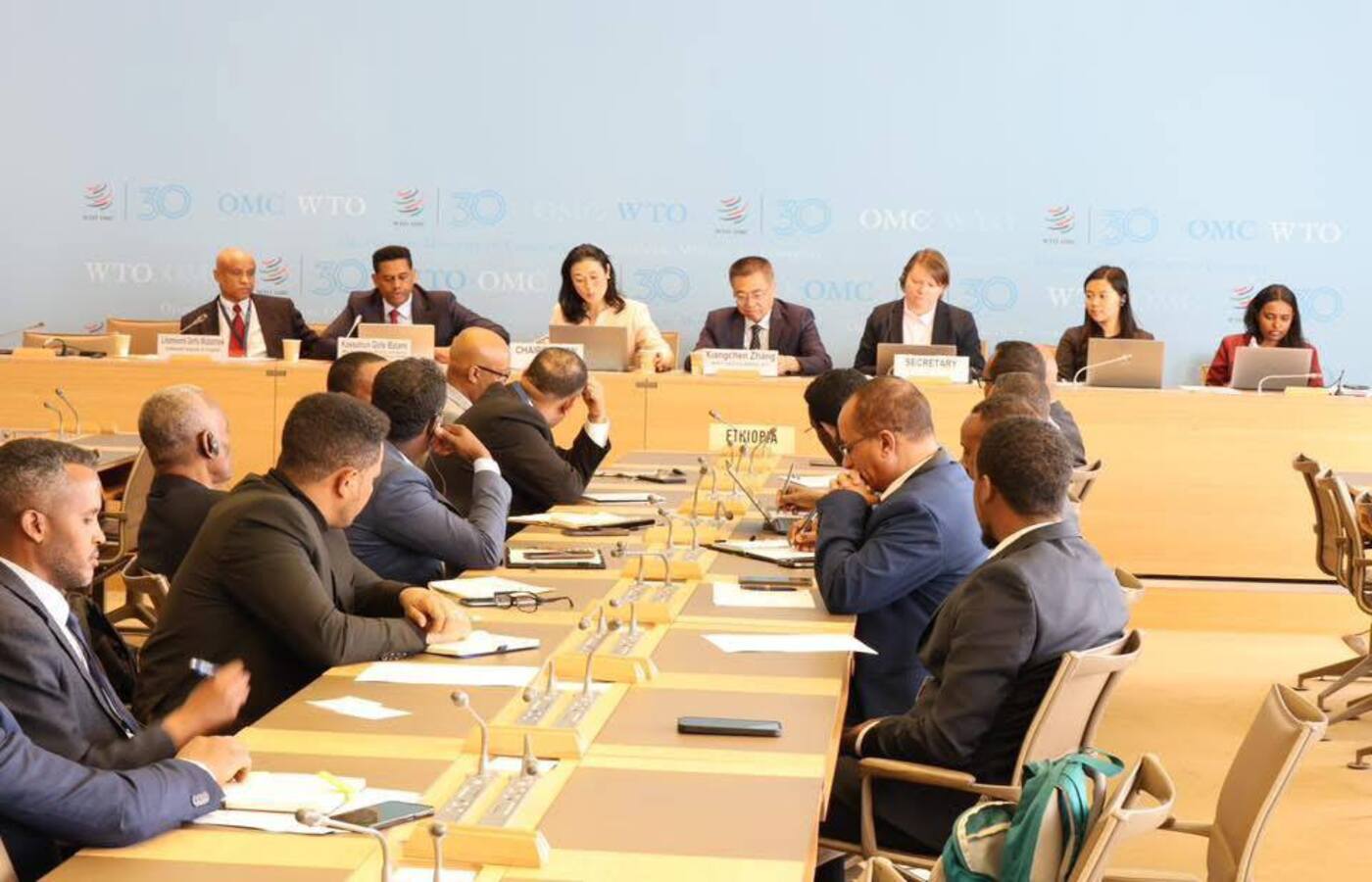
Ethiopia’s journey toward WTO membership, which formally began in 2003 with the establishment of its Working Party, has entered a critical phase as of March 29, 2025. The fifth round of negotiations, held on March 19 in Geneva, marked a major step forward after a five-year hiatus triggered by the COVID-19 pandemic and internal conflicts.
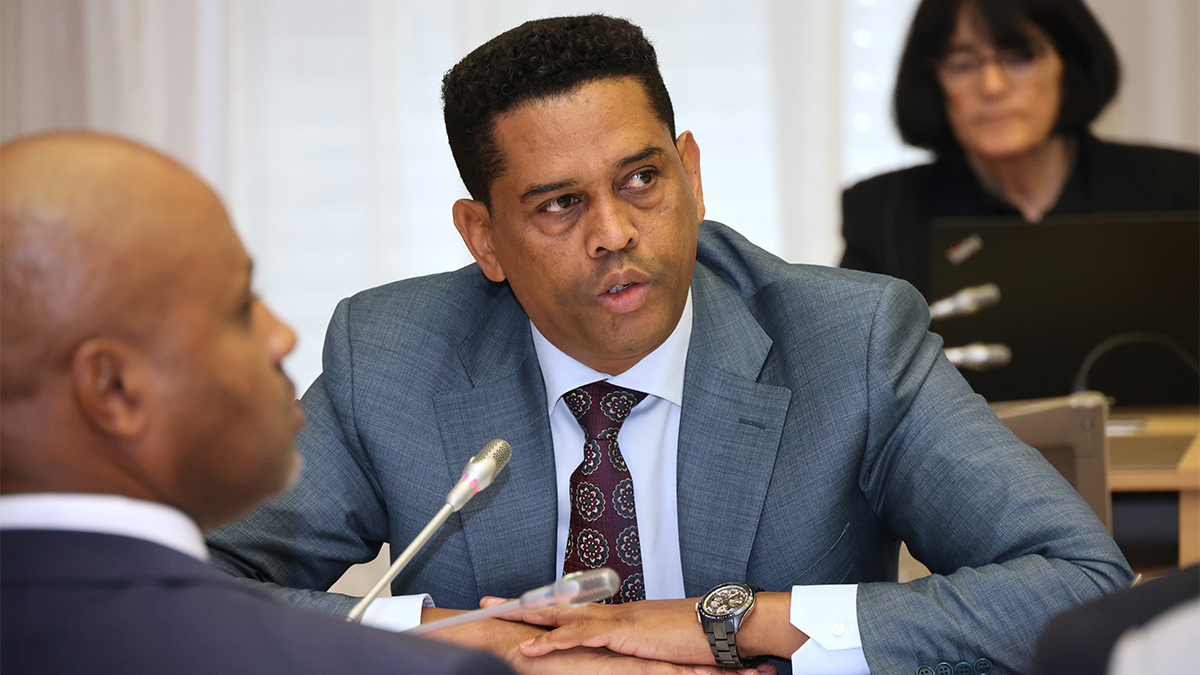
Led by Kassahun Gofe (PhD), Ethiopia’s Minister of Trade and Regional Integration and chief negotiator, the delegation expressed optimism about the process. “Our ambition is to finalize the accession process in the next several months and join the WTO family at the 14th Ministerial Conference, scheduled to take place on African soil,” Kassahun declared in his opening statement last week, emphasizing Ethiopia’s economic growth and its historical leadership in Africa.
The latest talks saw Ethiopia present revised offers on goods and services, committing to bound tariff rates lower than benchmarks for least developed countries (LDCs) in agriculture and opening key sectors like finance, communications, transportation, education, and tourism. Bilateral market-access negotiations have kicked off with 12 of 17 interested WTO members, a sign of "tangible progress."
Kassahun noted a drop in member inquiries—from 181 in 2020 to 110 this year. “Virtually all of these reforms are designed to ensure that its regulatory regime is fully compliant with WTO rules,” he told reporters on March 24, citing reforms like a new foreign-exchange system, a securities exchange, and liberalized investment policies under the Home-Grown Economic Reform Agenda.
Support for Ethiopia’s bid has been robust, according to Kassahun. Nineteen countries, alongside the World Bank, endorsed its efforts during the March meeting, a backing Kassahun described as exceeding expectations. WTO Deputy Director-General Xiangchen Zhang praised Ethiopia’s “ambitious accession commitment,” urging it to seize the opportunity for deeper economic reforms.
A high-level delegation visit to the WTO from December 5-11, 2024, further solidified this momentum, laying out a roadmap targeting a sixth Working Party meeting before the summer break and conclusion by 2026. Ethiopia’s observer status since 2003 has kept it in the fold, but full membership now hinges on finalizing these negotiations and overhauling domestic laws, particularly on intellectual property.
Still, hurdles remain. Ethiopian authorities are expected to refine its legal framework to meet WTO requirements, a process that could strain its capacity as an LDC. Local industries, especially in manufacturing and agriculture, face potential disruption from foreign competition, a concern echoed by critics who fear liberalization could undermine national priorities.
How Long Could Ethiopia’s Journey Take Based on Past Experiences?
The WTO accession process is notoriously arduous, particularly for LDCs, and Ethiopia’s timeline ambition invites comparison with the journeys of other nations. Since the WTO’s inception in 1995, 36 countries have acceded under Article XII, with LDCs often facing protracted negotiations due to capacity constraints and complex domestic reforms. The average duration for LDCs is around 12 years, though this varies widely depending on political will, economic readiness, and external support.
Take Nepal, an LDC that joined in 2004 after applying in 1989. Its 15-year process involved six Working Party meetings, extensive legislative changes, and bilateral talks with major economies like the U.S. and India. Similarly, Cambodia’s accession, finalized in 2004 after a 1994 application, spanned a decade, with eight meetings and significant concessions on tariffs and services.
More recently, Comoros and Timor-Leste became the 165th and 166th WTO members in 2024, following 17 and 19 years of negotiations, respectively. “The success of these two new members inspires Ethiopia to redouble its efforts to finalize its accession as expeditiously as possible,” Kassahun said last week.
Ethiopia’s 22 years as an observer and applicant place it among the longer-running cases, rivaled only by Algeria (37 years and counting) and Sudan (30 years) in Africa. Its four Working Party meetings before 2025—held in 2008, 2010, 2012, and 2020—reflect a stop-start rhythm, with delays tied to political shifts, economic crises, and global disruptions.
The current pace suggests a sprint to the finish: if the sixth meeting occurs by July 2025 and bilateral deals conclude swiftly, Ethiopia could hit its MC14 target, shaving years off the typical LDC timeline. This would require roughly 23 years total, aligning with the upper end of historical norms but accelerated by recent urgency.
Yet, speed comes with risks. Liberia, another LDC, wrapped up its accession in 2016 after just nine years, a record bolstered by post-conflict momentum and strong U.S. support—but it faced implementation challenges post-entry.
Ethiopia’s roadmap, bolstered by technical assistance from the WTO Secretariat and World Bank, aims to avoid such pitfalls. Zhang’s call for intensified market-access talks by April’s end signals a tight 12-month window, a pace more akin to Samoa’s 15-year journey (1996-2011) than the decades-long slogs of some peers. For Ethiopia, the lesson from history is clear: momentum matters, but capacity and compromise will dictate the final stretch.
What Global Trends Could Impact Ethiopia’s Bid?
Ethiopia’s accession unfolds against a backdrop of global trade uncertainties, with the WTO facing financial and political headwinds that could ripple through its process. Chief among these is the specter of U.S. defunding, a recurring threat tied to shifting American priorities.
The U.S., which contributed 18.9 million to the WTO’s 197 million US dollars budget in 2024 (about 9.6 percent), has long critiqued the organization’s efficacy, particularly under Republican administrations. In 2020, the Trump administration slashed funding proposals, and with a potential GOP return in 2025, analysts see renewed pressure looming. A March 2025 report from the U.S. Trade Representative flagged concerns over WTO dispute settlement delays and China’s trade practices, hinting at leverage for budget cuts.
Such a move could strain the WTO’s operations, including technical assistance critical for LDCs like Ethiopia. The Secretariat’s 2024 budget already flagged a 10 million US dollars shortfall, prompting calls for voluntary contributions. For Ethiopia, which relies on capacity-building support—evident in last week’s Round Table with partners like the EU and UNIDO—any funding dip could slow negotiations or dilute assistance. “Ethiopia expressed its readiness to actively engage with WTO members,” Kassahun noted, but a leaner WTO might struggle to facilitate the bilateral talks he envisions.
Broader trends add complexity. Rising protectionism, cited by Kassahun as a global challenge, has seen tariffs spike in key markets, with the U.S. imposing 25 percent duties on Chinese goods in 2024. This climate could harden member stances in Ethiopia’s market-access talks, particularly with the U.S., a key bilateral partner.
On March 3, 2025, President Donald Trump also enacted a 25 percent tariff on imports from Canada and Mexico and a 10 percent duty on Chinese goods, citing fentanyl and migration concerns. Canada retaliated with 25 percent tariffs on 155 billion US dollars in U.S. goods, while China vowed to “fight till the end,” targeting U.S. agriculture. Mexico signaled reciprocal measures, and there is fear over a broader boycott by Japan, Europe, and Australia, with Japan and Canada reportedly selling off U.S. dollars.
Global shocks amplify the stakes. For Ethiopia, a bystander in this chaos, trade diversion offers opportunities—its coffee and textiles could fill gaps left by disrupted suppliers—but also risks, as protectionism fragments supply chains it hopes to join. The U.S.’s “Liberation Day” gambit—tariffs on “trillions” in imports, including autos from the EU, slated for April 2—could tip the scales. Economists warn of a 911 billion US dollar hit to the U.S. economy if all partners retaliate, per Iowa State’s CARD, dwarfing the 360 billion US dollar global efficiency loss.
Meanwhile, the African Continental Free Trade Area (AfCFTA), which Ethiopia joined in 2020, offers a parallel integration path, potentially easing WTO urgency if global multilateralism falters. WTO membership growth—two LDCs in 2024—bucks the skepticism, but stalled talks for giants like Russia (ended 2022) underscore geopolitical risks.
Ethiopia’s fate may hinge on navigating this turbulence. A U.S. pullback could delay MC14 or weaken WTO clout, yet Ethiopia’s 19-nation coalition and African momentum might offset the blow. As Kassahun affirmed, “It strengthens our confidence that WTO members will continue to support our efforts to the end.” Whether that confidence holds through 2026 depends as much on Geneva’s resolve as Washington’s whims.




