Skip to content

November, 2026

Birr Metrics
Birr Metrics
  • News
  • Feature
  • Insights
  • Interview
  • Startups
  • Editorial
  • Digital Magazine
Search
Birr Metrics
Birr Metrics
  • News
  • Feature
  • Insights
  • Interview
  • Startups
  • Editorial
  • Digital Magazine
Loading...
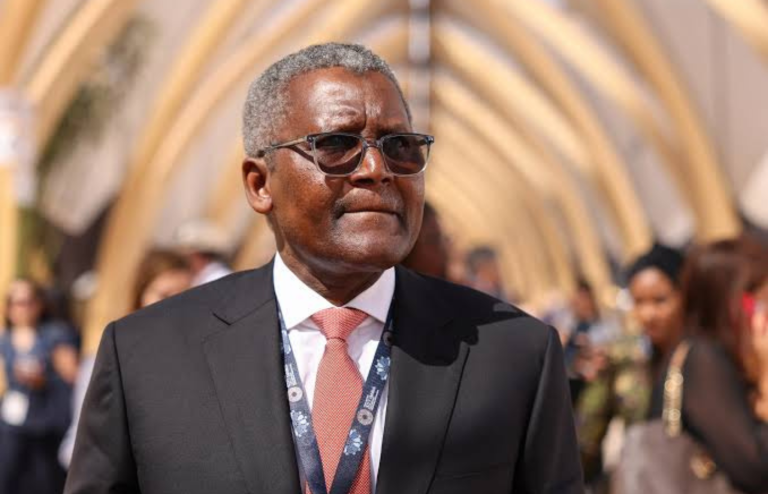
*Dangote Cement’s Expansion to Test Cash Allocation After 41.5 Percent Profit Growth* _Capital commitments of 2.31 trillion naira put investment spending and shareholder returns in focus, even as stronger cash generation improves the balance sheet_ By Amanuel Kindeya Dangote Cement Plc’s expanding investment commitments will test its ability to sustain strong shareholder payouts while financing new production capacity, despite a 41.5 percent increase in pre-tax profit in the first nine months of 2026. The company reported pre-tax earnings of 1.47 trillion naira, up from 1.04 trillion naira a year earlier. Profit after tax increased 31.2 percent to 974.79 billion naira, while earnings per share rose to 58.37 naira from 43.82 naira. The results show a business generating stronger earnings and cash, but also taking on a larger investment pipeline. Capital commitments reached 2.31 trillion naira at the end of September, more than double the 1.12 trillion naira recorded at December 2025. Those commitments should not be treated as expenditure falling due immediately. Their implications for liquidity depend on construction schedules, contractual payment terms and the pace at which new plants begin generating revenue. Nevertheless, their scale makes capital allocation increasingly important. Dangote plans to increase annual production capacity from 55 million tonnes to 80 million tonnes by 2030, an expansion of about 45 percent. Its September capital markets presentation identified projects in Nigeria, Ethiopia, Cameroon, Senegal and Zimbabwe, combining new plants with additions to existing facilities. The Ethiopian programme includes a second production line and a satellite grinding unit intended to double capacity to five million tonnes annually. The strategy offers an opportunity to serve growing construction markets and spread investment across several countries. Its financial success, however, will depend on how quickly additional capacity translates into profitable sales. Installed capacity alone does not guarantee demand, particularly where construction activity faces expensive credit or pressure on household purchasing power. Stronger cash generation provides substantial support. Operating cash flow increased 41.5 percent to 1.83 trillion naira during the nine-month period, while dividend payments totalled 753.85 billion naira. Management reported free cash flow of 1.26 trillion naira after deducting capital expenditure, covering dividends approximately 1.7 times. It also reported a net cash position of 51.1 billion naira, compared with net debt of 682.9 billion naira at the end of 2025, using a definition that includes related-party borrowings and bank overdrafts. These figures indicate that the expansion programme begins from an improving financial position. The financing picture is more nuanced than gross debt repayments suggest. Although Dangote repaid 992.65 billion naira in loans, it also obtained 467.69 billion naira in new borrowing, leaving net loan repayments of approximately 525 billion naira. Supplier financing also supported investment. The cash-flow statement records property, plant and equipment additions of 566.72 billion naira, but cash acquisition payments of 301.70 billion naira, alongside 268.71 billion naira in unpaid supplier credit. Such arrangements spread payments over time, easing immediate cash requirements while creating obligations that future cash generation must meet. Short-term liquidity therefore remains an area to watch. Current liabilities of 2.75 trillion naira exceeded current assets of 1.97 trillion naira, producing a current ratio of approximately 0.72 times and a working-capital deficit of about 780 billion naira. A ratio below one does not, by itself, establish financial distress. A company collecting cash quickly while paying suppliers later can operate with negative working capital. The vulnerability emerges if collections weaken, suppliers demand earlier payment or investment outflows accelerate. The quality and durability of earnings growth will also matter. Revenue increased 19.6 percent to 3.77 trillion naira, while operating profit rose 27.8 percent to 1.57 trillion naira. Gross margin widened to 63.2 percent from 59.2 percent, showing that the improvement extended beyond financing costs. However, a 57.8 percent decline in finance costs to 120.80 billion naira provided a significant additional boost to pre-tax earnings. Lower borrowing costs strengthen the company’s capacity to invest, but an equally large reduction cannot be assumed to recur. Sustaining profit growth will increasingly require stronger sales and continued control of production and distribution expenses. Ethiopia illustrates the operational demands accompanying the expansion. Dangote’s September presentation put the planned investment in its second production line and grinding unit at 380 million US dollars. For that expenditure to deliver the intended returns, raw-material supplies, energy availability, logistics and construction schedules will need to support higher output. The company’s past difficulties in Ethiopia provide relevant background, but should not be presented as a new shutdown threat. Reports that Dangote might close its plant over an Oromia directive to outsource pumice, sand and clay mining to youth groups date to June 2017. Those reports also described a suspended advance payment for an earlier expansion proposal; they do not establish that the same dispute is active in October 2026. Dangote Cement’s shares closed at 1,341.90 naira on October 27, gaining 9.8 percent on the day and bringing the year-to-date increase to approximately 120 percent. The rally signals strong investor confidence, although price movements alone cannot establish how fully future earnings have been reflected in the valuation.

Dangote Cement’s Expansion to Test Cash Allocation After 41.5 Percent Profit Growth

Capital commitments of 2.31 trillion naira put investment spending and shareholder returns in focus, even as stronger cash generation improves the balance sheet Dangote Cement Plc’s expanding investment commitments will...
Read More
Frehiwot Calls for Regulatory Costs to Be Weighed Against Benefits

Frehiwot Calls for Regulatory Costs to Be Weighed Against Benefits

New minister directs communications regulator to remove administrative hurdles that hinder network expansion, investment and service improvements. Newly appointed Innovation and Technology Minister Frehiwot Tamru has instructed the Ethiopian Communications...
Read More
Dashen Bank Launches Account-Free Merchant Payments

Dashen Bank Launches Account-Free Merchant Payments Through AirPay

New payment feature allows customers to identify nearby merchants and complete transactions without entering account numbers, phone numbers or scanning QR codes. Dashen Bank has introduced a digital payment service...
Read More
Somalia’s 450 Million US Dollar Khat Market Puts Ethiopia’s

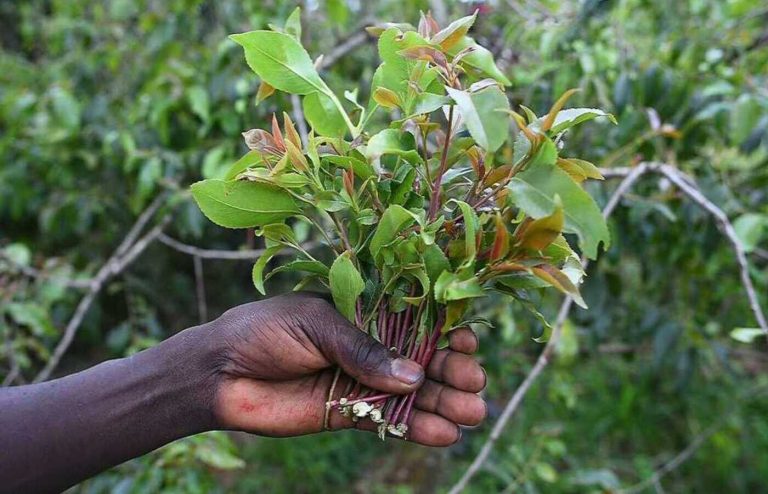
Somalia’s 450 Million US Dollar Khat Market Puts Ethiopia’s Falling Exports in Focus

New economic figures reveal a lucrative market contested by Ethiopia and Kenya, as reported Ethiopian shipments decline 35 percent amid shifting regional trade relations. Somalia imported khat worth 450.4 million...
Read More
Nyala Insurance Paid-Up Capital Tops 2 Billion Birr as Assets Exceed 7 Billion

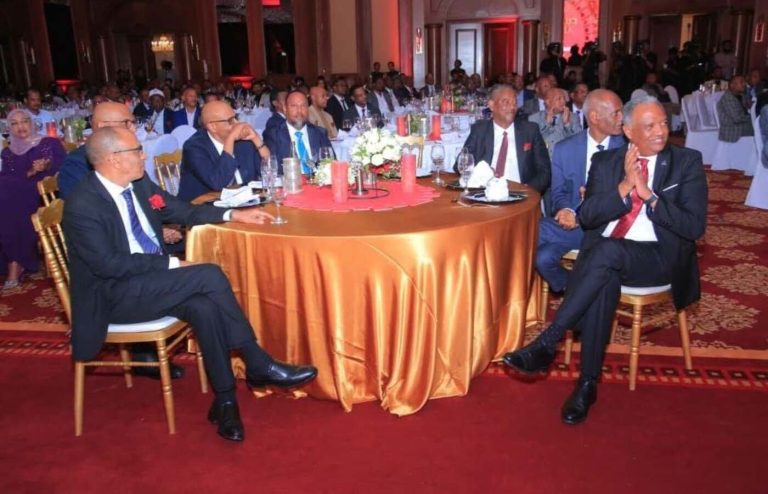
Nyala Insurance Paid-Up Capital Tops 2 Billion Birr as Assets Exceed 7 Billion

The insurer has expanded its capital base from 7 million birr at establishment, while the National Bank of Ethiopia signals plans for a separate insurance regulator. Nyala Insurance S.C. has...
Read More

Ethiopia’s Electric Vehicle Boom Outpaces Infrastructure Readiness, Global Index Finds

New international assessment places Ethiopia among economies at risk of losing electrification momentum, citing weak electricity networks, limited access and shortages of skilled workers. Ethiopia’s rapid adoption of electric vehicles...
Read More
P2P Transfers Dominate EthSwitch’s $7.8 Billion Payment Network as Merchant Transactions Lag _Person-to-person transfers account for 85 percent of payment value, while POS and QR transactions remain limited despite expanding national infrastructure._ Person-to-person transfers accounted for nearly 85 percent of the 7.8 billion US dollars in transactions processed through Ethiopia’s national electronic payments switch during the 2025/26 financial year, highlighting the concentration of activity in direct money transfers as merchant payments remain a small part of the interoperable network. EthSwitch, the operator of the national payments infrastructure, reported processing 387 million interoperable transactions during the year, with person-to-person (P2P) transfers accounting for 242.6 million transactions valued at approximately 6.6 billion US dollars. The transfers represented nearly 63 percent of total reported transaction volumes, reflecting the scale of payments moving between customers of participating financial institutions. By comparison, point-of-sale (POS) transactions reached just 3.9 million, worth approximately 66.5 million US dollars, while payments through the ETHQR platform totalled 551,500 transactions valued at 42.2 million US dollars. Combined, the two merchant payment channels accounted for approximately 4.45 million transactions, equivalent to just 1.2 percent of the total volume processed through the national switch. Automated teller machine (ATM) transactions remained the second-largest category, with 131.5 million transactions worth approximately 1.2 billion US dollars. The figures show that transfers between individuals and ATM withdrawals continue to account for most activity on the interoperable network, while payments made directly to merchants represent a much smaller share. However, the data cover transactions processed through EthSwitch rather than all digital payments conducted across Ethiopia. Payments processed within individual banks and other payment-service providers may not be reflected in the reported totals. The four disclosed transaction categories account for approximately 378.6 million transactions, leaving about 8.4 million transactions outside the breakdown provided by the company. EthSwitch also reported gross profit before tax of approximately 16.1 million US dollars during the financial year. Comparative earnings figures were not included in the information released. The results come as Ethiopia continues to develop the infrastructure connecting banks and other payment-service providers, with interoperability forming part of efforts to expand access to digital financial services. EthSwitch said its EthioPay Instant Payment System (IPS) had processed more than one million P2P transactions in a single day, with a combined value of approximately 31.7 million US dollars. The company has also completed the migration of P2P transfers to the instant-payment platform, allowing participating financial institutions to process transfers through shared real-time infrastructure. The migration represents a further stage in the development of Ethiopia’s national payment system, which is intended to enable transactions between customers using different financial institutions and payment-service providers. Interoperable payment infrastructure allows institutions to exchange payment instructions through a common network rather than relying exclusively on separate systems or direct arrangements between individual providers. For consumers, the infrastructure supports transfers across participating institutions. For businesses, it can provide the foundation for merchant collections, digital payments and other financial transactions. The expansion of the national switch follows broader changes in Ethiopia’s financial sector, including the growth of mobile money services and the development of digital payment channels by commercial banks and other providers. In November 2025, the AfricaNenda Foundation upgraded Ethiopia’s instant-payment system from the “Basic” to the “Progressed” level in its State of Inclusive Instant Payment Systems in Africa 2025 report. The classification assesses instant-payment systems using criteria that include interoperability, institutional participation, supported payment services and conditions affecting financial inclusion. EthSwitch has separately stated that AfricaNenda recognised its instant-payment platform as a matured platform. However, the description differs from the formal “Progressed” classification in the 2025 report, and the company has not clarified whether it refers to a separate assessment. The distinction reflects the different measures used to evaluate payment infrastructure. Transaction volumes indicate the scale of activity, while assessments of inclusivity also consider affordability, accessibility, consumer protection and the range of available payment services. EthSwitch has since officially launched the EthioPay brand and introduced a five-year corporate strategic plan covering the 2026/27 to 2030/31 financial years. The strategy will guide the company's operations during a period in which Ethiopia is expanding its digital financial infrastructure and developing additional payment services. The latest transaction figures provide a breakdown of how the national switch is currently being used. P2P transfers alone generated approximately 6.6 billion US dollars in transaction value, compared with a combined 108.7 million US dollars processed through POS and ETHQR channels. This means the value of P2P transfers was more than 60 times the combined value of transactions processed through the two merchant payment channels. The difference illustrates the concentration of activity within EthSwitch’s interoperable network, although it does not establish the overall level of merchant payment adoption across the country's financial system. AfricaNenda is scheduled to release the 2026 edition of its State of Inclusive Instant Payment Systems in Africa report in Mauritius on November 19, providing an updated assessment of instant-payment infrastructure across African markets. The forthcoming report will offer a new reference point for evaluating Ethiopia’s progress since its 2025 classification, including developments following the migration of P2P transactions to EthioPay-IPS. For EthSwitch, the latest financial-year results establish the scale of transactions processed through the national network, while the distribution of activity shows that direct transfers remain its principal use. The company's new five-year strategy will provide the framework for its next phase of operations, including the development of payment services beyond person-to-person transfers.

P2P Transfers Dominate EthSwitch’s $7.8 Billion Payment Network as Merchant Transactions Lag

Prson-to-person transfers account for 85 percent of payment value, while POS and QR transac7tions remain limited despite expanding national infrastructure. Person-to-person transfers accounted for nearly 85 percent of the 7.8...
Read More
Regulator Urges Manufacturers to Comply as Addis Ababa

Regulator Urges Manufacturers to Comply as Addis Ababa Finalizes Bottled Water Price Deal

𝘛𝘳𝘢𝘥𝘦 𝘉𝘶𝘳𝘦𝘢𝘶 𝘤𝘢𝘭𝘭𝘴 𝘧𝘰𝘳 𝘧𝘢𝘪𝘳 𝘱𝘳𝘪𝘤𝘪𝘯𝘨 𝘢𝘯𝘥 𝘵𝘳𝘢𝘯𝘴𝘱𝘢𝘳𝘦𝘯𝘤𝘺, 𝘸𝘩𝘪𝘭𝘦 𝘧𝘰𝘰𝘥 𝘢𝘯𝘥 𝘥𝘳𝘶𝘨 𝘢𝘶𝘵𝘩𝘰𝘳𝘪𝘵𝘺 𝘸𝘢𝘳𝘯𝘴 𝘰𝘧 𝘭𝘦𝘨𝘢𝘭 𝘢𝘤𝘵𝘪𝘰𝘯 𝘰𝘷𝘦𝘳 𝘴𝘢𝘧𝘦𝘵𝘺 𝘷𝘪𝘰𝘭𝘢𝘵𝘪𝘰𝘯𝘴 The Addis Ababa Trade Bureau has urged bottled water manufacturers...
Read More

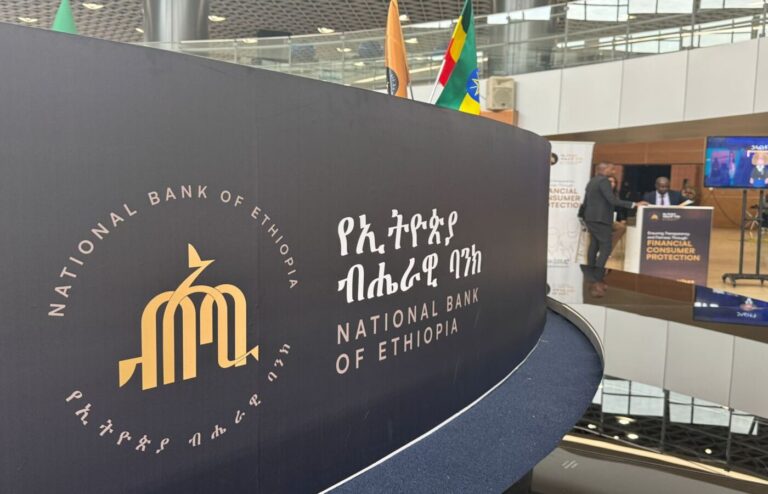
NBE Allocates $140 Million as Banks Bid for $150.83 Million in Latest FX Auction

The central bank's 31st foreign exchange auction attracted bids from 30 commercial banks, with 28 securing allocations at a weighted average rate of 159.7014 birr per US dollar. The National...
Read More

Goods Imports Climb to 22.1 Billion US dollars Despite Exchange-Rate Reform and Import Substitution Drive

Demand for fuel, capital goods and industrial inputs remains strong as officials report progress replacing selected imports with local production. Ethiopia’s merchandise imports increased by approximately 18 percent to 22.1...
Read More
« Previous 1 … 10 11 12 13 14 … 290 Next »
Menu
  • News
  • Feature
  • Insights
  • Interview
  • Startups
  • Editorial
  • About us
  • Digital Magazine
  • Privacy Policy

hello@birrmetrics.com

Copyright © 2026 Birr Metrics | All Rights Reserved

Designed By Collab Systems

Scroll to Top