

New international assessment places Ethiopia among economies at risk of losing electrification momentum, citing weak electricity networks, limited access and shortages of skilled workers.
Ethiopia’s rapid adoption of electric vehicles is advancing faster than the infrastructure and policy conditions needed to sustain a broader transition to electricity, according to a new international assessment that identifies the country as an unusual case among 16 economies examined.
The Electrification Competitiveness Index, published on October 27, 2026, by the We Mean Business Coalition with support from energy research organisation RMI, assigns Ethiopia a deployment score of 45 percent against an enabling-conditions score of 38 percent.
Ethiopia is the only economy in the assessment where the deployment score exceeds the enabling-conditions score, highlighting a gap between the adoption of electric technologies and the infrastructure, financing, workforce and regulatory arrangements required to support their continued expansion.
The report places Ethiopia in its “risk of stalling” category, alongside the United States, Australia, Brazil and South Korea. The classification reflects concerns about the conditions needed for further electrification rather than evidence that Ethiopia’s electric-vehicle market has already begun contracting.
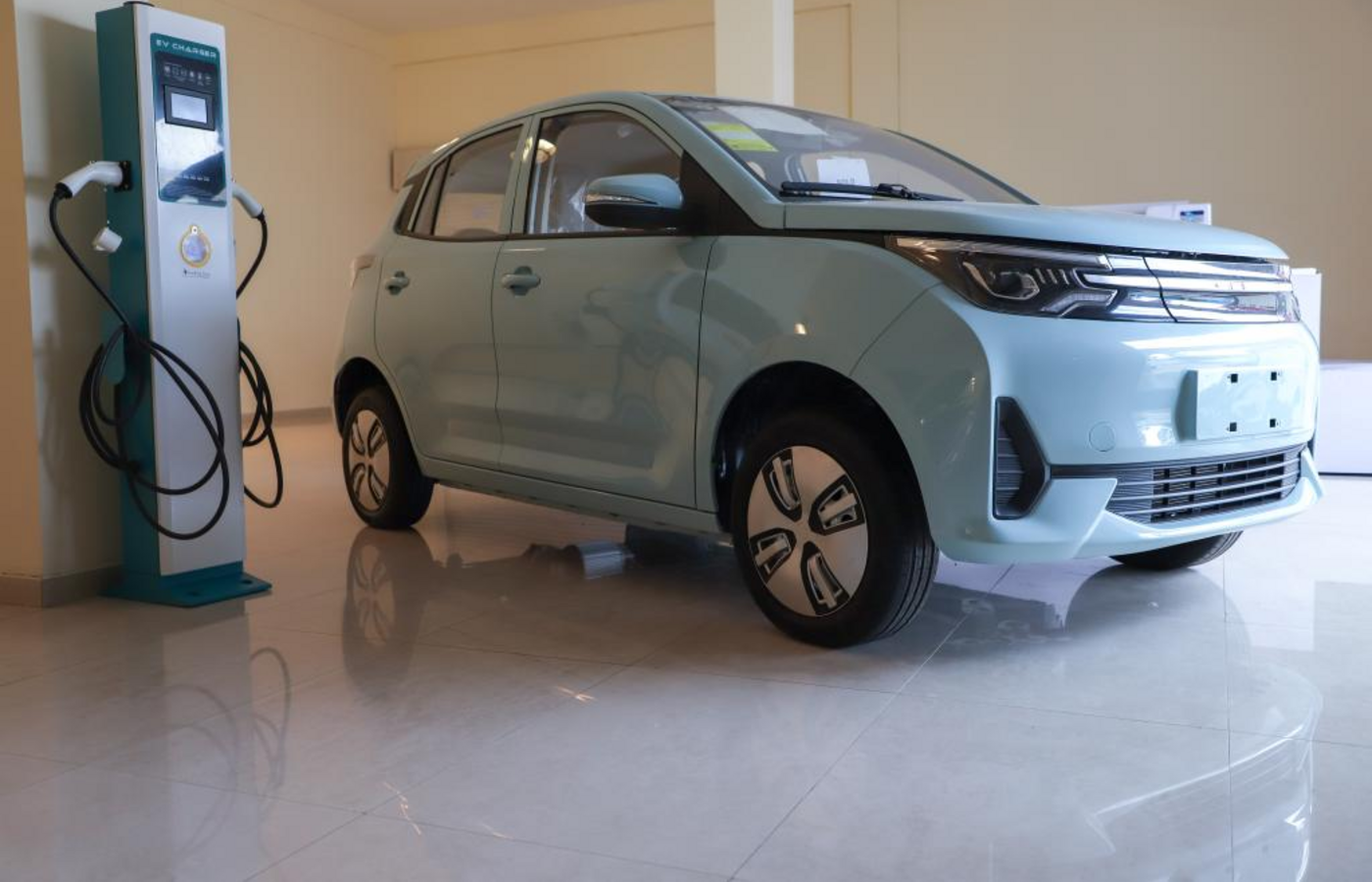
The findings come as Ethiopia pursues an unusually rapid shift towards electric mobility following restrictions on imports of petrol- and diesel-powered passenger vehicles and government efforts to reduce dependence on imported petroleum products.
According to the index, electric vehicles accounted for approximately 60 percent of new passenger-car purchases in Ethiopia in 2024. The figure illustrates the scale of the country’s transition towards electric mobility, although the report acknowledges limitations in the underlying vehicle-sales data.
The assessment identifies Ethiopia’s predominantly hydropower-based electricity system and comparatively low electricity costs as advantages for electrification. These conditions have supported the expansion of electric transport and provide opportunities to substitute electricity for imported fossil fuels.
Yet the report finds that progress in transport has not been matched across other sectors of the economy.
Electricity accounts for only 2 percent of residential energy consumption, according to the assessment, reflecting the continued dependence of Ethiopian households on traditional fuels, particularly for cooking. Industrial electrification also remains limited, despite the country’s substantial hydropower resources.
The gap illustrates a central challenge facing Ethiopia’s energy transition: expanding electricity generation does not automatically translate into reliable electricity access for households, factories and transport operators.
The index identifies weaknesses in transmission and distribution infrastructure, electricity reliability, investment conditions and workforce skills as obstacles to wider adoption.
These constraints have implications for manufacturers seeking to replace fossil-fuel-powered equipment, businesses considering investment in electric transport fleets and households looking to shift towards electric cooking and other appliances.
Ethiopia’s electricity system has expanded considerably through large hydropower investments, most notably the Grand Ethiopian Renaissance Dam. However, electricity access remains limited, while the distribution network faces substantial investment requirements.
The new assessment follows the International Energy Agency’s Ethiopia 2026 Energy Policy Review, also released on October 27, which estimates that approximately 85 million Ethiopians lacked electricity access in 2024.
The IEA estimates that electricity access reached about 35 percent that year, underscoring the scale of investment required to connect households and businesses despite Ethiopia’s growing generation capacity.
The two reports use different indicators and methodologies. The IEA examines Ethiopia’s broader energy system and policy framework, while the Electrification Competitiveness Index compares the deployment of electric technologies with the conditions supporting their adoption across selected economies.
Together, their findings point to the importance of electricity distribution, reliability and financing in determining how effectively Ethiopia can use its expanding generation capacity.
For Ethiopia’s transport sector, the infrastructure challenge extends beyond the number of electric vehicles entering the market.
The commercial viability of electric mobility depends on access to charging facilities, adequate electricity connections, dependable supply and the availability of technicians capable of maintaining vehicles and charging equipment.
For manufacturers, wider electrification requires sufficient network capacity and reliable service to support production processes that currently depend on diesel generators or other fuels.
The assessment also identifies workforce capacity as a constraint. Expanding electric transport, industrial equipment and building technologies requires technicians, engineers and specialised service providers whose availability can influence both investment costs and operational reliability.
The index does not conclude that Ethiopia’s electrification strategy has failed. Rather, it identifies a risk that progress in deploying electric technologies could outpace improvements in the systems needed to sustain their use.
Its findings also carry important statistical qualifications. The publishers flag concerns about data quality for Ethiopia, particularly gaps in investment information and electric-vehicle sales statistics. The index’s scores should therefore be interpreted as comparative assessments rather than precise measures of infrastructure performance.




