

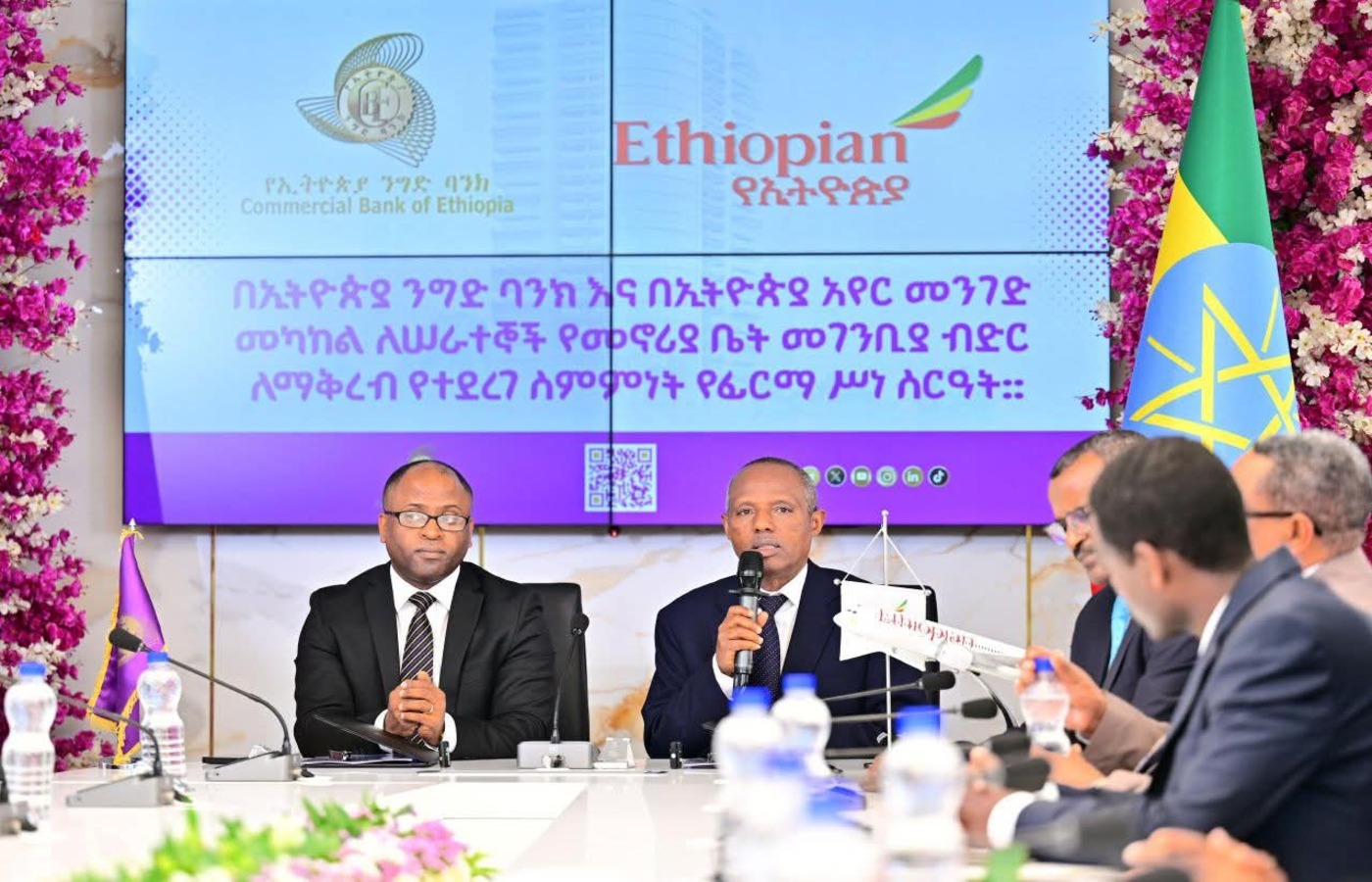
The Commercial Bank of Ethiopia (CBE) said the government accounted for 12 percent of its total lending in the 2025/26 fiscal year, signalling a further shift away from state-dominated credit allocation towards private sector financing.
Of the 458 billion birr disbursed in loans during the year, 404 billion birr, or 88 percent, went to private enterprises, while 54 billion birr was allocated to government projects.
The latest figures mark a notable change for Ethiopia’s largest and only fully state-owned commercial bank, which has historically been a primary financier of government-led development through state-owned enterprises (SOEs). Established in 1942, CBE holds nearly half of the banking sector’s assets and deposits and has long played a central role in funding large-scale infrastructure, agriculture, and industrial projects aligned with government priorities.
For decades, this mandate positioned the state—often via SOEs in power, rail, sugar, and manufacturing—as the dominant recipient of CBE credit. Major borrowers have included Ethiopian Electric Power, the Ethiopian Railway Corporation, and the Ethiopian Sugar Corporation, with loans frequently backed by government guarantees or bonds. While these exposures were often recorded under sectoral headings such as manufacturing, construction, and agriculture, they contributed to significant credit concentration and elevated risk on the bank’s balance sheet.
By the early 2020s, SOE-linked lending accounted for a substantial share of CBE’s portfolio, contributing to rising non-performing loans and drawing concern from regulators and international partners. These vulnerabilities were amplified by economic shocks, foreign exchange shortages, and project delays, prompting calls for a reorientation of the bank towards commercial discipline and private sector growth.
That rebalancing gained momentum in late 2024, when parliament approved a major restructuring under which the government assumed more than 845 billion birr in legacy SOE debts from CBE, issuing bonds to recapitalise the bank. The move, supported by the IMF and World Bank, aimed to reduce credit concentration, strengthen asset quality, and free up lending capacity for private investment.
Against this backdrop, the 2025/26 lending mix reflects CBE’s effort to operationalise those reforms. Efrem Mekuria, deputy president for corporate services at the Commercial Bank of Ethiopia, said the allocation balances private sector development with government financing needs, while maintaining commercial discipline across the bank’s portfolio.
While legacy state exposures remain a structural challenge, the bank’s latest disclosures suggest a gradual transition away from its historic role as the government’s primary financier towards a more private-sector-oriented model—a move seen by policymakers as critical to sustaining investment, job creation, and broader economic growth.




