


Cement prices in Ethiopia have stabilized after years of sharp fluctuations, helped by increased supply from new factories such as Lemi National Cement and the resumption of operations at National Cement. The trend has eased pressure on builders and developers, offering relief to a construction sector that has struggled with high material costs and slowing activity in recent years.
Yirga Melak, a civil works consultant, said the market “is reasonably stable compared to previous years, significantly benefiting the construction sector.” He explained that affordability has supported renewed construction activity, enabling infrastructure development and economic growth. “The moderation likely stems from a well-balanced supply and demand,” Yirga said. “Lemi Cement Factory and other producers have ensured sufficient supply. But cement prices are always subject to fluctuations, and future trends remain uncertain.”
Vendors in Addis Ababa also report that prices have held steady for months. Near Figa, Semahegn Ayalew, who has sold construction materials for more than a decade, said, “National Cement is sold for about 1,000 birr per quintal, Derba for 1,080 birr, and Dangote for 1,100 birr. The factories are operating again, and supply is better. But construction is not at the pace it used to be three or four years ago, and that may also explain why prices are down.”
Addis Asefa of East Africa Trading noted that National Cement now sells for less than 1,000 birr per quintal—down sharply from 2,900 birr last year. “The government’s mega projects, like the GERD, are being completed,” he said. “Corridor development and other public works have not absorbed as much cement as anticipated. The reduced demand has bridged the gap in the construction market.”
Addis added that while lower prices help small builders and housing projects, broader challenges remain. “The slowdown in construction is partly due to instability in different regions and less government engagement in housing projects compared to previous years,” he said.
Ethiopia’s cement market underpins its urbanisation and industrial growth. Valued at about 734 million US dollar in 2024, the sector is expected to rebound with a 5.1 percent annual growth rate through 2033 after a 5.2 percent decline last year. Demand has historically been driven by large public works such as the Grand Ethiopian Renaissance Dam, which alone consumed more than 10 million tons of cement.
The country’s installed cement production capacity reached 20 million tons per year by mid-2025, placing Ethiopia among Africa’s top producers. Yet utilisation rates hover around 50 to 60 percent, reflecting slower construction activity. The Lemi National Cement Factory—the country’s largest—produces up to 15,000 tons of cement daily, while a second line in Dire Dawa has boosted national supply by nearly 50 percent. Alongside Dangote, Derba, Messebo, and Habesha, these plants control about 70 percent of total output.
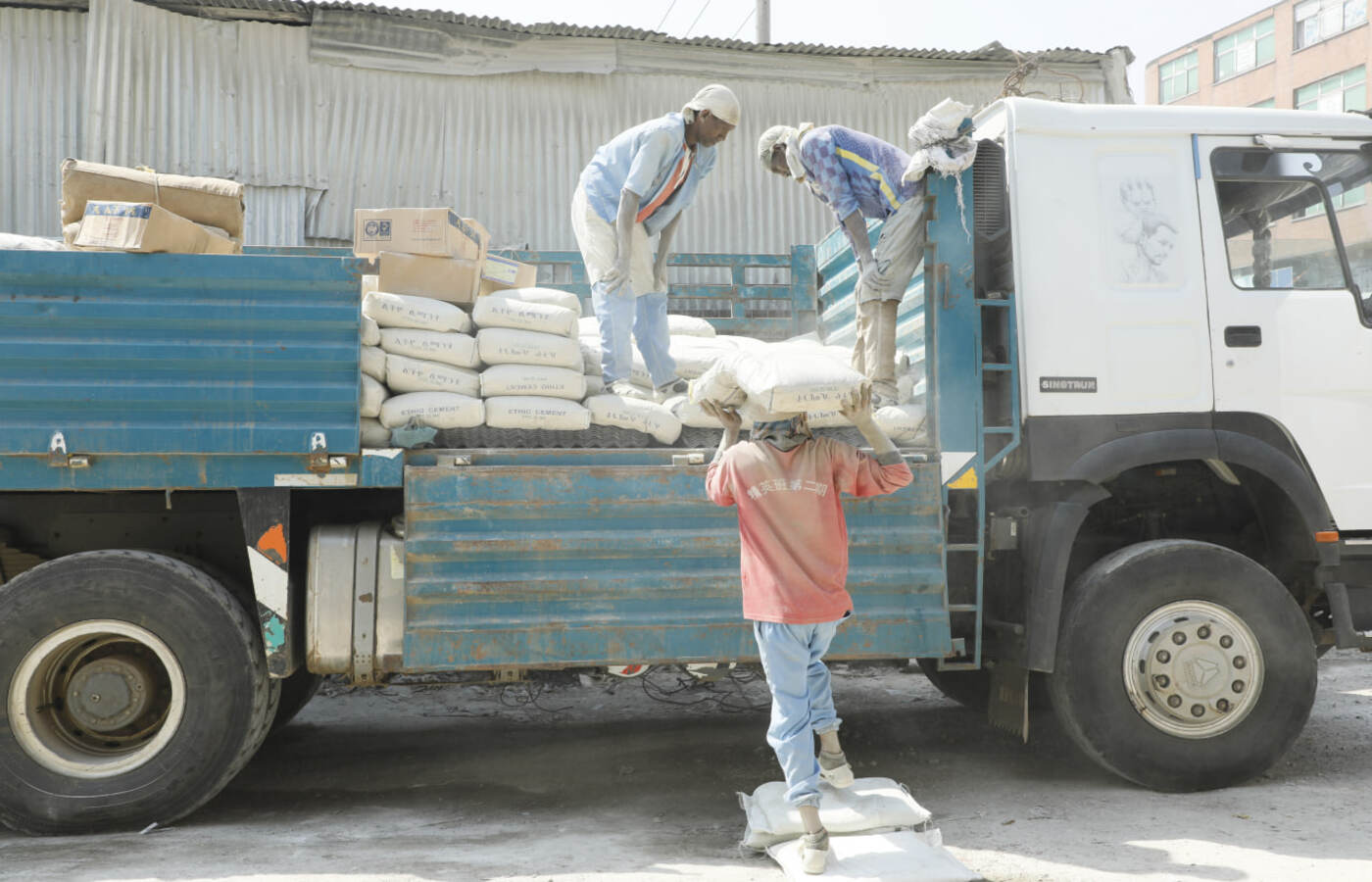
Cement prices, which peaked at 2,900 birr per quintal in 2024, have since fallen by more than half, averaging between 1,000 and 1,200 birr across Addis Ababa. The Ministry of Trade reports continued stability, crediting the entry of new producers, the partial lifting of price controls, and improved domestic distribution.
The cement industry remains central to Ethiopia’s economic ambitions but faces structural challenges, including high energy costs, foreign exchange shortages, and low capacity utilisation. Environmental concerns are also shaping future policy. In 2025, Ethiopia committed to low-carbon cement production under its updated Nationally Determined Contributions (NDC 3.0), launched at the Africa Climate Summit. Producers, through the Ethiopian Cement Producers Association, are piloting cleaner technologies such as biomass fuels, renewable energy integration, and clinker substitution.
Despite these efforts, the broader construction slowdown raises questions about how long price stability will last. As Engineer Yirga cautioned, “Stable or lower prices are critical—they reduce project costs, attract investment, and create jobs. But if prices rise again, small developers and public works could face serious strain.”




