


The move affects only Shariah-compliant lenders, allowing them to expand financing while conventional banks remain under the previous credit restrictions.
After years of lobbying, Ethiopia’s interest-free banks have secured a major policy victory. The National Bank of Ethiopia (NBE) has lifted the credit cap—a restriction executives say long constrained their growth and left them at a disadvantage compared with conventional lenders.
The policy, introduced to control inflation and credit expansion, effectively limited how much banks could lend relative to their deposits. While the cap applied across the sector, interest-free banks argued that its design failed to account for the unique nature of Shariah-compliant finance, which prohibits interest and depends instead on asset-backed, risk-sharing arrangements. Unlike conventional lenders, these institutions could not offset the constraint by investing in treasury bills, bonds, or inter-bank placements to generate returns.
Industry leaders had long contended that the rule stifled innovation and distorted competition. With the cap in place, they struggled to deploy deposits, scale financing for small and medium enterprises, or fund the expansion of digital and branch networks essential for reaching underserved communities. The result, they argued, was a paradox: a sector established to advance financial inclusion was instead constrained by regulation.
For Hijra and ZamZam, the country’s two full-fledged interest-free banks, the decision marks the beginning of fairer competition.
“Yes, the credit cap has been lifted, and we at Hijra Bank have been advocating for this change with the National Bank of Ethiopia for some time,” Dawit Keno, Chief Executive of Hijra Bank, told Birrmetrics. “Unlike conventional banks, we do not benefit from interest-based instruments such as bonds, treasury bills, or inter-bank transactions. As Ethiopia’s full-fledged interest-free bank, our Shariah-compliant services operate without riba (interest), and we remain in a developmental phase.”
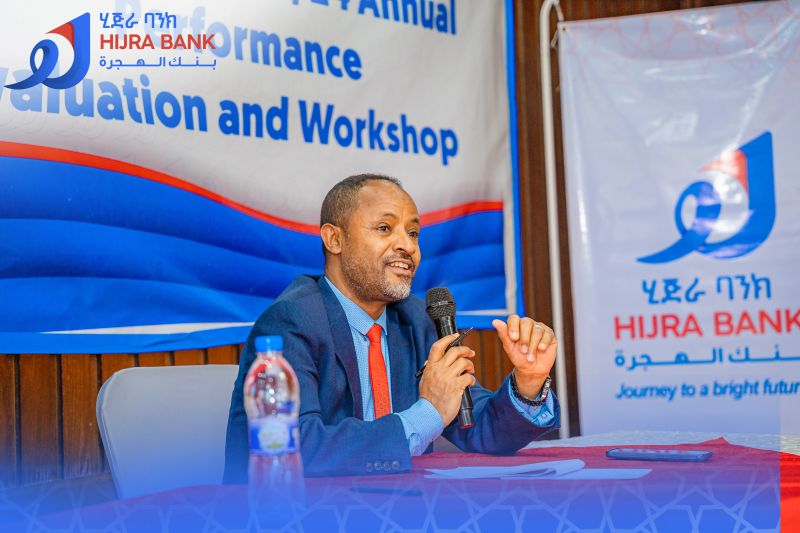
Dawit said the lifting of the cap would give Hijra Bank the operational flexibility it had long sought. By removing artificial limits on lending, the bank can now allocate more resources to meet growing customer demand, strengthen liquidity management, and attract additional deposits.
“Removing the cap is a significant relief. It enables us to extend financing to more customers without restrictive credit limits, enhances our operational efficiency, attracts greater deposits, and levels the playing field—allowing us to compete effectively while staying true to interest-free banking principles.”
While conventional lenders could rely on interest-rate adjustments to hedge inflation or attract deposits, interest-free banks are bound by fixed profit-sharing ratios and asset-backed contracts. This structural rigidity made them more vulnerable to policy-induced liquidity constraints and reduced competitiveness, particularly during their early developmental stage.
The lifting of the credit ceiling, therefore, not only relieves a regulatory bottleneck but also restores flexibility in liquidity management and allows institutions to deploy deposits more effectively into productive sectors.
Edris Umer, Chief Strategy and Customer Experience Officer at ZamZam Bank, described the reform as “a landmark decision that directly supports NBE’s financial inclusion mandate.”
He recalled the severe constraints the bank faced under the previous credit cap. “Two years ago, when the credit cap stood at just 14 percent, we at ZamZam Bank formally and informally urged the National Bank of Ethiopia to remove it. At that level, we could not utilise even a quarter of our lending capacity in a single year—let alone achieve profitability—while simultaneously investing in branch expansion and digital infrastructure.”
Edris added the limitations affected not only profitability but also broader economic activity. “The cap severely constrained revenue generation and liquidity management. Accessibility to financing diminished, and economic activity in the communities we serve became stagnant. Unlike conventional banks, we cannot access interest-based instruments such as bonds, treasury bills, or inter-bank placements to manage liquidity or generate returns.”
He emphasised the structural challenge posed by the interest-free banking model itself. “As a full-fledged Interest-Free Bank (IFB), our Shariah-compliant model inherently contributes minimally to inflationary pressures—neither exacerbating nor actively controlling inflation. Yet, during our early developmental stage, the cap disproportionately hindered our growth.”
Anticipating the policy change earlier this Ethiopian New Year, ZamZam Bank had already aligned its operational and financing plans to the expected lifting of the cap. “With indications earlier this Ethiopian New Year that the cap would be lifted by September, we proactively structured our annual operational and financing plans on that assumption. Now, with the policy confirmed, we will seamlessly execute those strategies—scaling Shariah-compliant financing, deepening deposit mobilisation, and accelerating inclusive growth across Ethiopia.”

Interest-free banking in Ethiopia has expanded rapidly since 2019, when the central bank first introduced directives for interest-free banking windows and licensed the country’s initial full-fledged Islamic banks. The regulatory framework laid the foundation for a sector that now serves millions of customers.
By June 2025, nine full-fledged interest-free financial institutions were operating—four banks and five microfinance institutions—while 48 conventional institutions offered Shariah-compliant windows. Deposits under these services reached 379.1 billion birr, and takaful premiums totalled 299.8 million birr.
In 2025, the NBE further reinforced the sector by updating its licensing directive for interest-free banks, introducing higher capital requirements and tighter governance standards to ensure stronger, more sustainable institutions. Complementing this, the National Agri-Finance Implementation Roadmap, launched in July 2025.
Experts say the removal of the lending limit could accelerate growth for Ethiopia’s interest-free banking sector. “Interest-free banking providers in Ethiopia will definitely benefit from the complete removal of the credit cap by the National Bank,” said Sewale Abate (PhD), an expert specialized in Finance and Investment and Deputy Chairperson of the Board of Directors at Zemen Bank.
He explained that the core difference between conventional and interest-free banking lies in the treatment of returns. “Conventional banking is built on interest, where money is lent for a fixed return regardless of outcome. Interest-free banking prohibits interest-based transactions and operates through partnership models. Every transaction must be backed by real assets or services, not mere money creation.”
The lifting of the cap, he said, would allow IFB institutions to expand operations and respond to growing demand. “Full removal of this cap will significantly enhance banking operations for IFB institutions. It will allow them to meet growing demand, expand financing to productive sectors, and compete more effectively without limits on lending growth.”
Abate cautioned, however, that structural vulnerabilities remain. High inflation, he noted, poses particular challenges for interest-free banks, which cannot adjust returns through interest rates.
“The fact is, high inflation severely constrains IFB banks because they cannot adjust returns through interest rates. When prices rise, the real value of profit shares or fixed margins shrinks, discouraging deposits and limiting their ability to extend financing. Conventional banks pass inflation risk to borrowers through rates, but IFB must absorb it, making it more vulnerable in inflationary environments.”
With the credit cap removed and inflation under control, Abate said interest-free banking could reach millions more Ethiopians while promoting job creation. “Without the credit cap and with inflation under control, interest-free banking can serve millions more, promote job creation, and contribute meaningfully to Ethiopia’s economic transformation while staying true to their principles.”
For Hijra and ZamZam, the policy change is not merely technical—it is existential. As Dawit Keno put it: “This is a significant relief, but also a signal that interest-free banking is now recognised as an equal part of Ethiopia’s financial system.”




