

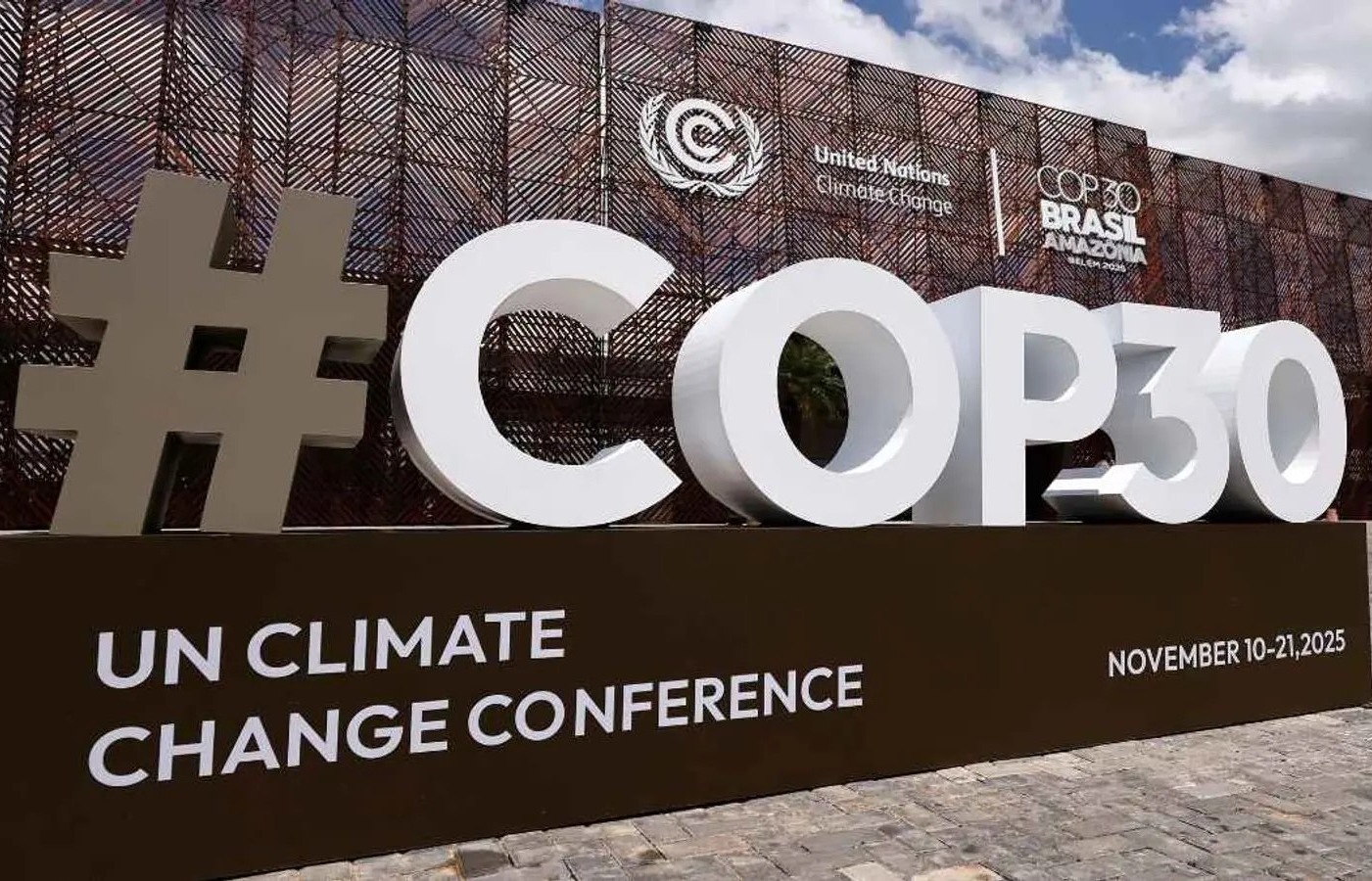
The UN Climate Change Conference in Belém closed on Saturday with only modest advances, as disagreements over climate finance and the future of fossil fuels overshadowed efforts to turn existing pledges into action.
Billed as an “implementation COP,” the talks were expected to produce tools and processes to operationalise global climate commitments. Instead, negotiations were slowed by sharp differences on funding arrangements, trade measures, and pathways to cut emissions. Attempts by more than eighty countries to secure a roadmap for transitioning away from fossil fuels failed to gain traction, with no such language included in the final outcome.
A political text known as the Mutirão decision emerged as one of the few concrete results. It launches a two-year work programme on climate finance intended to advance the New Collective Quantified Goal agreed in Baku, including efforts to scale up public and private finance to at least USD 1.3 trillion per year by 2035. The decision also calls for tripling adaptation finance by 2035, though many developing countries criticised the delayed timeline and lack of clarity on baselines.
Progress on adaptation remained uneven. Negotiators adopted a list of sixty indicators for the Global Goal on Adaptation, but last-minute changes weakened the technical work and left future steps unclear. A long-awaited assessment of National Adaptation Plans was finalised, recognising advances made by developing countries but offering limited guidance on expanding support.
Trade tensions resurfaced throughout the week, driven by disputes over unilateral measures such as border carbon adjustments. Parties ultimately agreed to hold a series of dialogues through 2028 to address concerns about fairness and cooperation.
One of the few areas of consensus was the new Gender Action Plan, which strengthens requirements for gender-responsive climate policies, the use of disaggregated data, and coordination between gender and climate institutions.
Attention now shifts to COP 31, which will convene in Türkiye under a shared leadership arrangement with Australia, and to COP 32 in Ethiopia—the first climate COP led by a least-developed country. Brazil has pledged to maintain momentum in the interim, including by advancing plans for a fossil-fuel transition and deforestation reduction.
Despite growing fractures between developed and developing countries, negotiators signalled an intention to press ahead through parallel political and technical processes in the coming year.




