

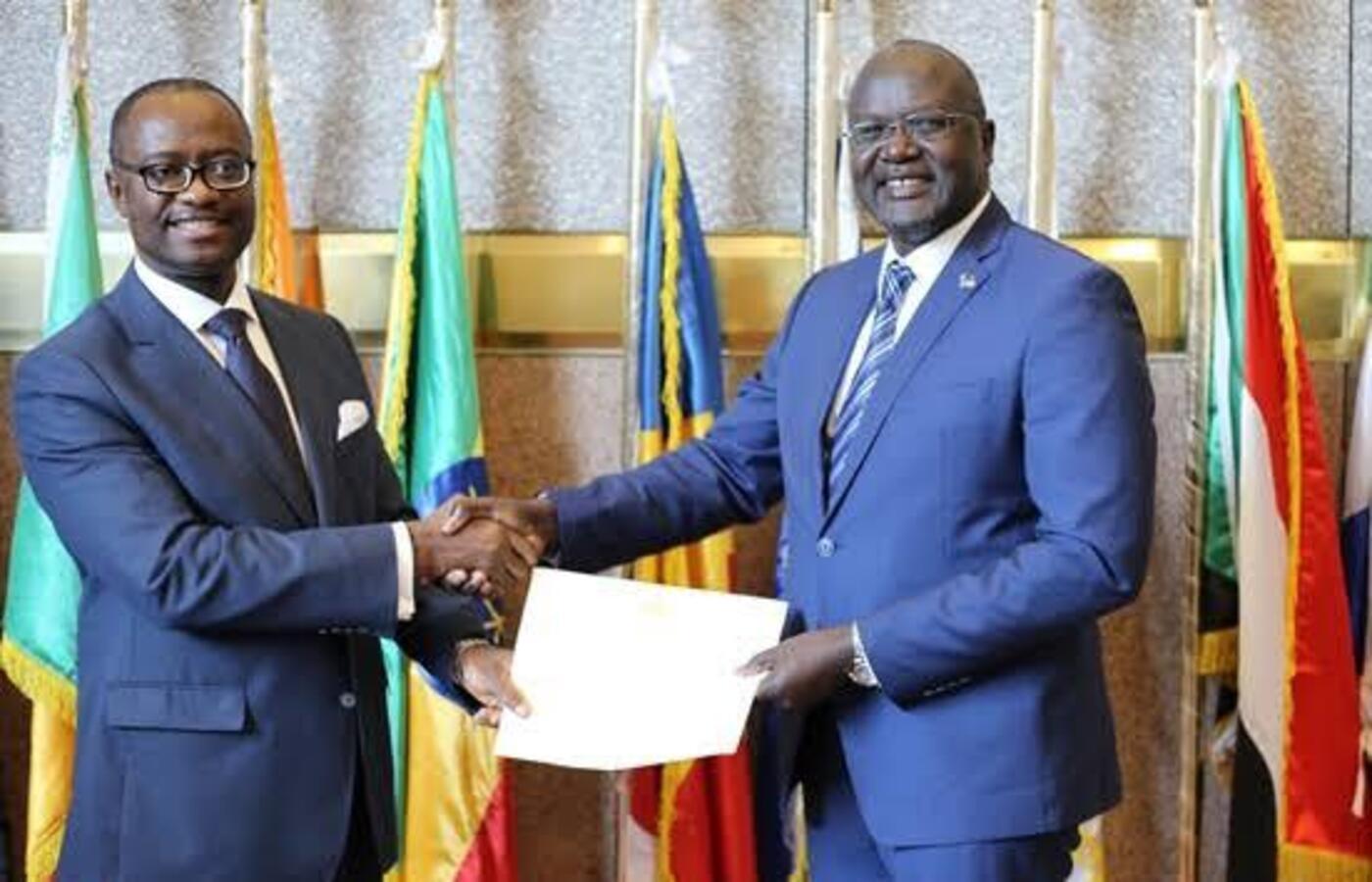
South Sudan has reached a deal with the African Export-Import Bank (Afreximbank) to suspend legal proceedings over a 657 million US dollars loan, easing tensions between the Juba government and the Cairo-based multilateral lender.
The agreement was concluded on May 30 during a high-level meeting in the South Sudanese capital, chaired by Vice-President Dr Benjamin Bol Mel, who heads the government’s Economic Cluster. Senior finance officials and a visiting delegation from Afreximbank were in attendance, according to government sources.
The dispute arose from a facility extended by Afreximbank, which alleged that South Sudan had failed to honour its repayment obligations. The bank filed a legal claim in May in pursuit of financial redress.
However, speaking on state broadcaster SSBC, Arop Nuai, First Undersecretary at the Ministry of Finance, confirmed that the litigation would no longer proceed. “The bank has agreed not to continue with the court case,” he said, noting that discussions also explored future investment in the livestock and mining sectors.
Elias Kagumya, Afreximbank’s Chief Risk Officer, cited a series of external shocks that had impaired South Sudan’s ability to meet its commitments — including severe flooding and the war in neighbouring Sudan, which have disrupted oil production and export routes, a critical source of fiscal revenue.
“We recognise the force majeure circumstances affecting oil exports,” Kagumya said. “The government has shown a clear commitment to its economic agenda and the steps needed to service our facility.”
The lender also acknowledged recent improvements in Juba’s fiscal governance. Kagumya pointed to the formation of a high-level economic committee and key leadership changes as evidence of a more structured approach to economic management.
Afreximbank, which finances trade and development across African markets, has previously supported South Sudan with credit facilities, despite the country's chronic macroeconomic volatility. Since gaining independence in 2011, the oil-dependent economy has remained acutely vulnerable to infrastructure bottlenecks and regional instability.
The resolution is expected to reset relations between the bank and Juba, while reinforcing the government’s stated ambition to attract investment and restore economic stability amid persistent security and fiscal challenges.




