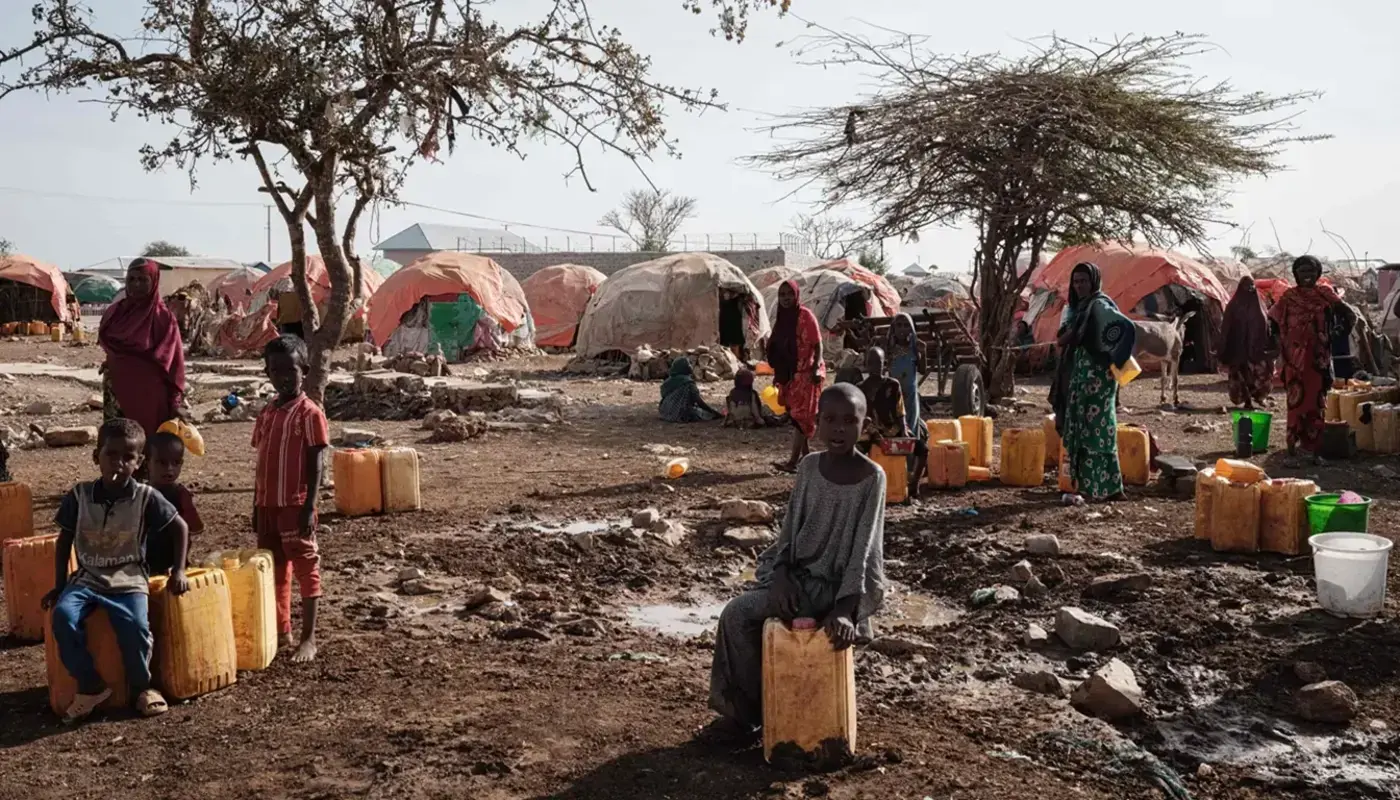
East Africa is facing weaker harvests and growing pressure on food prices after an exceptionally dry June-to-September rainy season hit major grain-producing areas across the region.
Large parts of South Sudan, Sudan, Uganda, Kenya and Ethiopia recorded one of the driest June-to-September seasons on record, with rainfall in several areas falling well below long-term averages.
The dry conditions were compounded by unusually high temperatures, accelerating soil moisture losses and increasing crop stress during critical stages of the growing season.
In Kenya, the impact is expected to be particularly severe in western maize-producing areas, where yields in some counties could fall by as much as 36 percent below average.
Western Kenya is one of the country’s main grain-producing regions, meaning weaker output could tighten domestic maize supplies and add pressure to food prices in the coming months.
The production outlook has also deteriorated in Ethiopia, where poor Kiremt rainfall has affected parts of the main Meher growing season.
Crop conditions have weakened across several western, central and northern areas, while below-average production is expected in some parts of Tigray, Amhara, Afar and Oromia.
The rainfall failure has also affected agricultural production in Uganda, Sudan and South Sudan.
In Uganda, dry conditions have reduced the outlook for sorghum production in Karamoja, while Sudan has experienced delayed planting and reduced rain-fed sorghum cultivation in several producing areas.
South Sudan is also expected to record below-average production in parts of Jonglei, Upper Nile and Unity states.
The current shock is significant because it has affected not only drought-prone pastoral areas but also some of East Africa’s major crop-producing zones.
Pastoral communities are also facing worsening conditions as high temperatures and poor rainfall reduce pasture availability and deplete water sources.
In northeastern Ethiopia and northwestern Kenya, worsening water shortages have increased pressure on livestock-dependent communities and forced households to travel longer distances in search of water.
The weaker agricultural outlook raises the risk of further increases in staple food prices across the region, particularly in countries already facing high transport costs, currency pressures, conflict-related disruptions and limited household purchasing power.
Food prices in several East African markets have remained above historical averages despite relative stability in some areas in recent months.
The region is now entering the October-to-December rainfall season with expectations of wetter conditions in parts of Ethiopia, Kenya, Somalia, Uganda, Rwanda and Burundi.
The additional rainfall could improve pasture, replenish water sources and support new planting.
However, it is unlikely to fully reverse crop losses already sustained during the main growing season, while heavier rainfall could also increase the risk of flooding and waterlogging in some areas.
The combination of weaker harvests, tighter grain supplies and already elevated food prices is expected to increase pressure on household food access across parts of East Africa in the final months of 2026 and into early 2027.
For broader macroeconomic and regional commodity updates, read our analysis on World Bank Raises Sub-Saharan Africa Growth Forecast to 4.3% or explore our coverage on Cost Pressures Test Kenya's Private Sector Recovery as Output Lags.