

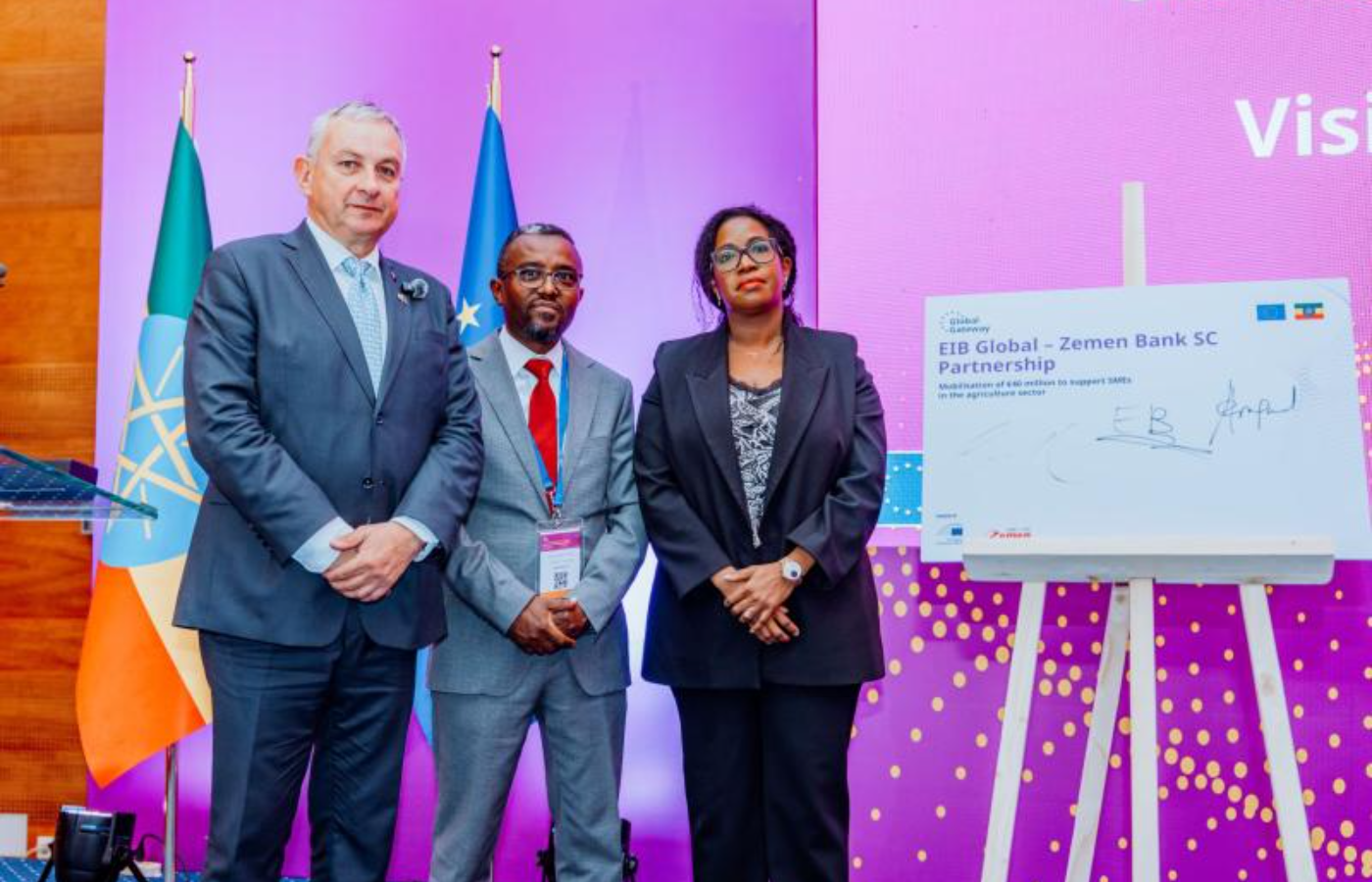
The development arm of the European Investment Bank Group has partnered with Zemen Bank SC to mobilise up to 40 million euro in financing for Ethiopia’s export-oriented agricultural sector, in a move aimed at expanding credit access for coffee and horticulture businesses.
Under the agreement, EIB Global will provide a 20 million euro credit line to Zemen Bank, which will match the amount. The funds will be on-lent to small and medium-sized enterprises engaged in agricultural exports, with a focus on coffee and horticultural products.
The facility marks the first direct loan from EIB Global to a commercial bank in Ethiopia, reflecting a shift towards using domestic financial institutions to channel development finance.
At least 30 percent of the financing will be directed to enterprises involved in climate-related activities, while another 30 percent is targeted at women-owned or women-led businesses, or firms offering products and services that support women’s economic participation.
The agreement was announced in Addis Ababa during a European Union Ethiopia business forum attended by Jozef Sikela alongside Ethiopian officials and private sector representatives.
“Agriculture is a key driver of Ethiopia’s economic growth, contributing to GDP, export earnings and employment,” said Ambroise Fayolle. He said the use of local banks is intended to help mobilise private capital across the agricultural value chain.
Zemen Bank, a private lender with more than 140 branches nationwide, will distribute the loans to eligible exporters. Its chief executive, Dereje Zebene, said the partnership is intended to support agricultural productivity and strengthen access to finance for farming enterprises.
The initiative is part of the European Union’s Green Agri Value Chain programme, which aims to expand agricultural commercialisation and boost exports of coffee, fruits, vegetables and herbs.
It also aligns with the EU Global Gateway strategy and broader initiatives to support climate resilience, gender inclusion and sustainable growth in Africa’s agricultural sector.
Ethiopia’s agriculture sector accounts for more than a third of gross domestic product and remains the country’s largest source of export revenue, particularly through coffee, a key foreign exchange earner.




