


Dodai, a fast-growing Ethiopian electric mobility startup, is setting its sights on becoming a continental player in green transport—even as it grapples with supply chain bottlenecks, foreign currency shortages and regulatory red tape.
The company, founded by Japanese entrepreneur Yuma Sasaki, has assembled 1,500 electric motorcycles since launch and aims to ramp up production to 5,000 units by the end of next year. It plans to sell 100,000 units and acquire an equal number of battery-swapping users by 2029.
“Our goal is to reach a total of 5,000 assembled motorcycles—including the 1,500 already built—by the end of 2025,” Sasaki told Birrmetrics. “Looking further ahead, we aim to reach 100,000 units sold and 100,000 battery swapping users by 2029.”
With a monthly production capacity of 1,500 units on two shifts, Dodai believes it can meet demand for the next 18 months, with expansion possible through a third shift and additional assembly lines. But Sasaki said bureaucratic inertia remains a significant drag on growth.
“One of the most frequently raised concerns from our customers—especially delivery drivers and business users—is the difficulty and delay in getting number plates for electric motorbikes,” he said. “Our customers are ready to adopt electric mobility, but they face real friction in the process—particularly when compared to the ease of purchasing and using fuel motorbikes.”
Dodai is lobbying for faster licensing procedures and greater regulatory clarity, arguing that sluggish registration processes have become a bottleneck in the clean transport transition. The company also wants electric vehicle (EV) manufacturers to receive the same tax exemptions on imported spare parts as they do on Completely Knocked Down (CKD) kits.
“We believe that all electric vehicle manufacturers should be allowed to import spare parts tax-free,” Sasaki said. “This would enable us to offer affordable after-sales service and spare parts—something that’s essential for customer trust and adoption of electric vehicles.”
Currency and Components
Dodai’s ambitions are also being tempered by macroeconomic headwinds. Like most manufacturers in Ethiopia, it is heavily reliant on imported components and has struggled to obtain timely access to foreign currency.
“If banks had a clear, enforceable timeline—for example, a maximum number of days to process approved forex requests after application submission—it would bring much-needed certainty,” Sasaki said. “Currently, many manufacturers face long, unpredictable waits with frequent follow-ups, which can damage trust with both customers and international suppliers.”
While Sasaki said the company is exploring local sourcing for non-critical parts, no local suppliers have yet met its required quality and reliability standards for key components.
A Deal Deferred
Dodai had previously entered into talks with Ethiopia Investment Holdings, the country’s sovereign wealth fund, to explore a possible partnership—but the agreement was quietly shelved earlier this year.
“Out of mutual respect, we won’t share detailed discussions with EIH,” Sasaki said. “However, after several months of constructive dialogue, both sides agreed it would make sense to pursue our respective strengths independently—considering speed, resource allocation, risk, and strategic priorities.”
He added that the relationship remains positive and that future collaboration is not off the table.
Long-Term Strategy
Though it is not yet profitable, Dodai is experiencing strong revenue growth, according to Sasaki. The startup expects to continue fundraising over the next four to five years to support its expansion plans.
“If the question is whether our revenue is growing—absolutely yes,” he said. “However, if you’re asking whether our current revenue covers both operational costs and the aggressive investments we’re making for long-term growth—then not yet, and we didn’t expect it to at this early stage.”
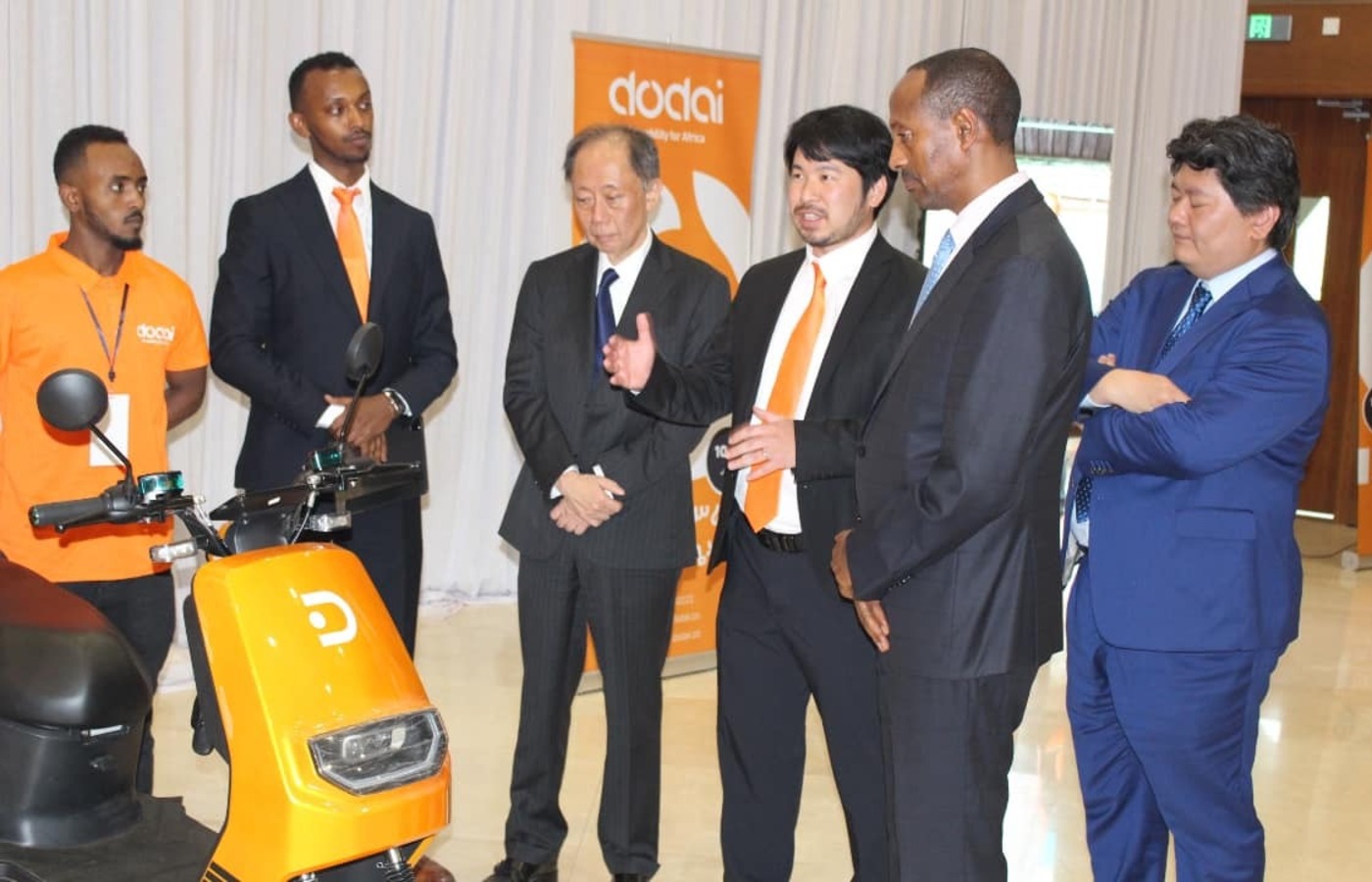
“Like Tesla, Uber, Google, and other transformative companies, building a truly impactful product often requires 5–10 years of sustained investment before profitability,” Sasaki added.
Although Dodai is not yet eyeing exports of its motorcycles, it sees long-term potential for scaling its asset-light battery-swapping software and operational platform to other African cities.
“We see significant export potential—not necessarily for the bikes themselves, but for our battery swapping software, battery technology, and operational model,” Sasaki said. “These are asset-light digital solutions that, once proven in Addis Ababa over the next 18–24 months, can be expanded to major African cities.”
As Ethiopia pushes to transition to a greener economy, Sasaki believes startups like Dodai can play a catalytic role—provided the policy environment evolves in parallel.
“We’re confident that improvements in just two areas—foreign currency access and tax treatment of spare parts—would accelerate industrial development and position Ethiopia as a leader in green mobility,” he said.




