

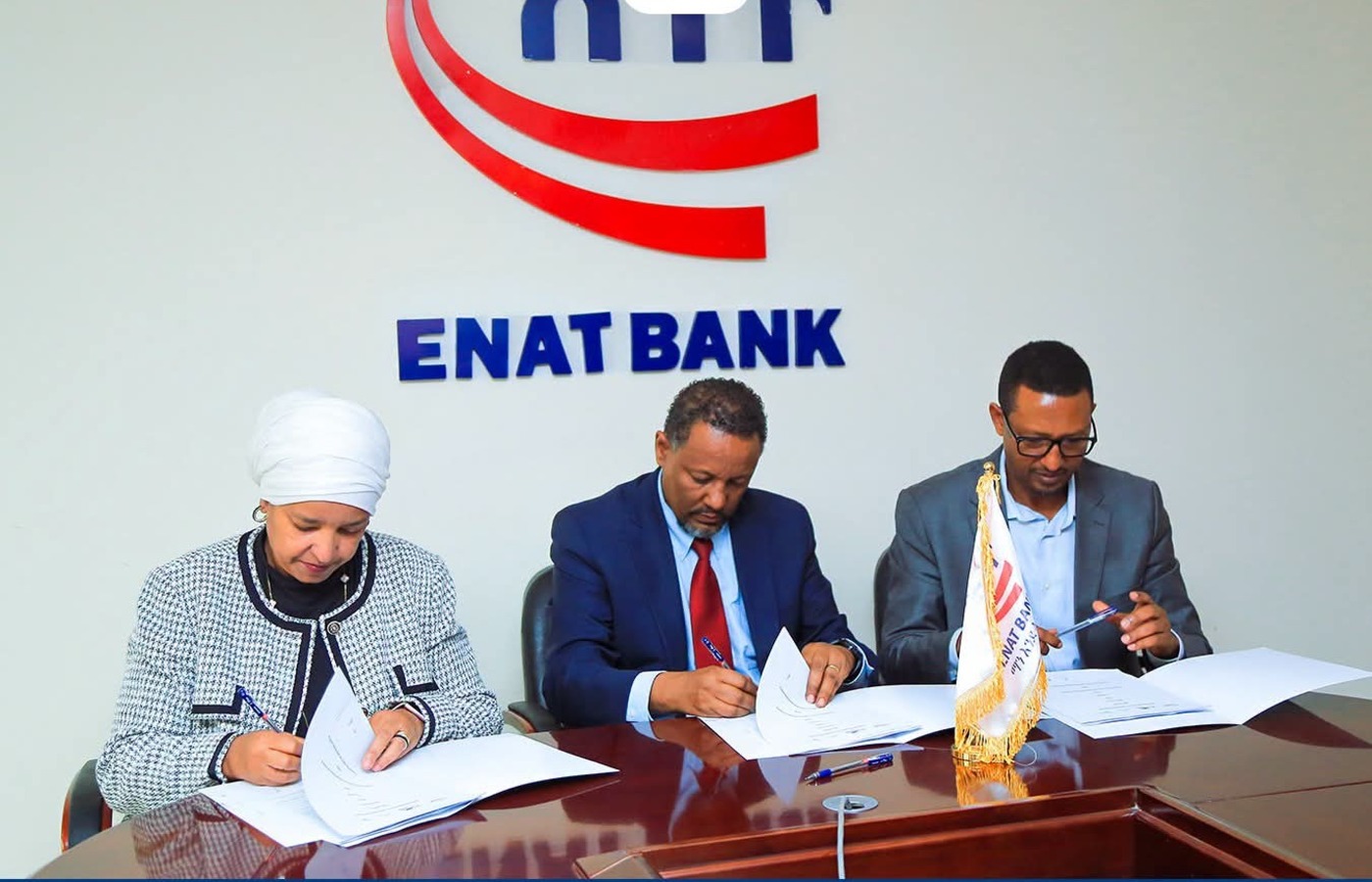
Enat Bank has partnered with three financial-sector development organisations to develop what the partners describe as the country’s first private-sector gender bond, seeking to create a new source of capital for women-led businesses and gender-focused projects.
The bank signed a memorandum of understanding with FSD Ethiopia, The i-Capital Africa Institute and FSD Africa to structure and launch the proposed bond, which would add a new thematic debt instrument to the country’s emerging capital market.
The partnership will cover the bond’s design and issuance process, including transaction structuring, development of a bond framework, regulatory compliance, investor engagement and post-issuance management, the partners said.
The agreement also provides for an independent consultant to provide a second-party opinion on the proposed framework in line with the International Capital Market Association’s Social Bond Principles.
The partners have not disclosed the planned size, pricing or timing of the issuance, which remain subject to the structuring and regulatory process.
“Gender Bond represents an important step toward broadening financing options for women-led enterprises while contributing to the continued development of the sustainable finance ecosystem,” said Hikmet Abdella, chief executive of FSD Ethiopia.
The proposed instrument is expected to direct private capital towards women-owned and women-led enterprises, including micro, small and medium-sized businesses, cooperatives and agribusinesses. Eligible financing could also extend to social infrastructure supporting women, such as housing, healthcare, childcare and education, depending on the final framework.
Enat Bank, which began full operations in 2013, was established by Ethiopian women with a mandate to expand access to finance for women while serving customers more broadly. It has developed lending and savings products targeted at women entrepreneurs and has worked with development institutions on financing and guarantee programmes.
The proposed bond comes as the country develops a capital market intended to provide companies and financial institutions with alternatives to traditional bank lending. The Ethiopian Capital Market Authority has been building the regulatory framework, while the Ethiopian Securities Exchange has been developing infrastructure for securities trading.
Gender bonds are a form of thematic or social debt in which proceeds are allocated to projects or businesses that advance gender-equality objectives. Such instruments typically require defined eligibility criteria, management of proceeds and impact reporting, with external assessments used to strengthen transparency.
The planned issuance would therefore extend Enat Bank’s focus on women’s financial access into the capital market while testing investor demand for gender-focused securities.
FSD Africa and other development-finance organisations have supported gender-bond initiatives elsewhere in Africa, where such instruments have been used to channel institutional and private investment towards women-owned businesses.
The i-Capital Africa Institute will act as transaction adviser under the partnership, supporting the development of the bond framework and the issuance process.




