

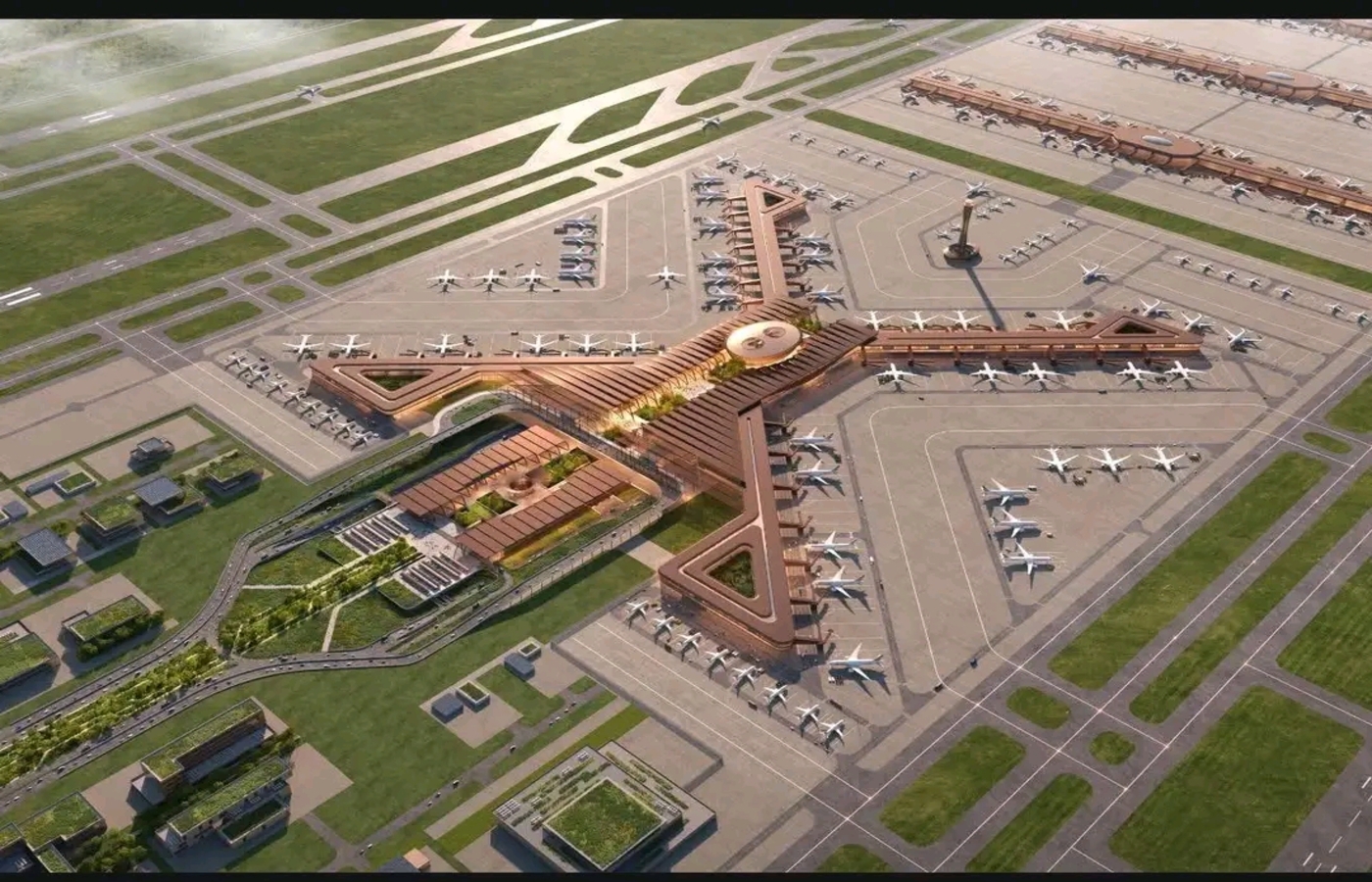
Ethiopia has joined a wave of international airport expansions with the launch of Bishoftu International Airport near Addis Ababa. The project is being led by Ethiopian Airlines in partnership with the Ethiopian government and is expected to become Africa’s largest new aviation hub, with a planned capacity of 110 million passengers annually and facilities to accommodate 270 aircraft. The first operational phase is scheduled for 2030, with phased development planned to achieve full capacity.
The airport places Ethiopia alongside Long Thanh International Airport in Vietnam, Noida and Dholera airports in India, and the New Manila International Airport in the Philippines, which are also expanding to meet rising global passenger demand. Bishoftu stands out in the African context, reflecting the continent’s growing importance in international aviation and trade networks.
The development incorporates Ethiopian cultural and environmental elements and is designed for efficiency, sustainability, and long-term operational performance. Phased construction will allow gradual expansion of both passenger and cargo facilities, ensuring that the airport can accommodate future growth.
Bishoftu International Airport is expected to stimulate economic activity, including tourism, cargo transport, and industrial development, while strengthening Ethiopia’s position within the African Continental Free Trade Area (AfCFTA). The project also aims to attract foreign direct investment and enhance regional connectivity, establishing Ethiopia as a strategic hub for both passenger and freight transport.
For comparison, Noida International Airport (Jewar Airport) in India is scheduled to open for domestic flights in 2025, with international operations in 2026, initially accommodating 12 million passengers annually. Dholera International Airport, also in India, will serve the Dholera Special Investment Region with a similar initial capacity.
Long Thanh International Airport in Vietnam will open in 2026 with a long-term capacity of 100 million passengers, while the New Manila International Airport in the Philippines, projected to open in 2027 or later, will feature four runways and a capacity of 100 million passengers annually.




