

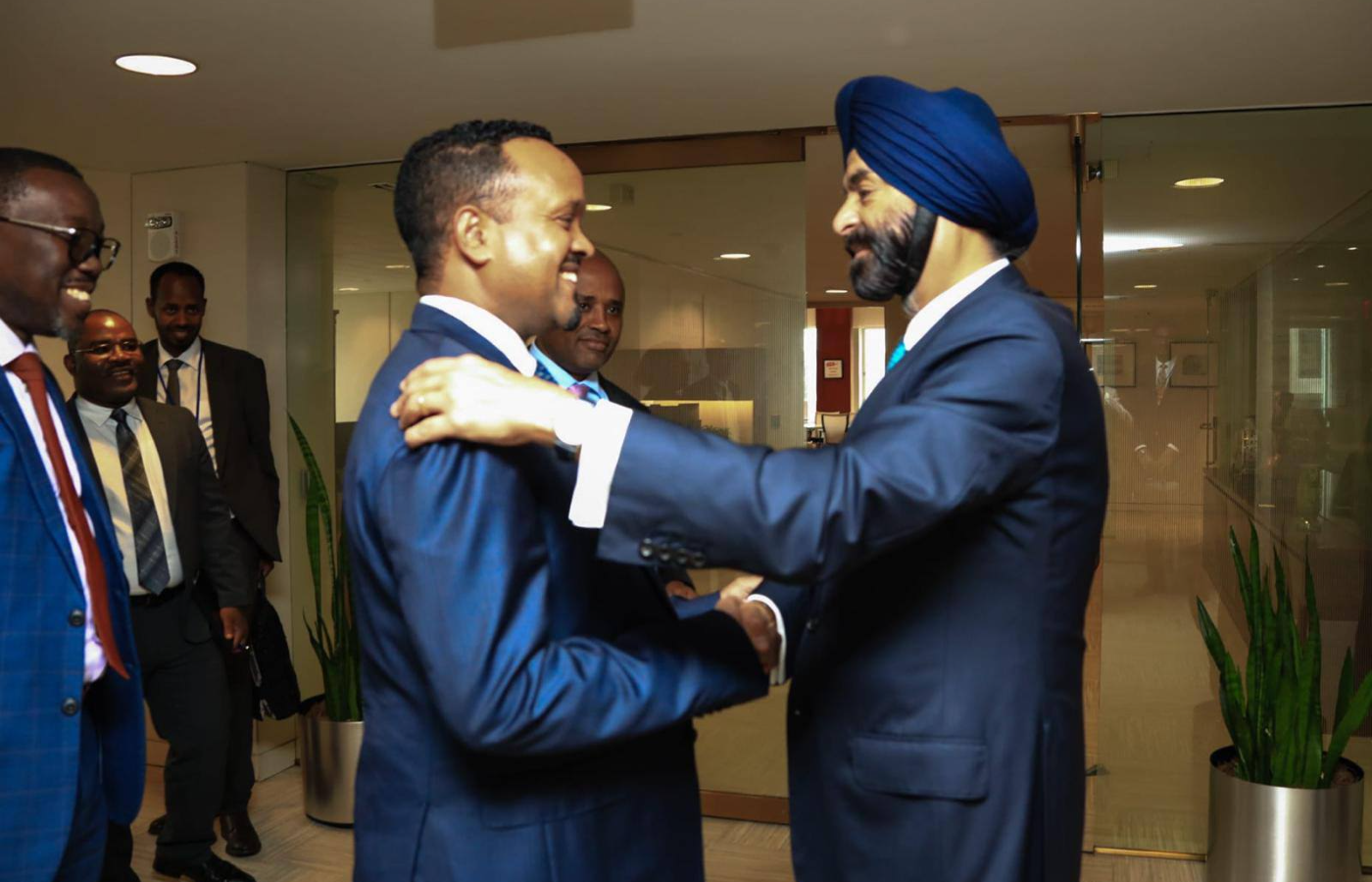
Ethiopia is exploring unprecedented debt-for-development swaps with the World Bank as Finance Minister Ahmed Shide pitched bold new financing instruments in Washington, signaling a strategic shift in how the country seeks to fund its reform and development agenda.
The high-level discussions, held on the margins of the World Bank and IMF Annual Meetings, brought together Shide, Eyob Tekalign (PhD), Governor of the National Bank of Ethiopia, Teklewold Atnafu, Senior Advisor to the Prime Minister, and other senior officials, with World Bank Group President Ajay Banga.
Shide used the meeting to address Ethiopia’s progress on its comprehensive macroeconomic reform program, which he said is yielding tangible results: moderating inflation, stabilizing the exchange rate, growing exports, strengthening foreign reserves, and attracting remittances.
These reforms have laid the groundwork for a new model of financing,Ahmed told Banga. He said the government is now exploring innovative approaches, including debt-for-development swaps, co-financing structures, and de-risking instruments, to mobilize capital for strategic projects while preserving fiscal sustainability.
Ethiopia’s proposed debt-for-development swaps could allow the country to convert portions of its outstanding debt into financing for infrastructure, agriculture, and human capital development. This is expected to reduce fiscal pressures but may also come with political and operational risks, particularly in balancing creditor demands with domestic development priorities.
Ahmed also highlighted the government’s development priorities, including modernizing agriculture, expanding access to education and healthcare, boosting youth and women’s participation in the economy, and mobilizing private sector investment across manufacturing, agribusiness, energy, logistics, and digital sectors.
Banga praised Ethiopia’s reforms, describing them as “historic and bold,” and reaffirmed the World Bank’s commitment to mobilize the full range of financial and technical instruments to support the country’s agenda. He also highlighted the Bank’s willingness to engage in regional initiatives, including leveraging the IDA regional window to support Ethiopia’s integration into the African Continental Free Trade Area and WTO accession.
The meeting comes amid growing scrutiny of Ethiopia’s public debt, with domestic and external obligations rising steadily over the past decade. While the government has restricted non-concessional borrowing, experts caution that ambitious reform plans and infrastructure projects may strain fiscal space, making innovative financing solutions a strategic necessity.




