

History rarely changes course so abruptly. Yet what many assumed would be a gradual transition to a new global order has, within just a few years, become a rapid realignment—much of it driven from Washington.
President Donald Trump, who proudly dubbed himself "Tariff Man", has recast American foreign policy through his "America First" doctrine. Long-standing alliances and multilateral rules have increasingly given way to transactional diplomacy, where trade, security and strategic commitments are treated as negotiable bargains rather than enduring obligations.
That approach is perhaps less surprising when viewed through the prism of Trump's background. Before entering politics, he spent decades as a real-estate developer and dealmaker, cultivating a negotiating style built around leverage, reciprocity and securing advantageous terms. As president, he has applied that instinct to statecraft, approaching international relations less as a system of alliances and institutions and more as a series of negotiations.
The shift marks a significant departure from the role the United States had played since the end of World War II. For nearly eight decades, Washington positioned itself as the architect and guarantor of a rules-based international order, building institutions such as the United Nations, the Bretton Woods financial system, NATO and successive trade agreements to promote open markets, collective security and multilateral cooperation.
"For decades, countries like Canada prospered under what we call the rules-based international order," Canadian Prime Minister Mark Carney said at the World Economic Forum. He argued that while the system provided stability, open markets and security, powerful states often exempted themselves from rules and international law was applied unevenly.
American leadership nonetheless provided global public goods, including open sea lanes, a stable financial system and collective security. But Carney argued that the bargain is now under strain as successive crises in finance, health, energy and geopolitics have exposed the vulnerabilities of deep global integration. Major powers are increasingly turning economic tools, including tariffs, financial networks and supply chains, into instruments of strategic competition.
Countries are adjusting their economies and foreign policies to navigate a rapidly changing global environment. Ethiopia, too, is rethinking its approach, though analysts argue that its response differs from the protectionist and inward-looking trends emerging elsewhere. They caution, however, that while official economic indicators point to progress, the reality on the ground remains more challenging, raising questions about the sustainability of the current trajectory.
"We can no longer think of development as a simple, straight-line journey," says Selamawit G/Egziabher (PhD), a researcher who has spent years studying Ethiopia's economic transformation. "The old assumption was that countries could move workers from agriculture into factories, replicate the path taken by Asian economies and gradually become high-income countries. That pathway is becoming much harder to follow."
She argues that the world economy is now being reshaped by overlapping disruptions. "We are facing a convergence of crises: geopolitical conflicts, fragmented supply chains and climate pressures. The economy is not a predictable machine; it is a connected system where shocks in one area quickly spread to others."
Artificial intelligence, food security and unemployment, she argues, cannot be addressed separately. "These challenges are deeply connected. You cannot solve one without considering how it affects the rest of the economy."
The government, meanwhile, argues that public perception does not fully reflect the scale of economic and development changes taking place. Prime Minister Abiy Ahmed recently told parliament that many Ethiopians have yet to recognise the progress achieved in recent years, saying visitors from abroad are often struck by the pace of transformation while domestic observers are less likely to appreciate the changes.
The government is targeting economic growth of 10.2 percent in the 2025/26 fiscal year, supported by expected gains in industry, agriculture and exports. Officials say the expansion reflects the impact of ongoing reforms aimed at increasing production capacity, improving foreign exchange earnings and strengthening private-sector participation.
Economists, too, would welcome the country’s return to double-digit growth. Their concern, however, is less about ambition than the route being taken to achieve it. They argue that the current strategy does not fully confront the structural bottlenecks that determine whether growth can translate into lasting economic strength. In a global economy being reshaped by technology, geopolitics and shifting trade patterns, the challenge is not simply to grow faster, but to avoid running an old development playbook in a race whose rules are changing.
"When we focus only on operational problems, why firms struggle to invest, innovate or expand, we are treating symptoms rather than causes," says Kebour Ghenna, an economist. "The real question is what kind of economic structure is producing these constraints."
He argues that Ethiopia’s economic model remains too reliant on external demand and foreign currency inflows rather than domestic productive capacity. "The question is not simply whether investors will come, but what kind of economy they are entering," he says. "If the model remains based on exporting raw materials and importing finished goods, investors are operating within a dependent system rather than helping build a self-sustaining one."
The narrow export base, he argues, remains one of the economy’s biggest vulnerabilities. Coffee, gold and a small group of agricultural commodities continue to account for a large share of foreign-exchange earnings, leaving the country exposed to external shocks. "We depend on these exports to finance the machinery, technology and inputs needed to expand production," he says. "That creates a cycle: without foreign currency, investment slows; without investment, the economy struggles to generate more foreign currency."
Alemayehu Seyoum (PhD), a finance researcher, adds another layer to the challenge: Ethiopia is not confronting these pressures in isolation but as part of a global system undergoing profound change. Higher interest rates in advanced economies have drawn capital away from poorer countries, geopolitical conflicts have disrupted established trade routes, and extreme weather events have intensified pressure on agricultural production.
"Ethiopia is facing a series of overlapping shocks," Alemayehu says. "Financial volatility, food insecurity and social pressures are not separate problems. They are interconnected challenges that require a more integrated policy response."
For him, the defining feature of the current moment is not a single crisis but the interaction between multiple disruptions. "The problem is that shocks are no longer isolated events," he says. "They reinforce each other, making each new challenge harder to manage. What we are experiencing is not simply a temporary setback, but a period of sustained uncertainty."
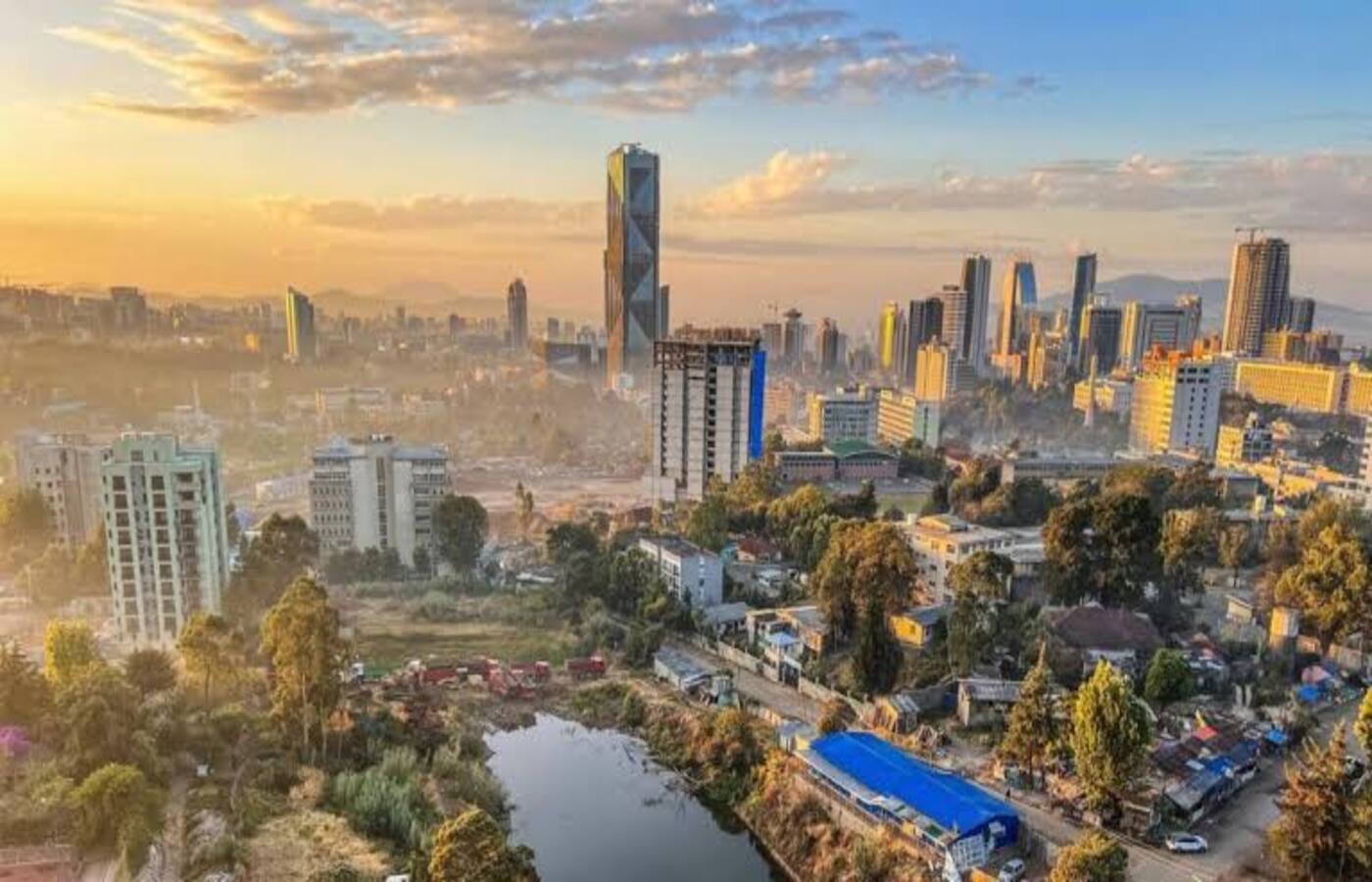
Ethiopia has become a recurring headline in global economic circles for the speed and scale of its transformation. Addis Ababa, once primarily known as a diplomatic capital, is increasingly being compared with emerging modern urban and tourism destinations as investment, construction and infrastructure projects reshape the city.
The country has also entered one of the most consequential economic experiments in its modern history through a reform programme agreed with the International Monetary Fund. Analysts describe it as among the boldest, and most controversial, economic shifts undertaken by the East African nation.
At the centre of the reform agenda is the liberalisation of the foreign-exchange regime, a move that triggered excitement among exporters while unsettling importers almost overnight. Exporters saw the weaker birr as an opportunity to earn more local currency from foreign sales, while businesses dependent on imports faced sharply higher costs as the currency adjusted.
But one of the earliest tests of the reform agenda came from outside Ethiopia’s borders: the Middle East conflict. After years of efforts to tame inflation, the National Bank of Ethiopia succeeded in bringing price growth back into single digits in December 2025. That progress was later interrupted, with inflation rising to 11.7 percent in April 2026 from 9.4 percent in March, driven largely by fuel supply disruptions and higher transport costs.
For analysts, the episode exposed the economy’s vulnerability to external shocks. "We used to design policies around the assumption of a relatively stable world, addressing challenges sector by sector," says Selamawit. "That assumption is no longer safe. Conflicts, disrupted trade and economic shocks now hit multiple parts of the economy at the same time. Policies must become more adaptive and capable of responding quickly to both domestic and global disruptions."
She advocates for what she calls "adaptive policy", a framework that accepts uncertainty and builds flexibility into decision-making from the outset. In her view, governments can no longer design policies based only on present conditions; they must also account for the possibility of sudden shocks, from commodity price swings and geopolitical conflicts to financial instability and humanitarian pressures. Without such flexibility, she warns, countries risk exhausting resources while struggling to achieve lasting progress.
She told Birrmetrics that the challenge extends beyond policy design, arguing that implementation remains one of the biggest weaknesses for policymakers. She added that the gap between drafting plans and delivering results remains too wide. Closing that divide, she says, is essential because it is where policies ultimately translate into tangible improvements in people’s lives.
"Too many of our problems can't be solved just by publishing articles. We have to shift our research culture from counting how many papers we produce to actually solving real puzzles. We can write a hundred articles, but if they miss the real issues, they're just noise. Good research has to show us the way out," she argues.
With artificial intelligence rapidly reshaping economies and new technologies emerging at unprecedented speed, Alemayehu argues that policymakers and researchers must rethink how they approach economic challenges. He stresses the need to address questions around data governance, regulation of emerging technologies and the ability to understand how different parts of the economy interact.
He argues that experts can no longer operate within narrow professional boundaries. Instead, they must develop a systems-based approach that connects technology, finance, trade and social challenges, ensuring that their work remains relevant in an economy undergoing rapid transformation.
Countries around the world are searching for their place in a new global order that is still taking shape. Ethiopia is not standing aside from that process. As an emerging economy, it has attempted to shield itself through a sweeping reform agenda, with early gains visible in several indicators.
The IMF has pointed to stronger-than-expected outcomes under Ethiopia’s Extended Credit Facility programme, citing improvements in growth, exports, revenue mobilisation and foreign-reserve accumulation. Foreign-exchange reserves reached 6.8 billion US dollars in 2025, more than triple the 2.0 billion US dollars recorded in 2023, according to Afreximbank’s African Trade Report. Export earnings also reached a record 10.7 billion US dollars in the 2025/26 fiscal year.
The harder question is whether these gains can become the foundation for a more productive and resilient economy. Higher reserves and stronger exports provide room to manoeuvre, but they do not by themselves resolve deeper constraints around productivity, industrial capacity, foreign-exchange dependence and job creation.
Alemayehu argues that institutional capacity will be equally important. "The quality of public service determines what a government can deliver," he says. "Strong frontline institutions are essential for improving health, education and responding to crises."
Kebour Ghenna focuses on production. For him, Ethiopia’s next phase of growth depends on moving beyond exporting raw materials. "Diversification is not simply about producing more; it is about producing better," he says. "Coffee should be processed locally, minerals should create domestic value, and knowledge-based services should become part of the export economy."




