

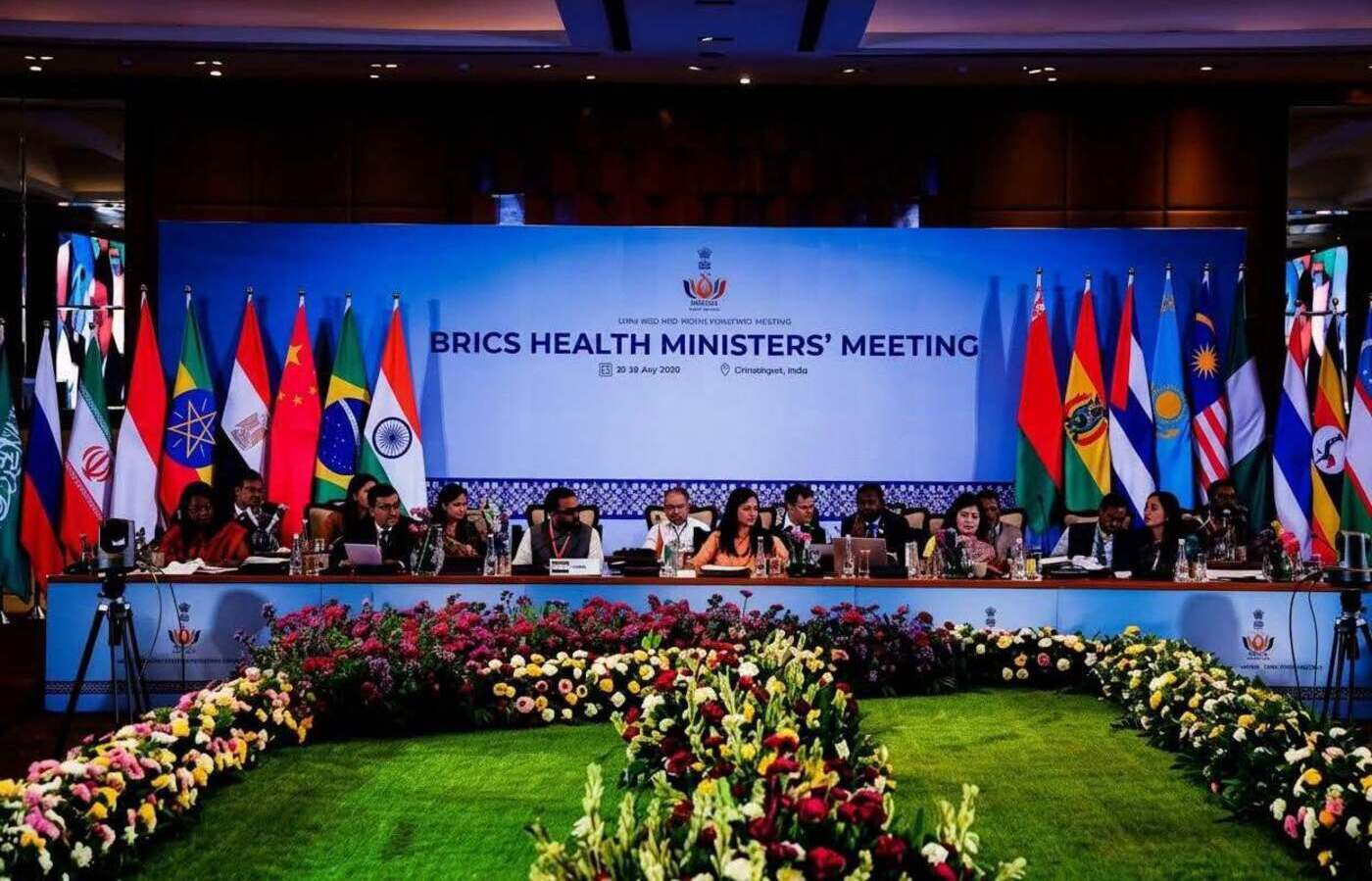
Ethiopia is set to gain access to expanded BRICS cooperation on affordable medicines, digital health, pandemic preparedness and medical research after the group's health ministers adopted a framework aimed at strengthening healthcare systems across its 11 member countries.
The 16th BRICS Health Ministers’ Meeting, held in Chandigarh, India, from July 22 to 24 under India’s chairship, unanimously adopted a declaration covering universal health coverage, pharmaceutical and regulatory cooperation, digital health, pandemic preparedness, medical research and traditional medicine.
For Ethiopia, the areas covered by the declaration coincide with some of the main constraints facing its health system, including shortages of medicines and medical supplies, limited access to specialised care in rural areas and pressure on health-financing schemes.
The country relies heavily on imported pharmaceuticals and medical equipment, leaving the health system exposed to foreign-exchange shortages and disruptions in international supply chains. Public health facilities have also faced shortages of medicines, diagnostic supplies and other medical products, increasing the financial burden on patients who have to purchase supplies privately.
The BRICS declaration calls for greater cooperation on affordable medicines and medical products, regulatory coordination and research. The framework could provide channels for the country to work more closely with major pharmaceutical and medical-technology producers such as India and China on supplies, regulatory capacity, technology transfer and local manufacturing.
The health ministers also agreed to strengthen cooperation on digital health and released a compendium on digital-health initiatives aimed at supporting continuity of care, including remote access.
That is relevant to the country's efforts to expand telemedicine, electronic health records and other digital services as it seeks to improve access to healthcare beyond major urban centres. India presented its e-Sanjeevani telemedicine platform and Ayushman Bharat Digital Mission at the meeting as examples of large-scale digital health systems.
Expanding such services could help address the shortage of specialised healthcare in remote areas, where patients often face long distances to reach hospitals and specialist doctors. The country is already working to expand connectivity and digital systems across health facilities, although infrastructure, internet access and technical capacity remain constraints in some areas.
The BRICS framework also places greater emphasis on pandemic preparedness. Member states agreed to support an integrated early-warning system for mass infectious diseases and strengthen cooperation in public-health research, vaccine development and disease surveillance.
For Ethiopia, which has continued to strengthen infectious-disease surveillance and emergency-response capacity, the framework creates a platform for information exchange, joint research and technical cooperation with other member states.
Research cooperation is also being expanded through BRICS networks, including work on tuberculosis and vaccine research. The declaration calls for closer collaboration among research institutions and health authorities across member countries.
Health financing is another area of relevance. Ethiopia has expanded Community-Based Health Insurance as part of its effort to move towards universal health coverage and reduce the financial burden of healthcare on households. The scheme now covers tens of millions of people through district-level arrangements supported by member contributions and government subsidies.
The system, however, faces financing and operational pressures, including fragmented risk pools, low enrolment in some areas, delayed reimbursements and rising healthcare costs.
BRICS members also discussed universal health coverage and presented different national approaches, including India's publicly funded Ayushman Bharat programme and Brazil's Unified Health System. These experiences provide a basis for technical exchanges on health insurance, primary care and financial protection.
The meeting also endorsed greater cooperation on traditional, complementary and integrative medicine, including the establishment of a BRICS expert working group. The initiative covers areas such as research, evidence generation, safety assessment and the exchange of scientific practices.
The country has a longstanding traditional-medicine sector, creating another area for cooperation as BRICS members seek to establish evidence-based approaches for integrating traditional and modern healthcare.
Ethiopia joined BRICS as part of the group's 2024 expansion, alongside Egypt, Iran, the United Arab Emirates and Indonesia. The grouping now comprises Brazil, Russia, India, China, South Africa, Egypt, Ethiopia, Iran, Saudi Arabia, the UAE and Indonesia.
The health declaration does not itself provide specific financing or procurement commitments to Ethiopia. Its implementation will depend on follow-up programmes, technical agreements, research partnerships and bilateral cooperation between member states.




