

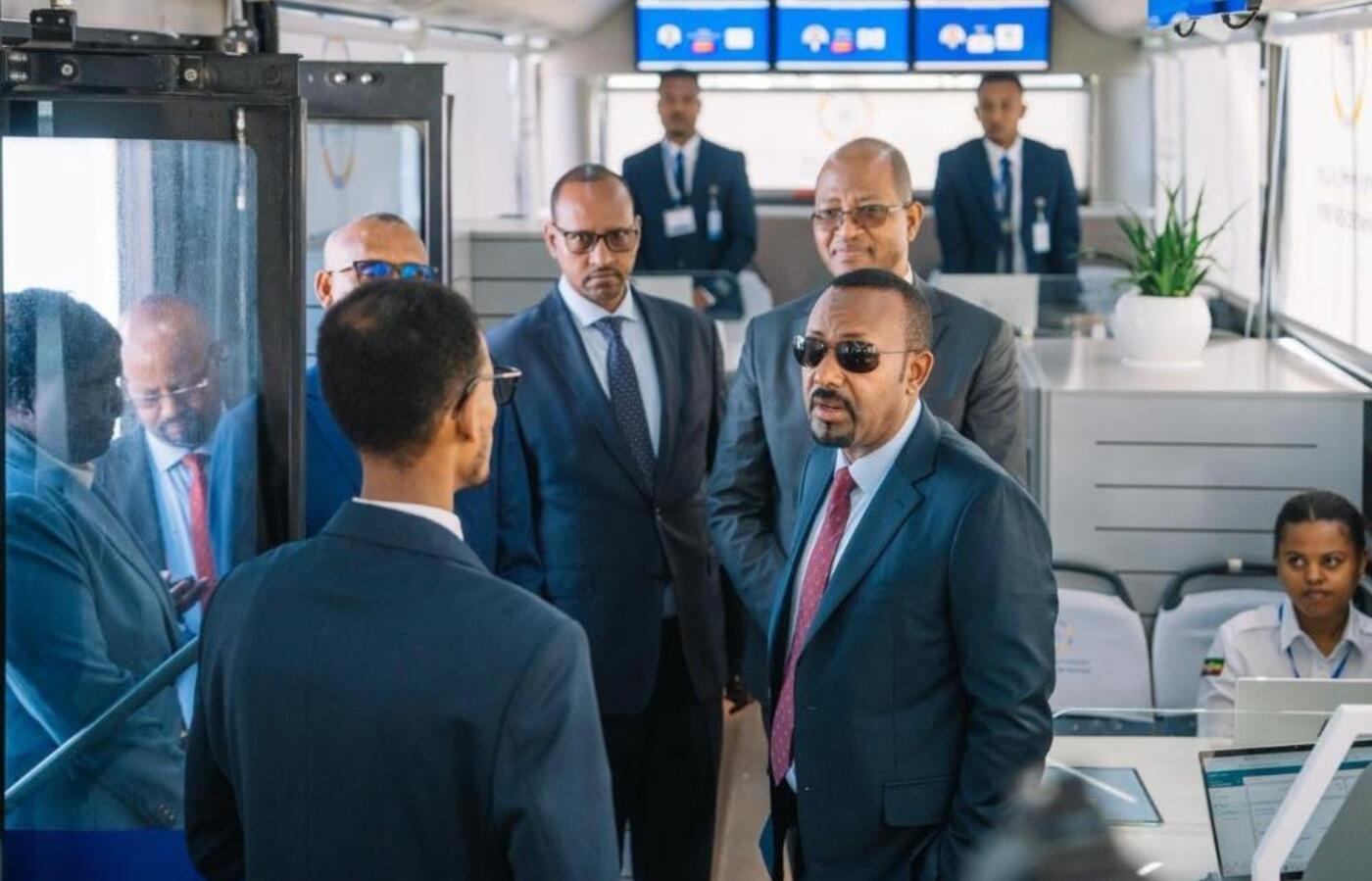
Ethiopia plans to begin assembling laptops and tablets domestically in the coming years as the government seeks to reduce dependence on imported technology and strengthen control over its digital infrastructure, Prime Minister Abiy Ahmed (PhD) said.
Speaking at the launch of the Mesob SuperApp on Monday, Abiy said government institutions are working with the Ethiopian Artificial Intelligence Institute to establish local assembly facilities for electronic devices, extending the country's digital ambitions beyond software development and digital services.
"Expanding our proven software and data capabilities into hardware production will establish the foundation for full technological sovereignty for the next generation," he said.
The initiative forms part of Ethiopia's push to build a larger digital economy while increasing local technological capabilities. Officials view domestic hardware production as a key step toward reducing reliance on foreign technology suppliers and improving national data security.
The government launched Digital Ethiopia 2030 in December 2025, targeting an increase in the digital economy's contribution to gross domestic product to 12 percent from 3.9 percent and the creation of one million jobs. The strategy identifies digital sovereignty and local capacity development as key priorities.
Infrastructure to support the manufacturing drive is already taking shape. At Hawassa Industrial Park, facilities once dominated by textile production are being transformed into a technology hub following the sector's decline after Ethiopia lost duty-free access to the United States market under the African Growth and Opportunity Act in 2022. Officials say the site is introducing artificial intelligence and robotics into electronics production.
A Danish-operated facility in Addis Ababa has also started assembling laptops and desktop computers locally using imported components, including motherboards, memory modules and storage drives.
Alongside the manufacturing initiative, the government is developing a centralised national data cloud at the Ethiopian Artificial Intelligence Institute. Abiy said the facility is expected to surpass the combined capacity of data centres currently operated by public institutions.
The prime minister said Ethiopia's digital ecosystem has continued to expand, citing 55 million Telebirr users, 45 million registrations under the national digital ID programme and five million participants trained through the Ethio-Coders initiative.
He said technological capability would play an important role in strengthening economic resilience and advancing the country's sovereignty objectives.




