

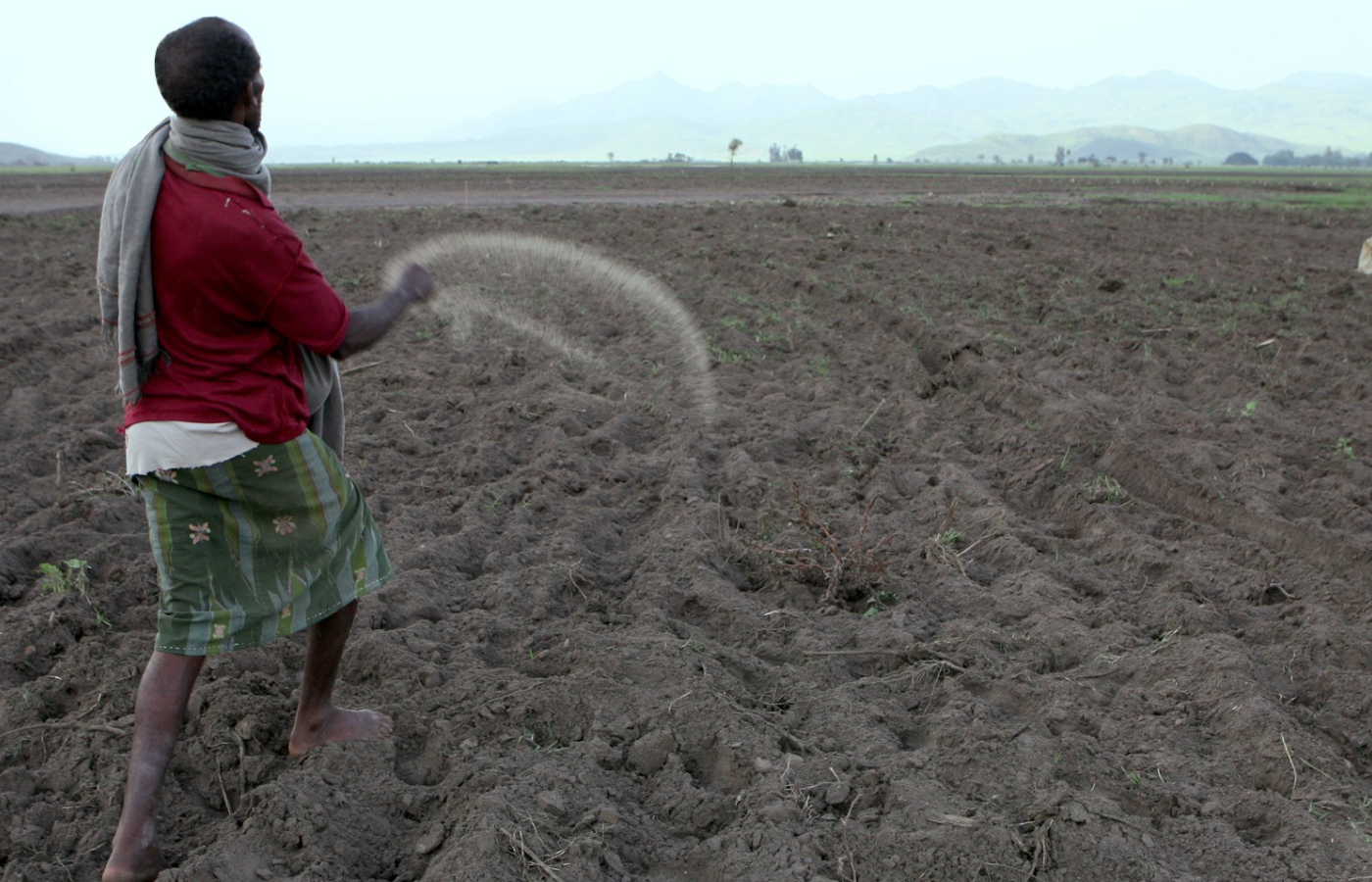
The Ministry of Agriculture has proposed the creation of a National Fertilizer and Soil Health (FSH) institute, backed by a 5.1 million US dollars budget, in a bid to address widespread soil degradation that is affecting millions of hectares of farmland.
The initiative forms a central pillar of the Ethiopian Fertilizer and Soil-Health Roadmap (EFSH), as the country seeks to strengthen food security amid growing agricultural pressures.
The institute is intended to centralise responsibilities for soil analysis, nutrient management, and fertilizer use, replacing a fragmented system that officials say has limited the effectiveness of soil mapping, data collection, and farmer advisory services.
Eyasu Elias, state minister for natural resources at the Ministry of Agriculture, which is leading the initiative, said the absence of a dedicated institution has constrained both farmers and development projects. “The lack of reliable soil data for analysis and for advising farmers was a key reason for establishing the institute,” he told Birrmetrics, adding that soil characterisation and mapping require a centralised body with a clear mandate.
“We have been doing this within a department under the ministry. This is not right,” Eyasu said. “We need an institute under the supervision of the ministry.”
According to the ministry, several development initiatives have struggled due to the lack of reliable, site-specific soil data. The proposed institute would be responsible for generating and sharing soil information with farmers, public institutions, and development partners, while drawing expertise from universities and research centres to build a national soil information system.
Soil degradation is escalating across Ethiopia. The Roadmap notes that Africa’s agricultural systems are under “unprecedented pressure” from population growth and rising food demand, while traditional soil-restoring practices such as extended fallow periods have largely disappeared. This has contributed to nutrient depletion, erosion, acidification, and declining biological activity. Across the continent, annual soil nutrient losses are estimated at 4 billion US dollars, a challenge mirrored in Ethiopia.
Eyasu said Ethiopia cultivates about 20 million hectares annually, of which 7.5 million hectares are affected by soil acidity. Around 3.2 million hectares are classified as strongly acidic, a condition he said continues to undermine agricultural productivity and food security.
Beyond data collection, the institute is expected to coordinate efforts to modernise fertilizer use and land management. This includes overseeing the expansion of mobile soil testing laboratories, known as CARVAN, aimed at providing location-specific fertilizer recommendations and reducing reliance on uniform application rates. The institute will also foster public-private partnerships to accelerate innovation in fertilizer production, distribution, and sustainable soil management.
“Soil laboratories were previously housed at the national soil testing centre, but the centre is in a damaged condition, which also led to the loss of two mobile laboratories,” Eyasu said. “The institute will ignite this work again.”
The proposal has been submitted to the Council of Ministers, though approval has yet to be granted. Eyasu said the delay has occurred “for unknown reasons,” adding that the ministry hopes the plan will be finalised in the near future.
The 10-year EFSH Roadmap sets out a broader reform agenda to address soil degradation, nutrient depletion, inefficient fertilizer use, and climate risks. It identifies weak supply chains, limited institutional capacity, and the lack of site-specific agronomic advice, particularly for smallholder farmers, as key constraints.
The Roadmap aligns with Ethiopia’s Digital Agriculture Roadmap, providing soil health data, decision-support tools, and tailored advisory services. By 2035, targets include doubling land under sustainable soil management to 12.5 million hectares, expanding integrated soil fertility management coverage to 60 percent, reclaiming 3 million hectares of acid soils, increasing fertilizer application rates to at least 100 kilograms per hectare, improving nitrogen use efficiency by 20 percent, and lifting cereal yields, including teff to 2.7 tonnes per hectare and wheat to 4.9 tonnes per hectare.
The Roadmap envisages total investment of 3.2 billion US dollars over the next decade, with 3 billion US dollars, or 93.75 percent, allocated to mineral fertilizer manufacturing through public-private partnerships, supported by a monitoring and evaluation framework to ensure delivery.




