

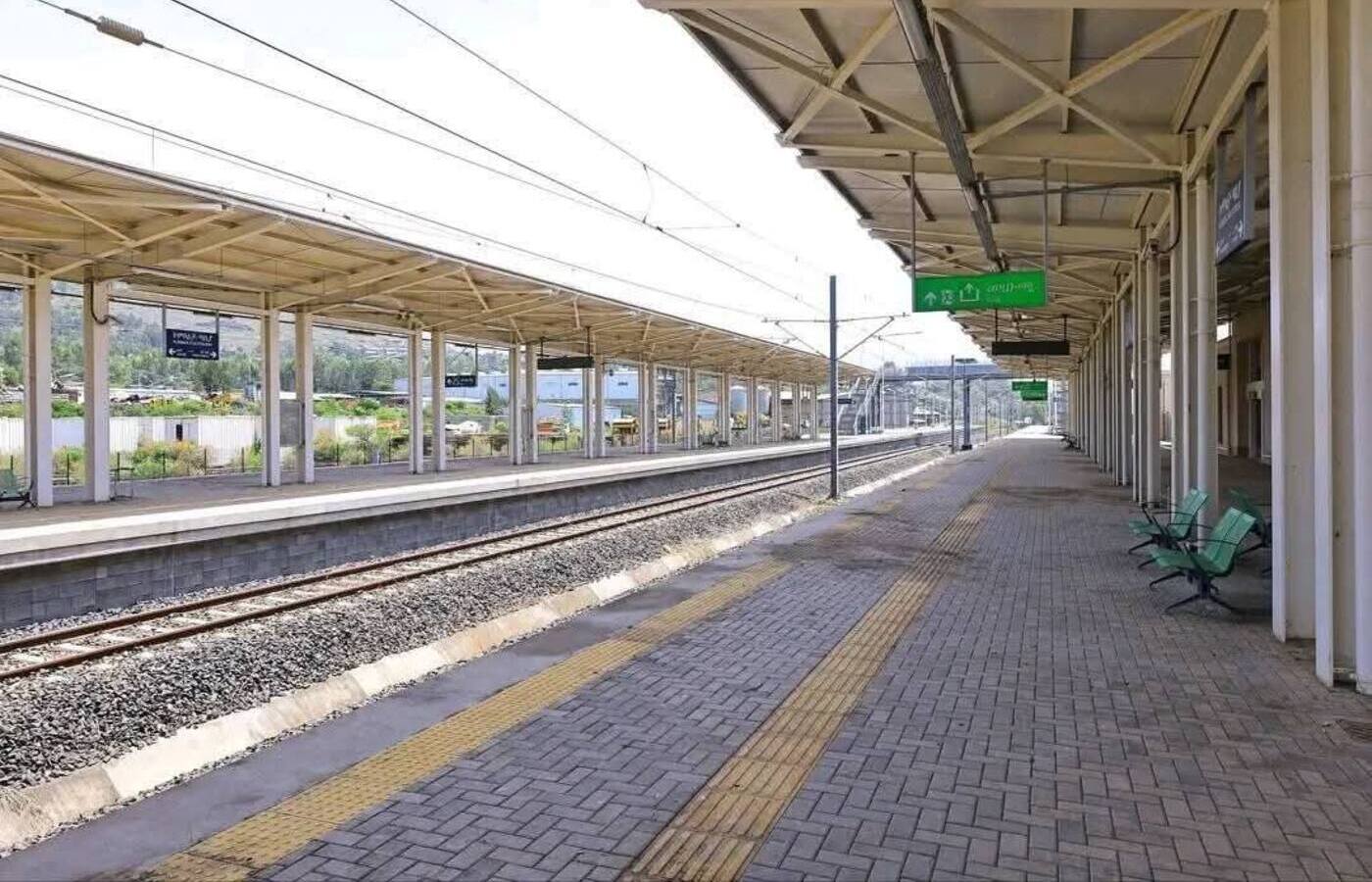
Ethiopia says it has relaunched work on the Awash–Kombolcha–Hara Gebeya railway, reviving one of the country’s most important unfinished transport corridors after years of delay caused by the northern conflict, contract disputes and damage to project infrastructure.
The 392-kilometre electric railway, which links Awash in central Ethiopia with Kombolcha and Hara Gebeya in the north, is designed to connect the Amhara region’s major commercial and industrial centres to the Addis Ababa–Djibouti railway corridor. Once completed, the line is expected to improve the movement of freight and passengers, support industrial activity around Kombolcha, and reduce the heavy dependence of northern businesses on road transport.
Officials said work has resumed following improvements in security conditions and the mobilisation of personnel, equipment and site facilities. The Ethiopian Railways Corporation has said preparatory activities are underway to restart repair and reconstruction works, including the rehabilitation of workers’ accommodation, mobilisation of manpower and site infrastructure preparation.
The project is now expected to be completed within two years, according to comments carried by the Ethiopian News Agency.
The railway was launched in 2015 under a 1.7 billion US dollar engineering, procurement and construction contract awarded to Turkish firm Yapı Merkezi. Financing was provided by Turk Exim Bank, while French firm SYSTRA MD was engaged as consultant. The line was initially expected to be completed around 2019/20, but the schedule was derailed by the outbreak of war in northern Ethiopia in November 2020.
Before the suspension, the project had already advanced significantly. According to ERC, the line includes substations, tunnels, bridges, power control stations, radio facilities and a main maintenance workshop. It is designed to operate at speeds of up to 120 kilometres per hour and to connect central and northern Ethiopia through an electrified rail network.
The conflict, however, turned the project from a near-completion infrastructure scheme into a damaged and legally contested asset. Sections of the line, project facilities and equipment were reportedly damaged or looted during the fighting, forcing construction to stop and requiring a fresh technical assessment before full works could resume.
The restart carries economic and political significance. Economically, the railway is intended to link northern Ethiopia more directly to the country’s main trade gateway. Ethiopia’s import-export system remains overwhelmingly tied to the Addis Ababa–Djibouti corridor, which carries more than 95 percent of the country’s import-export trade by volume, according to the World Bank. By feeding northern freight into that corridor through Awash, the railway could strengthen access to Djibouti port while supporting domestic logistics hubs such as Kombolcha.
Kombolcha is central to the project’s commercial logic. The city hosts industrial and logistics facilities, including an industrial park and dry port-related infrastructure, making it one of the main potential beneficiaries of the railway’s completion. Local officials have framed the restart as a response to long-standing public demand and as a step that could support trade, employment and regional recovery.
But the project still faces unresolved risks. Although construction activity has returned to the corridor, the final cost of damage, the scope of rehabilitation and the contractor arrangement remain sensitive issues. The railway has also been tied to a major arbitration case between ERC and Yapı Merkezi.
Recent reporting by The Reporter said the London Court of International Arbitration dismissed the bulk of a 979.9 million US dollar claim filed by Yapı Merkezi against ERC. The tribunal reportedly rejected about 750 million US dollars of the claim and ordered the contractor to return a 29.1 million US dollar advance payment. The dispute centred on delays, financing, right-of-way compensation, power supply and conflict-related disruption.




