

Ethiopia has begun to bring some of its most visible macroeconomic pressures under control, but the harder phase of its economic reform is only beginning.
Inflation has eased, foreign-exchange reserves have recovered and the gap between official and parallel-market exchange rates has narrowed sharply since the government launched sweeping reforms in July 2024.
Behind those improvements, however, lie structural weaknesses that cannot be resolved through exchange-rate adjustment or monetary tightening alone.
The government still raises relatively little tax revenue. Ethiopia’s financial system remains concentrated. Capital markets are at an early stage of development. Foreign-exchange trading remains shallow, while banks continue to operate in a market where liquidity, pricing and competition are undergoing rapid change.
Those structural constraints are increasingly shaping the next phase of the Homegrown Economic Reform Agenda.
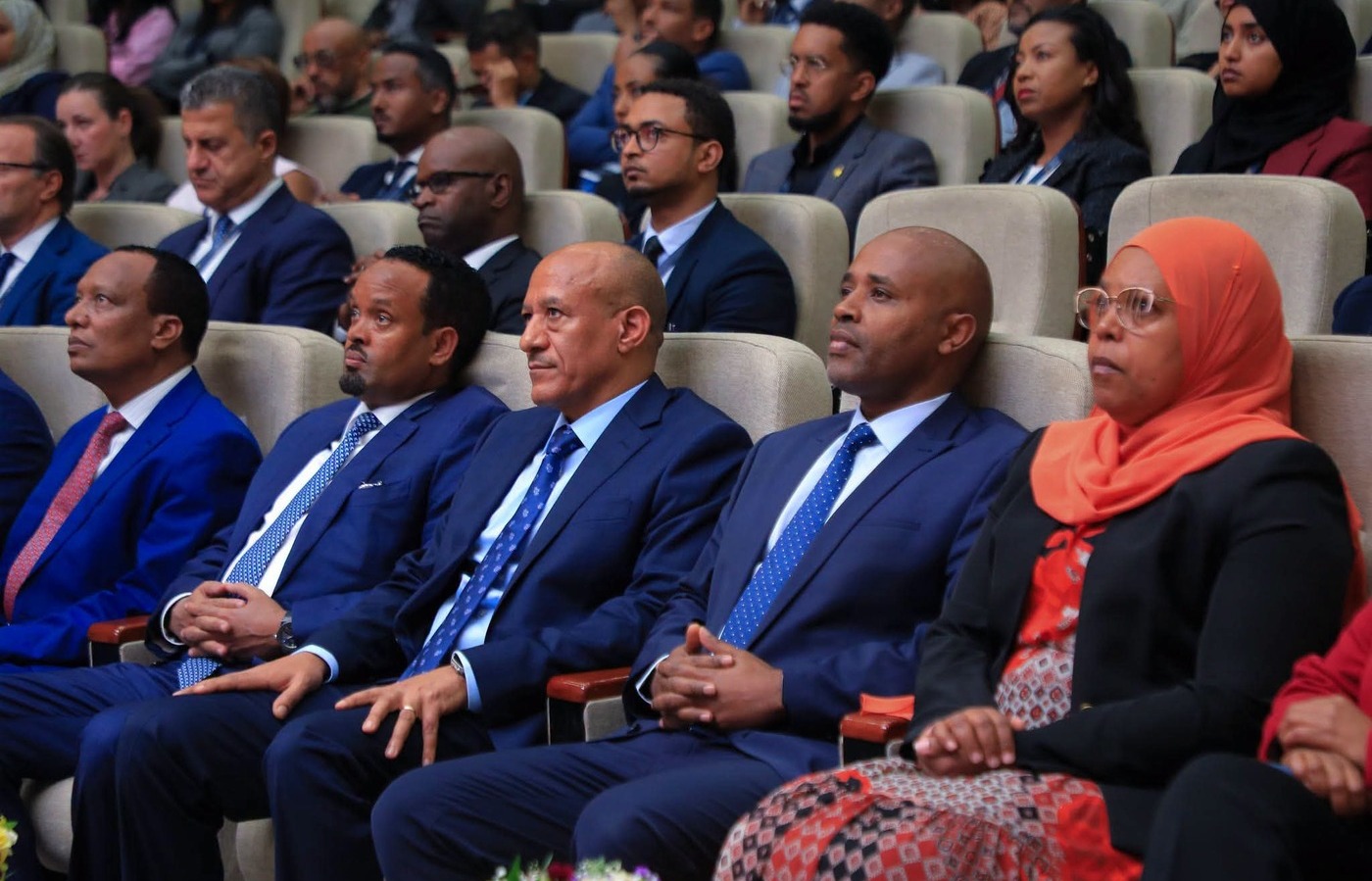
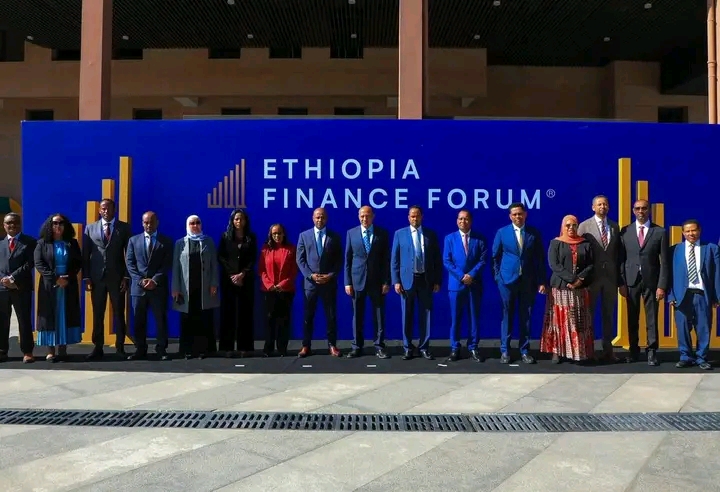
The challenge was evident at the Ethiopia Finance Forum 2026, which opened Tuesday at the Adwa Victory Memorial Museum in Addis Ababa, bringing policymakers, banks, investors and development institutions together to discuss the future of the country’s financial system.
The forum comes more than two years after Ethiopia embarked on one of the most extensive economic liberalisation programmes in its recent history.
The July 2024 transition toward a market-determined foreign-exchange regime was followed by reforms covering monetary policy, taxation, banking, state-owned enterprises and public finance.
The programme is supported by a four-year, 3.4 billion US dollars Extended Credit Facility approved by the International Monetary Fund and forms part of a broader financing and debt-support package involving international development partners and creditors.
The first phase was largely about stabilisation.
The next is about building institutions capable of sustaining it.
Kyungsuk Lee, IMF Resident Representative to Ethiopia, said Ethiopia’s experience most closely resembles Angola’s transition toward a more flexible exchange-rate regime, where a significant parallel-market premium persisted even after reforms began.
He identified three factors behind Ethiopia’s remaining parallel-market premium: restrictions that still apply to some current-account transactions, a closed capital account combined with limited returns on birr-denominated assets, and an underdeveloped financial system dominated by a single large bank.
The diagnosis points to a broader problem.
Changing the exchange-rate regime may remove one distortion, but it does not automatically create a competitive foreign-exchange market.
For that, Ethiopia needs deeper financial markets, more instruments for savers and investors, stronger interbank trading, greater competition among financial institutions and more confidence in birr-denominated assets.
The same structural challenge is visible in public finance.
Ethiopia’s tax-to-GDP ratio remains among the lowest internationally despite recent improvements.
Tax collection has risen following reforms to value-added tax, customs, income taxation and tax administration. The depreciation of the birr has also raised customs receipts in local-currency terms.
But the revenue base remains too narrow for the scale of Ethiopia’s ambitions.
The government is simultaneously trying to expand infrastructure, strengthen social protection, service debt, finance public services and support economic transformation.
Those demands require a much stronger domestic revenue system.
The IMF has repeatedly stressed that revenue mobilisation and expenditure discipline will be central to maintaining fiscal sustainability.
The issue becomes more difficult as the government withdraws subsidies.
Fuel subsidy reform, for example, improves public finances over time but also transfers more of the cost of energy directly to households and businesses.
That makes the strength of social protection increasingly important.
If fiscal savings are achieved faster than safety nets expand, macroeconomic reform can improve government accounts while intensifying pressure on household budgets.
The banking sector faces a similar transition.
Fikadu Digafe, Vice Governor and Chief Economist of the National Bank of Ethiopia, used the forum to address concerns surrounding bank liquidity.
He said banks remain responsible for managing their own deposits, interest rates and daily operations even as the central bank provides interbank market facilities, standing facilities, emergency liquidity support and reserve mechanisms.
His remarks reflect a broader shift in the relationship between the regulator and commercial banks.
For years, Ethiopian banking operated within a heavily managed financial system.
The reform agenda is gradually replacing parts of that framework with market-based mechanisms.
That gives banks greater commercial space, but also places greater responsibility on management and boards to price risk, manage liquidity and compete for deposits.
The arrival of foreign banks is expected to add another layer of competition.
Meanwhile, the development of the Ethiopian Securities Exchange and other capital-market institutions is intended to reduce the economy’s overwhelming dependence on bank financing.
These reforms are interconnected.
A deeper capital market can create additional investment options for savers. Stronger competition can improve financial services. A functioning interbank market can improve liquidity allocation. Better returns on domestic financial assets can reduce incentives to hold wealth outside the formal system.
None of these changes, however, happen as quickly as an exchange-rate adjustment.
That is why Ethiopia’s recent macroeconomic numbers tell only part of the story.
Inflation has fallen sharply from earlier peaks. International reserves have improved from critically low levels. The parallel-market exchange-rate premium has narrowed substantially, while economic growth has remained strong.
Those are important gains.
But they represent the stabilisation of the economy rather than the completion of its transformation.
The more difficult test is whether Ethiopia can turn that stability into a deeper financial system, a broader tax base, more productive investment and stronger household incomes.
Deputy Prime Minister Temesgen Tiruneh, opening the Ethiopia Finance Forum, argued that the ultimate measure of reform should not be international assessments or macroeconomic statistics, but improvements in citizens’ daily lives.
That may also be the most demanding benchmark.
The first stage of Ethiopia’s reform could be measured in reserves, inflation and exchange rates.
The next will be measured in something harder: whether a more market-oriented economy produces enough investment, jobs, credit and public revenue to make the stabilisation sustainable.
For deeper coverage on economic policy reforms, financial market developments, and macroeconomic analysis in the Horn of Africa, read full coverage on Ethiopia Stabilisation Gains Expose Harder Part Reform, or monitor official publications on the Ministry of Finance and National Bank of Ethiopia portals.




