

Ethiopia has enlisted Chinese expertise to strengthen its workforce in electric mobility, advancing efforts to develop technical skills for the country’s emerging new energy vehicle (NEV) sector.
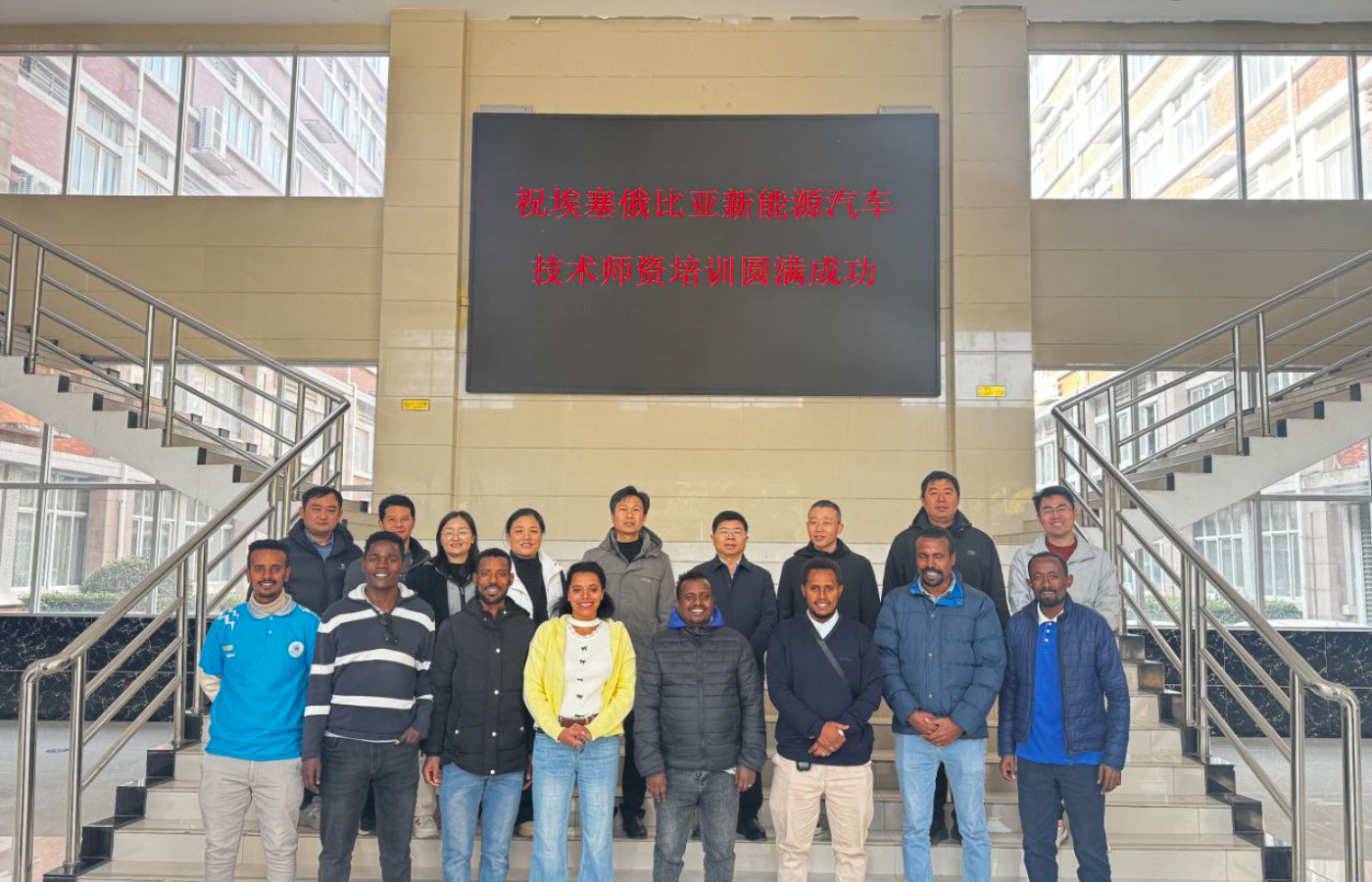
A three-week training programme on NEV technology for Ethiopian instructors concluded on Friday, hosted by Shangqiu Polytechnic in Henan province. Faculty members from the Ethiopian Industrial Parks Corporation’s training institute participated in the programme, which combined classroom instruction with hands-on technical sessions, addressing gaps in both practical skills and teaching methods needed for Ethiopia’s nascent NEV industry.
Founded in 2001, Shangqiu Polytechnic has grown into one of China’s national demonstration vocational institutions, recognised for applied education and close alignment with industry needs. The college offers a wide range of professional programmes across manufacturing, transportation, information technology, agriculture and business, emphasising hands-on workshops and practical teaching methods.
The programme employed a blended approach integrating classroom lectures, case studies, hands-on practice, and peer exchanges. Organisers said this model helped participants enhance both their technical competence and instructional capacity, preparing them to deliver NEV-focused courses adapted to Ethiopia’s local context.
At the closing ceremony, Xue Mingzhi, party secretary and president of Shangqiu Polytechnic, awarded completion certificates to the Ethiopian instructors. He described the programme as part of China’s wider international vocational education initiatives, aimed at fostering applied skills development and international cooperation in technical training.
Ethiopia has been aggressively promoting electric mobility. The government has banned imports of petrol and diesel vehicles, introduced tax incentives for fully assembled and semi-assembled EVs, and set a target to deploy 500,000 electric vehicles by 2030, replacing the majority of fossil fuel-powered vehicles.
Analysts note that these measures are expected to reduce Ethiopia’s annual fuel import bill, previously exceeding US dollars 4.5 billion, while expanding local industrial capacity. State-owned enterprises are rolling out EV charging infrastructure, particularly in Addis Ababa, and Chinese manufacturers are exploring local assembly and production opportunities.
Representing the Ethiopian participants, one instructor said the course was highly practical and directly aligned with the needs of Ethiopia’s NEV industry. “We have gained exposure to advanced training facilities, structured teaching methods, and cutting-edge NEV technologies,” he said. “We plan to integrate what we learned into Ethiopia’s technical and vocational curriculum to cultivate technicians equipped with both practical skills and technical knowledge.”
The programme comes as Ethiopia seeks to expand its electric mobility sector, reduce reliance on imported fuels, and support industrial upgrading.




