

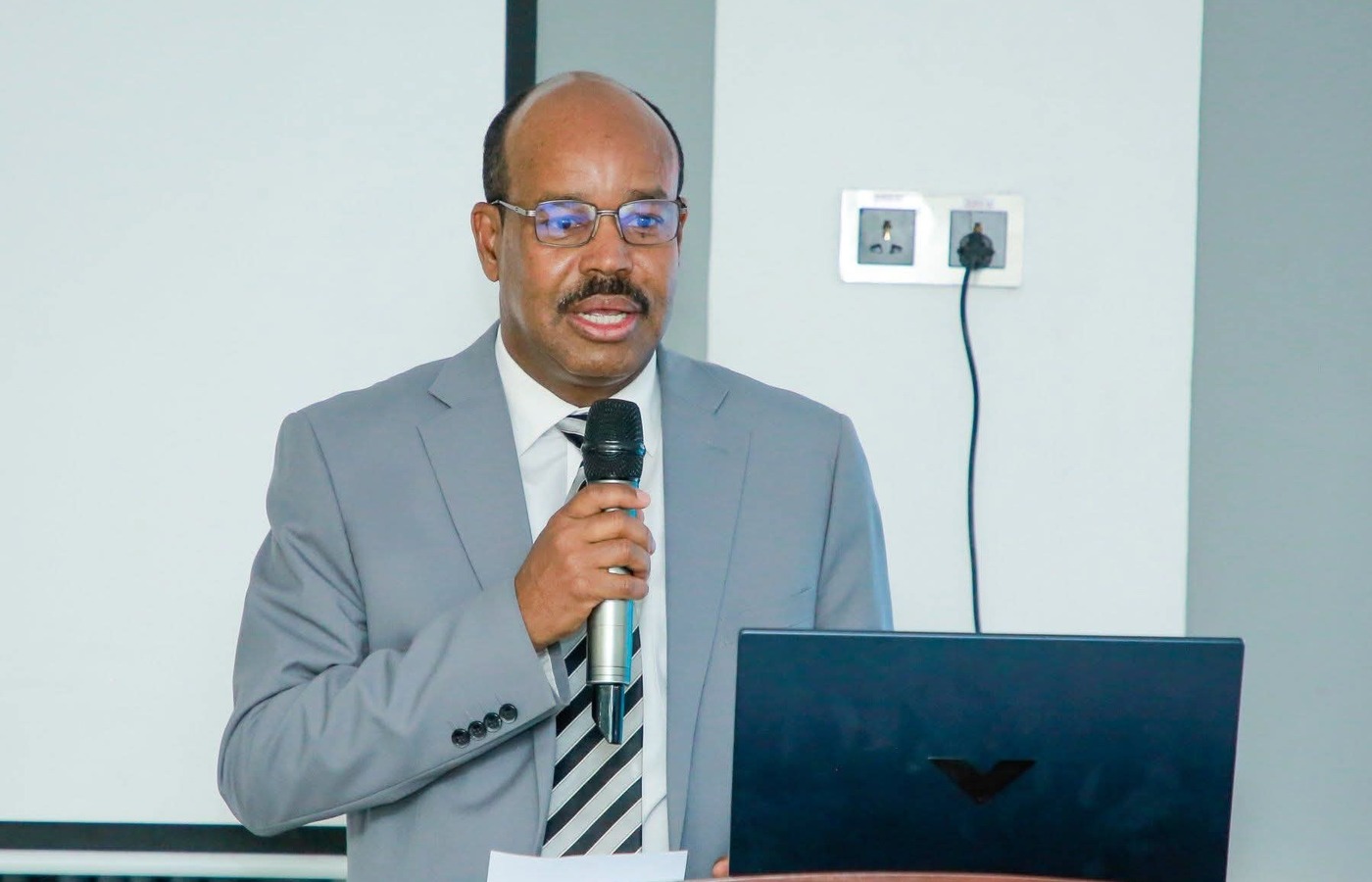
Ministry of Agriculture has called for closer coordination between government agencies, investors and farmers to raise cotton output, as officials acknowledge that most of the country’s suitable land remains underutilised.
At a stakeholder forum held in the capital, representatives from the Ministry of Industry, the German development agency Deutsche Gesellschaft fur Internationale Zusammenarbeit (GIZ), cotton and textile associations, commercial farm investors and smallholder farmers reviewed bottlenecks in the sector and discussed measures to lift productivity.
Officials said Ethiopia possesses favourable agro-ecological conditions for cotton cultivation but has yet to capture the expected economic gains. According to GIZ, less than 5 percent of land suitable for cotton is currently under production, underscoring the gap between potential and output.
Data presented at the meeting showed that during the 2017/18 production season 110,000 hectares were planted with cotton, yielding 70,000 metric tonnes. The figures reflect a gradual rise in productivity in recent years, driven in part by renewed policy attention and the reopening of previously idle textile factories.
Hassan Mohammed, state minister at the Ministry of Industry, said improved output had helped bring some closed manufacturing plants back into operation, strengthening linkages between growers and processors. He added that sustained support for the sector was required if Ethiopia was to increase foreign currency earnings and expand employment through the cotton-to-textile value chain.
Samson Assefa, head of cotton development at the Ministry of Agriculture, said cotton had wide industrial applications but required further investment to reach its full capacity. He highlighted its role in supporting domestic textile production, a priority area under Ethiopia’s industrialisation strategy aimed at reducing imports and boosting exports.
Participants identified limited access to improved seed, input supply constraints, financing gaps, market access challenges, quality standards and the role of intermediaries as key obstacles. Speakers stressed that better coordination between the agriculture and industry ministries would be central to addressing structural weaknesses.
Belaynesh Kumsa, adviser for crop and horticulture development at the Ministry of Agriculture, said the government was working to support farmers, investors and manufacturers. She urged licensed investors to bring allocated land into full production to help close the supply gap.
Ethiopia’s textile and garment industry has been positioned by policymakers as a pillar of export diversification. Expanding domestic cotton supply is seen as critical to reducing reliance on imported raw material and stabilising input costs for local manufacturers.




