

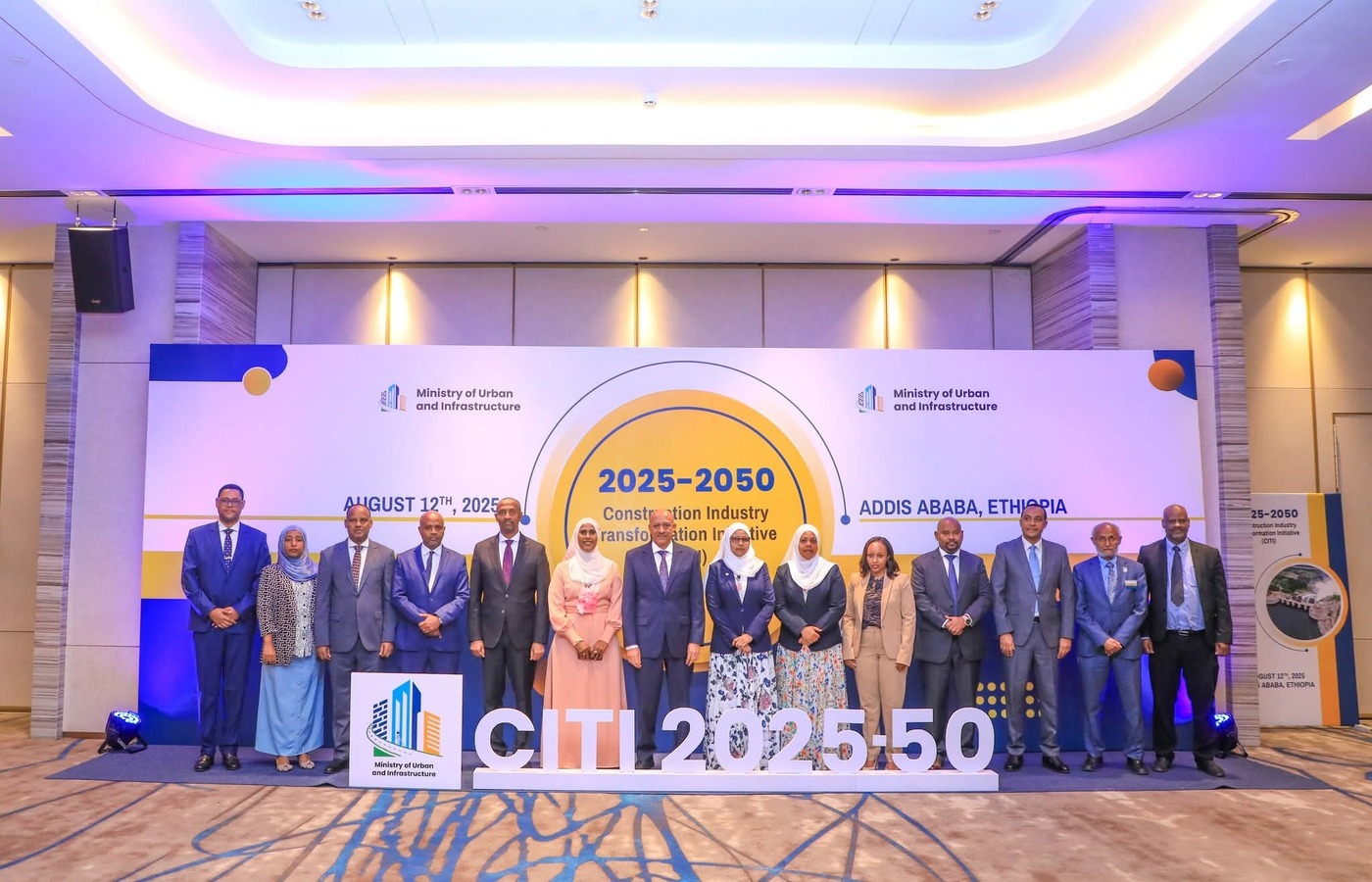
Ethiopia has launched a 25-year plan to reduce the construction industry’s reliance on imported materials and increase its global competitiveness.
The Construction Industry Transformation Initiative (CITI), announced on August 12, will run from 2025 to 2050 and is part of the government’s 2021–30 development framework. The construction sector accounts for more than 10 percent of employment and about 20 percent of gross domestic product, according to the Ministry of Urban and Infrastructure.
Urban and Infrastructure Minister Chaltu Sani said CITI will focus on four areas: adopting technology-driven services, recognising high-performing professionals, strengthening public-private partnerships, and replacing imported inputs with local alternatives. More than 20 Ethiopian contractors are preparing to compete for projects abroad, while local firms are involved in corridor development in more than 70 cities.
Deputy Prime Minister Temesgen Tiruneh said the initiative aims to create a sector that is “quality-based, creative, far from corruption, inclusive and able to showcase our civilisation and wealth.”
A government review identified three drivers for the reform: advances in global construction technology, domestic economic and urban growth, and sector inefficiencies including weak collaboration and import dependence. The government said CITI will move the industry from fragmented practices to a transparent, professional and investor-friendly model.




