

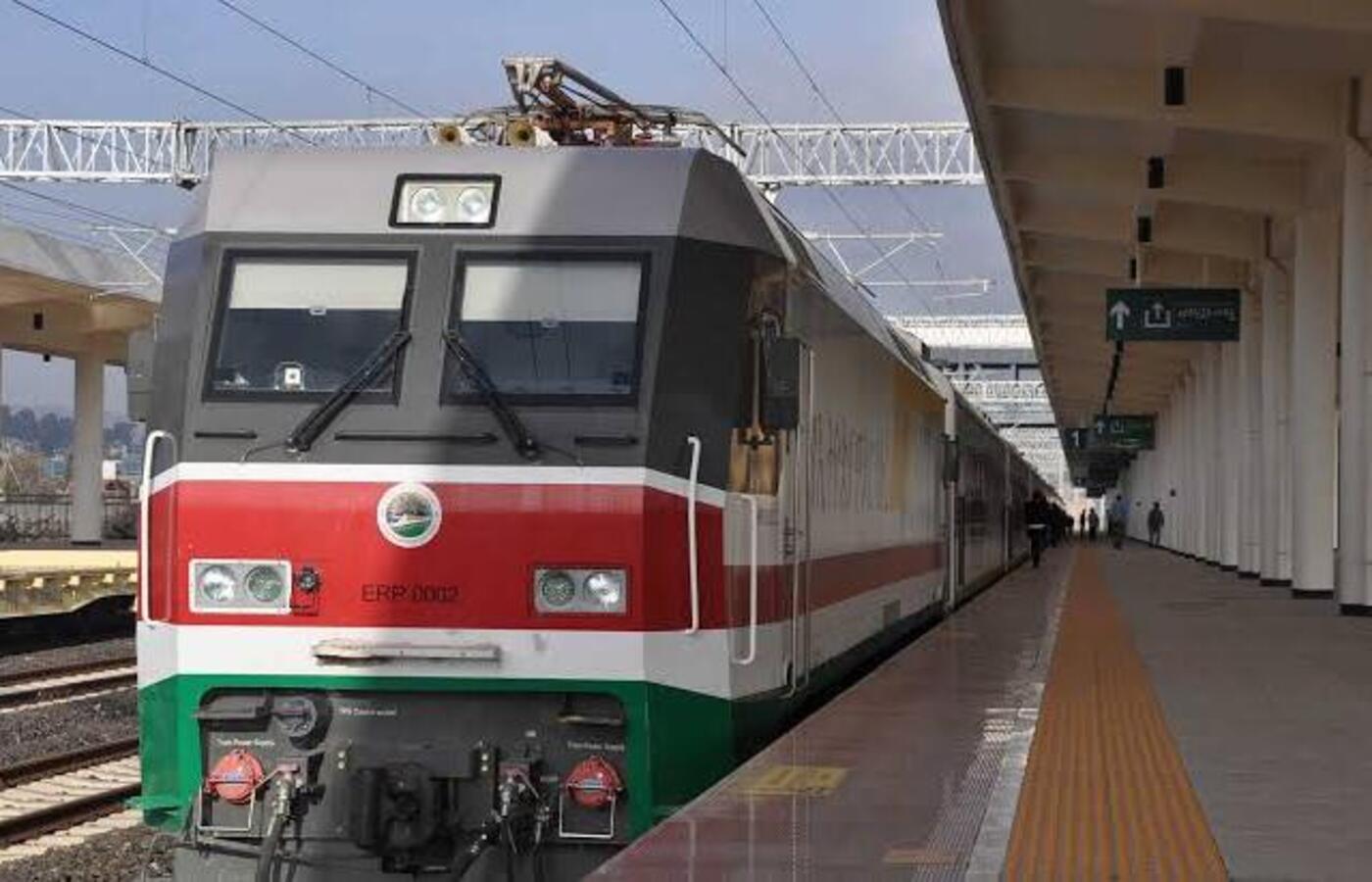
Ethiopia is stepping up efforts to modernise its payment infrastructure in tandem with upgrades to the Ethiopia-Djibouti railway, a key trade corridor underpinning the country’s export economy and regional integration under the African Continental Free Trade Area (AfCFTA).
At a high-level panel discussion held on August 2, senior government officials including National Bank of Ethiopia Governor Mamo Mihretu, Finance Minister Ahmed Shide, and Transport Minister Alemu Sime, joined representatives from major financial institutions to assess progress on improving both physical and financial logistics linked to the railway.
The 756-kilometre standard gauge line, operated by the Ethiopia-Djibouti Railway Company and largely financed by China’s Export-Import Bank, connects landlocked Ethiopia to the Port of Djibouti, which handles approximately 95 percent of the country’s external trade. Around 97 percent of Ethiopia’s imports and exports—ranging from agricultural commodities such as coffee, sesame and khat—are transported via this corridor.
However, operational inefficiencies, including frequent power outages and maintenance bottlenecks, have curtailed the railway’s current utilisation to roughly 60 percent of its designed capacity. Officials said the ongoing modernisation seeks to raise efficiency and reliability across the trade route.
Finance Minister Ahmed Shide underscored the railway’s strategic value for Ethiopia’s integration into the 3 trillion US dollars AfCFTA market. He highlighted the need to address high logistics costs, which average 16 percent of the country’s export value.
Governor Mihretu noted that financial sector policies are being reoriented to support projected export growth, with a particular focus on financing logistics and infrastructure improvements essential to maintaining trade momentum.
Djibouti’s Minister of Decentralisation, Qasim Harun Ali, reiterated his country’s commitment to expanding railway infrastructure and enhancing coordination between the port and rail systems to ensure seamless cargo movement.
The Ethiopian government is also pursuing long-term plans to extend rail links to Sudan, Kenya, and the Lamu Port-South Sudan-Ethiopia Transport (LAPSSET) corridor, as part of a wider strategy to deepen regional trade integration.




