

The Ministry of Health said the Ethiopian government has increased its treasury allocation to the health sector threefold over the past four years, stepping in as the United States Agency for International Development (USAID) effectively ceased global operations in 2025.
Dereje Duguma (MD), state minister for the program wing, said the government recognised the need to strengthen domestic financing and responded to the end of USAID support by tripling its treasury allocation to the health sector over the past four years.
“We have to present a clear investment case to our government and bring partners fully on board to support the actions and policies,” he added.
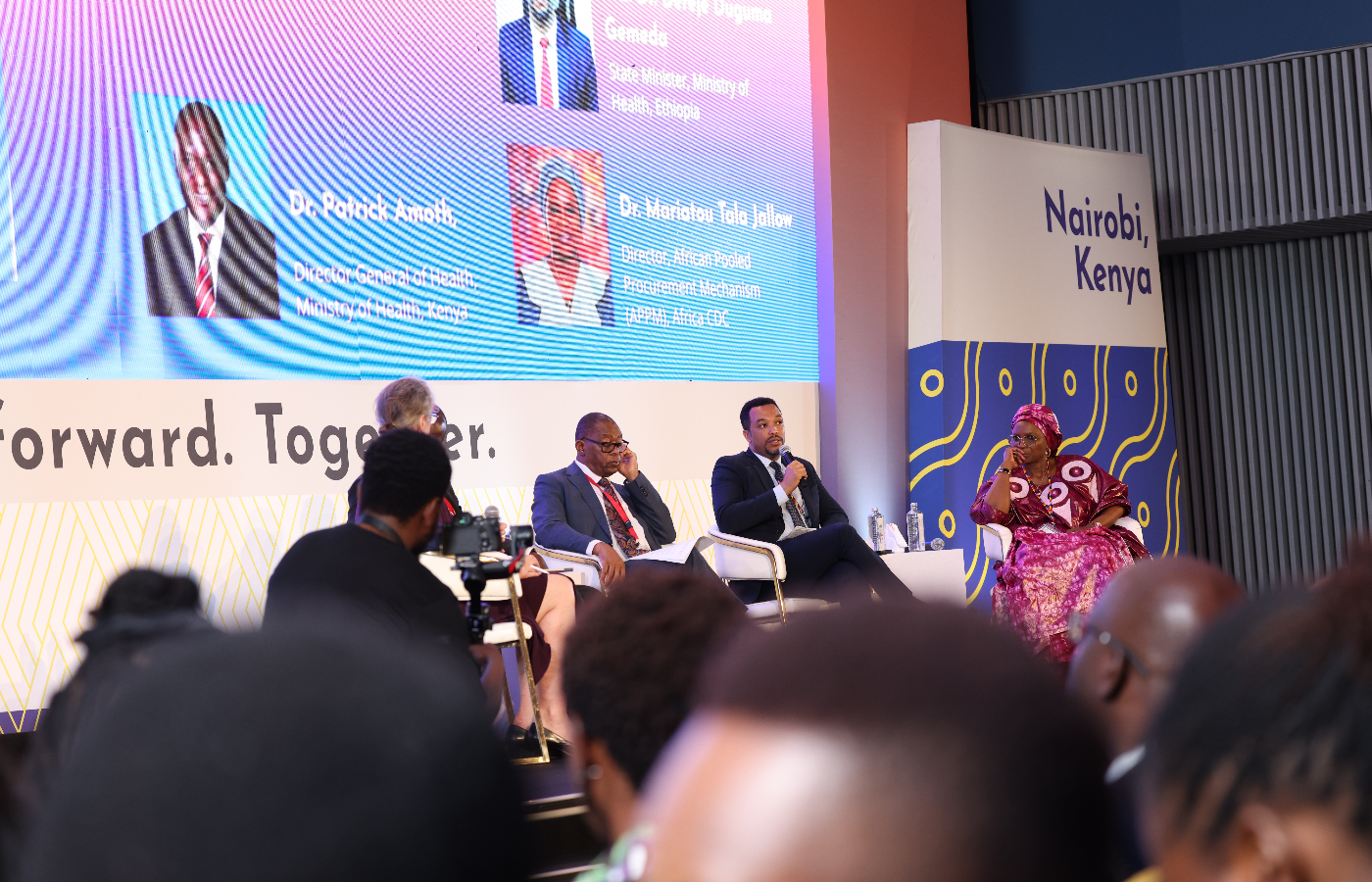
The minister made the remarks on Monday at the International Maternal Newborn Health Conference (IMNHC) in Nairobi, noting that financial assistance from external sources is declining. He emphasised the importance of aligning partners with the government’s policies and strategies.
“We informed our partners to fill the gaps…to achieve the Sustainable Development Goals by 2030. Bringing partners behind the strategies and avoiding parallel work at different levels will be crucial going forward,” he said, adding that policy makers must be engaged during planning processes.
He added that the ministry viewed the decline in foreign assistance as an opportunity to demonstrate the country’s capacity. To this end, it has developed strategies for domestic resource mobilisation, including a Reproductive, Maternal, Newborn, and Child Health (RMNCH) programme in collaboration with 11 partners. Under a one-to-one matching arrangement, the programme is set to mobilise 284 million US dollars over the next three years.
With this framework, the ministry aims to ensure that more than 85 percent of family planning, maternal and child health, and newborn commodities are procured domestically and delivered directly to families.
Procurement is already underway in line with agreements signed with partners, and the Ministry of Finance has committed an additional budget of more than 140 million US dollars to support the programme.
According to Dereje (MD), maternal mortality in Ethiopia has declined to 141 per 100,000 live births, with the ministry aiming to reduce it to less than 70 by 2030.
“To realise this, a sustainable financial platform is essential,” he said. “…the government of Ethiopia and other governments must prioritise maternal and child health in policies and strategies…I personally believe that maternal and child mortality can define a country’s economy more than GDP or GNP.”
Before its closure, USAID played a major long-term role in Ethiopia and globally. Between fiscal years 2021 and 2023, its humanitarian arm provided over 3.3 billion US dollars in emergency assistance to Ethiopia alone, supporting food security and health programmes.
Following USAID’s restructuring, the U.S. State Department assumed responsibility for certain bilateral aid agreements with Ethiopia as of July 1, 2025. These include core humanitarian, global health, and food security programmes, now operating under new frameworks to ensure continued and responsive aid delivery.
In response to the resulting disruptions in foreign assistance, Ethiopia has introduced domestic measures to fill funding gaps, including a Domestic Disaster Risk Response Fund, aimed at sustaining projects previously financed by USAID.




