

By Yared Seyoum
A new report from ActionAid International has issued a stark warning to Ethiopia, calling on the government to abandon IMF-prescribed austerity measures amid a rapid deterioration of public education and health services.
The study — The Human Cost of Public Sector Cuts in Africa — highlights the effects of fiscal consolidation policies across six African countries, with Ethiopia emerging as one of the hardest hit. Drawing on fieldwork involving 100 respondents in Ethiopia, including 40 public sector workers and 60 community members, the report documents a deepening crisis in frontline services, compounded by debt distress and growing inequality.
According to ActionAid, Ethiopia’s strict adherence to International Monetary Fund (IMF) guidance on curbing public spending, limiting wage bills and pursuing privatisation has hollowed out its capacity to deliver basic services. The findings paint a picture of overstretched teachers, under-resourced clinics and women disproportionately burdened with unpaid care work.
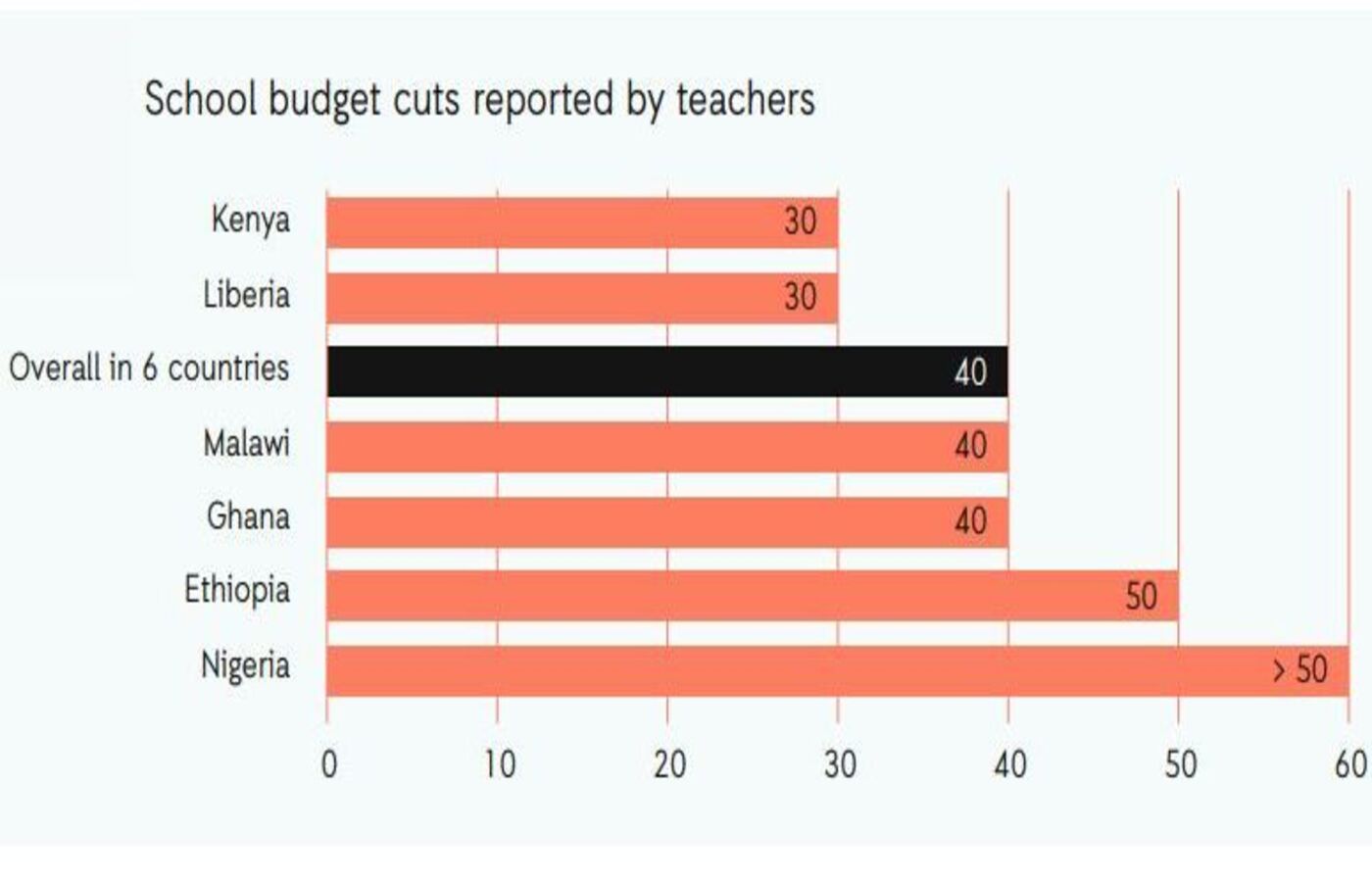
In the education sector, 100 percent of surveyed teachers in Ethiopia reported sharp declines in basic provisions such as desks and textbooks. School budgets, they noted, have been slashed by over 50 percent in the past five years. Ethiopia's student-teacher ratio currently stands at 1:55 — nearly double the international recommendation of 1:30.
“Schools lack teachers and textbooks... families are ordered to pay for books,” said Amara*, a mother of seven from Muyakela Kebele. “School equipment like desks and blackboards are not suitable.” The report found that 81 percent of teachers share limited supplies to cope with overcrowded classrooms.
In healthcare, Ethiopia allocates just 7.1 percent of national revenue — well below the 15 percent Abuja Declaration target. The country has only 1.43 doctors and 10.47 nurses per 10,000 people, with maternal and child health services particularly affected. of surveyed health workers cited persistent equipment and staffing shortages, leading to prolonged wait times and declining quality of care.
As public services falter, women have assumed increasing unpaid care responsibilities, estimated at up to 28 additional hours per week. “This is a gendered crisis,” the report states, “with women absorbing the shocks of failing systems.”
Ethiopia’s economic constraints are further compounded by external debt repayments, which account for six percent of national revenue. The report flags the 213 million US dollars the country loses annually to illicit financial flows and criticises the IMF’s recent Extended Credit Facility programme — signed in July 2024 — for reinforcing spending limits that inhibit recruitment of essential workers.
ActionAid argues that such conditionalities have had a chilling effect across the continent, estimating a $10 billion cut in public sector budgets across 15 countries due to IMF austerity.
In response, the organisation has outlined a suite of recommendations for Ethiopia and other affected governments:
The report urges Ethiopia to resist wage bill caps and fiscal tightening measures that have eroded service delivery and worker recruitment. It also called for a coordinated push among Global South countries to advocate for debt cancellation and a new UN-led framework on sovereign debt. More than 75 percent of low-income countries now spend more on debt servicing than on health.
National governments should reject coercive IMF policies, seek debt relief or cancellation, and expand tax revenues in fair ways to rebuild public health and education workforces and infrastructure, ActionAid said.
Beyond fiscal policy, ActionAid’s report takes aim at the global financial architecture, criticising the IMF and World Bank for what it describes as “colonial-era dynamics” that prioritise creditors over citizens. African countries hold less than 10 percent of the IMF’s voting power, despite bearing the brunt of its policies.
Ethiopia’s long-standing engagement with the Fund — including nine IMF programmes since 1945 — has done little to insulate it from recurring crises, the report argues.
In July 2024, the International Monetary Fund (IMF) approved a four-year, 3.4 billion US dollars Extended Credit Facility (ECF) arrangement for Ethiopia to support the country's Homegrown Economic Reform Agenda. The program aims to address macroeconomic imbalances, restore debt sustainability, and lay the foundation for inclusive, private sector-led growth .
Officials argue the IMF program was a strategic choice by the Ethiopian government to bolster its reform agenda. The government's reforms include transitioning to a market-based exchange rate, modernizing monetary policy, and opening the financial sector to foreign investment. These measures are designed to stabilize the economy, attract foreign capital, and improve service delivery.




